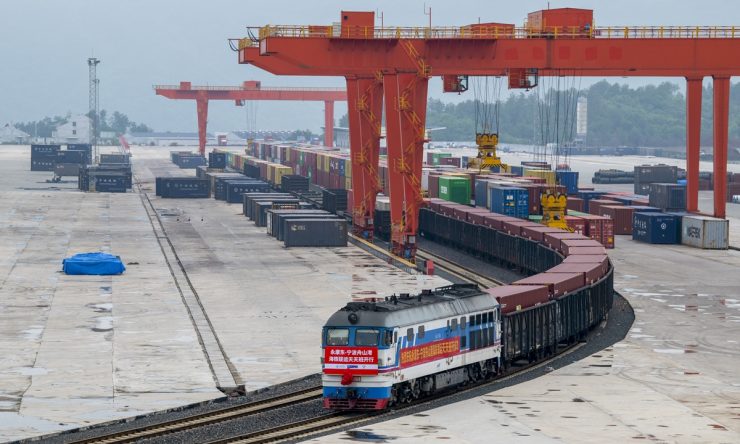
WINDHOEK, July 23 — Namibia‘s Sixth National Development Plan (NDP6) has identified the transport and logistics sector as a strategic priority for economic transformation and regional integration and calls for increased investment and coordination to expand infrastructure and boost trade connectivity.
Launched by President Netumbo Nandi-Ndaitwah on Monday, the plan outlines targeted interventions to develop road, rail, port, and digital transport systems as part of Namibia‘s ambition to become a logistics hub for southern Africa, covering 2025 to 2030.
To support this, the NDP6 encourages greater engagement with the private sector in infrastructure delivery, alongside public investment and development cooperation.
“Strategic expansion of infrastructure in areas of transport and logistics… is at the heart of socio-economic development,” the document states.
According to Namibian authorities, the plan highlights the importance of leveraging private sector investment through enabling policies, institutional coordination, and project prioritization.
It includes a focus on high-impact infrastructure projects, such as corridor development and port modernization.
Key trade corridors such as the Walvis Bay-Ndola-Lubumbashi Development Corridor and the Trans-Kalahari Corridor are prioritized for improved integration, with emphasis placed on cross-border connectivity, digital systems, and logistics efficiency, according to the plan.
Meanwhile, the government aims to modernize border infrastructure and logistics services through automation, digital platforms, and improved customs coordination.
By promoting private sector participation in national development priorities, the government hopes to ease fiscal constraints while accelerating infrastructure upgrades that support industrial development and regional trade.
Namibia‘s logistics sector plays a critical role in facilitating regional trade and economic integration in southern Africa.
Strategically located along the Atlantic coast, Namibia serves as a key transit country for landlocked neighbors such as Botswana, Zambia, and the Democratic Republic of the Congo through its well-developed transport corridors, including the Walvis Bay-Ndola-Lubumbashi and Trans-Kalahari corridors. (Xinhua)