


WASHINGTON, Aug. 21– U.S. President Donald Trump announced on Wednesday that the United States will impose “unprecedented” economic warfare and isolation on Iran, after months without a decisive military outcome or diplomatic progress.
Calling it “an Economic D-Day,” Trump said in a post on Truth Social that the move will be “the most crushing economic operation ever taken against any country.”
He warned that any countries providing a “lifeline” to Iran will face tremendous economic consequences, urging allies to stand with the United States to “isolate, and defeat, the Iran threat.”
U.S. Treasury Secretary Scott Bessent likewise said on Thursday that Washington will impose “the toughest sanctions in history” on Iran, describing the strategy as a “one-two punch” that combines the existing blockade with sweeping new sanctions.
Bessent said that if Washington applied maximum economic pressure, “likely there will not be a large-scale kinetic restart.”
He told CNBC on Thursday that he would share more details on the latest package and discuss specifics at a press conference on Monday.
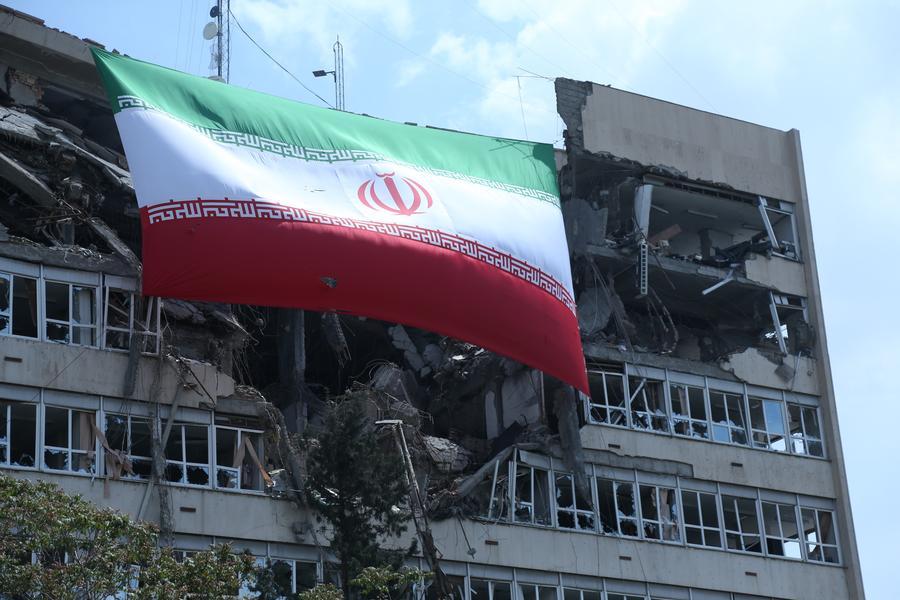
Iranian Foreign Minister Seyed Abbas Araghchi on Thursday dismissed Trump’s plan as another failed U.S. policy in a post on X, describing the proposed economic pressure as “economic terrorism” that threatens the global economy and the sovereignty of nations worldwide.
He argued that the so-called “Economic D-Day” is intended to divert attention from America’s own crisis, including its mounting debt and rising interest costs.
According to the Financial Times, analysts said increased economic pressure is unlikely to force Tehran to cave in, as Iran has endured decades of U.S. sanctions, including the “maximum pressure” campaign imposed by Trump during his first term, and believes it has a much higher pain threshold than Washington.
“The Islamic Republic has operated under intensifying economic pressure and sanctions since 2011,” said Sanam Vakil at Chatham House, a London-based think tank. “Trump once again appears to underestimate the resolve of Iran’s leadership, which views resistance rather than capitulation as the only viable path” to survival.
Uncertainty also remains over the U.S. administration’s longer-term strategy. Dennis Ross, former U.S. envoy to the Middle East, said Washington’s approach to Iran lacks “the ability to think beyond the immediate next step,” adding that “they’re playing checkers. They’re not playing chess.” (Namibia Daily News / Xinhua)

