
Advertise Here

China warns U.K. against overstretching national security concept, says investment climate at risk

BEIJING, Oct. 23 — China has always opposed the practice of overstretching the concept of national security and politicizing economic and trade issues, a Foreign Ministry spokesperson said on Thursday, warning that such practices by the United Kingdom would severely undermine Chinese companies’ confidence in its investment environment.

Spokesperson Guo Jiakun made the remarks at a regular press briefing when asked about reported U.K. security concerns over a planned 1.5-billion-pound investment by Chinese wind turbine maker Mingyang Smart Energy Group Co., Ltd. in Scotland.

The Chinese government supports Chinese enterprises in carrying out international cooperation based on mutual benefit, market principles and compliance with laws and regulations, Guo said, noting that at the same time, the security of Chinese investments is also an important consideration.

He pointed out that in recent years, it has been frequent to see normal economic and trade projects in the U.K. being impacted by pan-political and pan-security influences.

Since the U.K. National Security and Investment Act came into effect in 2022, the British government has made decisions in more than 10 cases involving Chinese enterprises, either prohibiting acquisitions or approving them with conditions.

The British government has not only actively taken over the operations of British Steel acquired by a Chinese private enterprise, it has also, through retrospective reviews, required Chinese companies to divest their shares in acquired U.K. semiconductor companies, undermining the investment security of Chinese enterprises under the pretext of so-called security concerns, Guo said.

“It is unfortunate that some in the U.K. continue to hype up the absurd ‘China threat’ narrative,” Guo said. “If such practices continue unchecked, Chinese companies will have to reassess and cautiously consider their investment decisions in the U.K.,” he added. (Xinhua)
October 23, 2025 0 comment
0 Facebook Twitter Google + Pinterest
Namibia embarks on 5-year plan to combat climate change, food insecurity

WINDHOEK, Oct. 23  — Namibia has unveiled a five-year agriculture strategic plan to better respond to climate change, food insecurity, land reform, water scarcity, and persistent economic inequality.

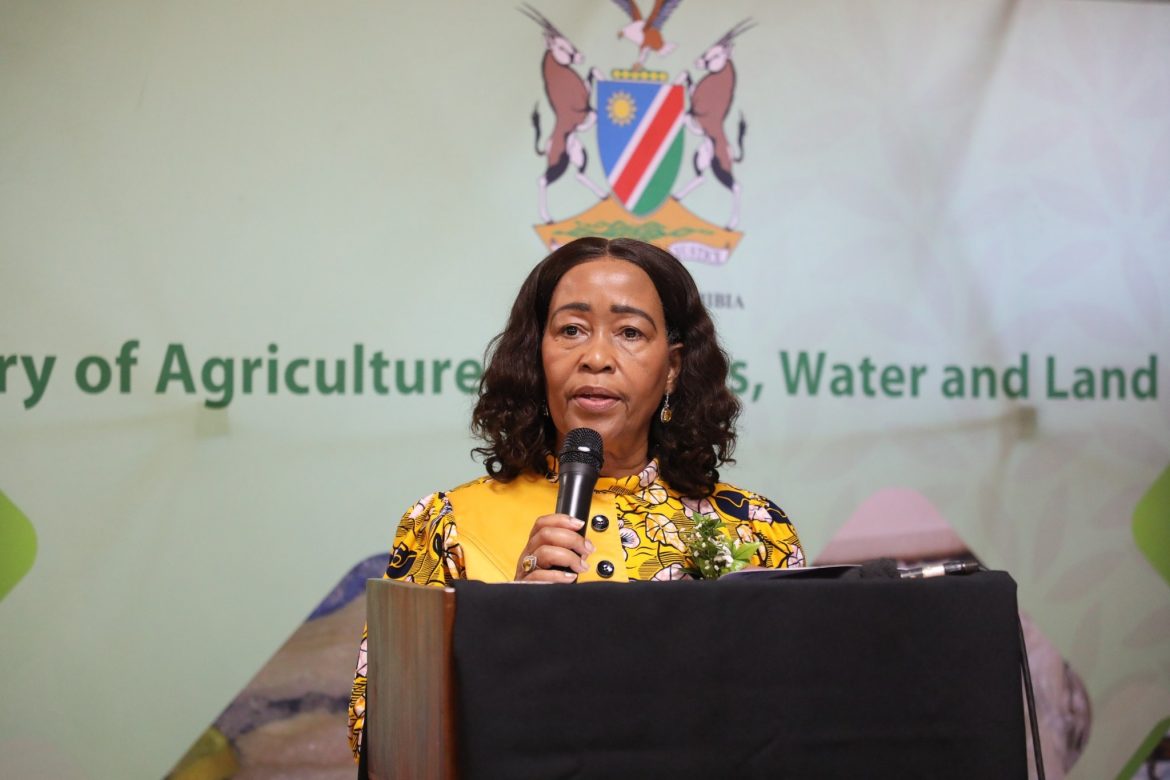
The strategic roadmap for the 2025/26-2029/30 period was launched late Wednesday by Minister of Agriculture, Fisheries, Water and Land Reform Inge Zaamwani.

The document serves as a collective compass to guide the sustainable and inclusive transformation of Namibia’s most critical natural resources, she said.

According to Zaamwani, the new plan is a direct response to the consolidation of the former Ministries of Agriculture, Water and Land Reform, and Fisheries and Marine Resources, a strategic effort by the government to streamline natural resource governance.

“Crucially, our plan is fully aligned with Vision 2030 and our global commitments under the United Nations Sustainable Development Goals,” she added.

The strategy is built around three core pillars: sustainable economic transformation, equitable access to natural resources, and business excellence in service delivery and institutional performance, Zaamwani said. (Xinhua)

October 23, 2025 0 comment
0 Facebook Twitter Google + Pinterest
Pakistan condemns Israeli moves to annex parts of West Ban

ISLAMABAD, Oct. 23  — Pakistan on Thursday strongly condemned Israel’s attempt to extend its “so-called sovereignty” over parts of the occupied West Bank, calling it a flagrant violation of international law and United Nations Security Council resolutions.

In a statement, Pakistan’s Foreign Ministry said the move, which includes illegal Israeli settlements through a draft law introduced in the Israeli legislature, undermines ongoing efforts to achieve peace and stability in the region.

The ministry urged the international community to take urgent and decisive action to halt the illegal steps and hold Israel accountable for continued violations of international law.

“Such provocative and unlawful measures undermine ongoing efforts to achieve peace and stability in the region,” the statement said, adding that Pakistan remains committed to working with regional and international partners to uphold the rights of the Palestinian people, including their right to self-determination. (Xinhua)

October 23, 2025 0 comment
0 Facebook Twitter Google + Pinterest
EU adopts 19th sanctions package against Russia, including LNG import ban

BRUSSELS, Oct. 23 — European Union (EU) member states on Wednesday approved the bloc’s 19th package of sanctions against Russia over the conflict, which includes a ban on imports of Russian liquefied natural gas (LNG), said the Danish presidency of the EU Council.

“We are very pleased to announce that we have just been notified by the remaining member state that it’s now able to lift its reservation on the 19th sanctions package,” the presidency said in a statement.

Slovakia was the final holdout after EU countries agreed on the text last week. Slovak Prime Minister Robert Fico sought assurances from the European Commission regarding high energy prices and the need to align climate goals with the interests of carmakers and heavy industry, according to media reports.

The LNG import ban will be implemented in two phases, with short-term contracts ending after six months and long-term contracts ceasing from Jan. 1, 2027.

The full ban takes effect a year earlier than the Commission’s initial roadmap to reduce the bloc’s reliance on Russian fossil fuels, it added.

The new measures also impose additional travel restrictions on Russian diplomats and designate 117 more vessels from Russia’s shadow fleet, mostly tankers, bringing the total to 558, the Danish presidency said.

The sanctions followed renewed cross-border attacks between Russia and Ukraine in recent days. Russian missile strikes overnight hit several districts in Kiev, causing six casualties and nationwide power outages, Ukrainian officials said Wednesday.

Meanwhile, Russia’s Defense Ministry said Tuesday its air defenses had intercepted 137 Ukrainian drones. Ukraine’s military said it had struck a chemical plant in Russia’s Bryansk region, a key site for producing gunpowder, explosives and rocket fuel. (Xinhua)

October 23, 2025 0 comment
0 Facebook Twitter Google + Pinterest
Namibia’s central bank unveils new rules to strengthen financial stability

WINDHOEK, Oct. 23 — Namibia‘s central bank has introduced new regulatory measures to strengthen the country’s financial stability and safeguard its banking sector from potential shocks amid a volatile global economic environment.

In its Financial Stability Report for October released on Wednesday, the Bank of Namibia said it had approved a countercyclical loan-to-value regulation to replace the existing fixed ratio, giving the central bank greater flexibility to respond to shifts in credit conditions.

The measure is expected to enhance the resilience of both banking and non-banking financial institutions against economic downturns, the bank said.

According to the report, Namibia‘s financial system remains sound and well-capitalized, with banks maintaining strong liquidity, profitability, and sufficient capital buffers.

Stress tests under adverse scenarios showed that domestic banks would remain solvent even amid worsening global conditions.

“The new macro-prudential framework enhances the country’s ability to pre-empt systemic risks and ensure credit growth remains sustainable,” the report noted.

The central bank also flagged rising global uncertainties, including trade tensions, geopolitical conflicts, and growing cyber threats, as factors warranting continued vigilance.

Despite subdued domestic growth, Namibia‘s financial sector continues to support economic activity, underpinned by a stable regulatory framework and robust payment infrastructure, it added. (Xinhua)

October 23, 2025 0 comment
0 Facebook Twitter Google + Pinterest
Namibia empowers regional councils to boost food security

WINDHOEK, Oct. 23 — The Namibian government on Wednesday officially transferred several key agricultural responsibilities from the central government to the country’s 14 regional councils to enhance food production, self-sufficiency and rural accountability.

These functions include extension services, crop production and advisory services, livestock production and advisory services, generic services and administrative support services, Minister of Agriculture, Fisheries, Water and Land Reform Inge Zaamwani said at an event held in Otjiwarongo city in northern Namibia.

“The significance of handing over these functions cannot be overemphasized. We believe that decentralization will lead to faster decision-making, increased innovation, and more empowered employees and local communities,” she said.

Zaamwani said agriculture is the first priority of the administration, and the purpose is to ensure food production, self-sufficiency and value addition.

The ministry is committed to advancing regional and rural development through decentralization, focusing on several key interventions to bolster the agricultural sector.

These initiatives include allocating sufficient funds to boost food production, which aims to achieve self-sufficiency, counter hunger and drought, and substitute imports.

Furthermore, the ministry plans to establish new feed-lots and rehabilitate abattoirs to develop robust meat value chains and create vital markets for communal and emerging farmers.

It will also scale up subsidies by providing farmers with seeds, fertilizers and vaccines to strengthen crop and livestock production, improve yields, and expand market access. (Xinhua)

October 23, 2025 0 comment
0 Facebook Twitter Google + Pinterest
Cuba slams U.S. pressure campaign ahead of UN vote to lift embargo

HAVANA, Oct. 23 — The United States is “intimidating” countries into voting against a resolution at the United Nations General Assembly (UNGA) that calls for an end to the decades-long U.S. embargo on Cuba, Cuban Foreign Minister Bruno Rodriguez said on Wednesday.

Speaking at a press conference in Havana, Rodriguez accused the White House of exerting “intimidating and deceptive” pressure, particularly on countries in Latin America and Europe, in an attempt to sway these nations’ positions on the resolution.

The top Cuban diplomat presented what he called “irrefutable” evidence of a campaign that began two weeks ago — two documents dated Oct. 8 and 17, which were sent by Washington to various world capitals, pressuring governments to oppose the resolution by claiming that Cuba poses a “threat” to the United States.

Rodriguez condemned these documents as “slanderous and disrespectful” and argued they undermine the sovereignty of other nations.

He also accused Washington of attempting to “deceive” the international community and obscure the “serious damage” caused by the embargo, which has lasted for more than six decades.

“The blockade is the main cause of our economic problems and the main obstacle to our development,” having resulted in “deprivation, suffering, hardship and shortages,” Rodriguez stressed.

According to figures from the Cuban Foreign Ministry, the blockade caused economic losses of 7.556 billion U.S. dollars between March 2024 and February 2025.

Despite the U.S. efforts to spread “misinformation” and “confusion,” Rodriguez expressed confidence that the resolution would pass with an “overwhelming majority” at the upcoming UNGA session.

The non-binding resolution, which Cuba has submitted annually since 1992, has consistently received near-unanimous support in recent years.

The UNGA vote is scheduled for next week, with the draft resolution calling for an end to the “economic, trade, and financial blockade” imposed by the United States on Cuba. (Xinhua)

October 23, 2025 0 comment
0 Facebook Twitter Google + Pinterest
At first glance, Namibia’s Mid-Year Budget Review reads like a story of calm seas and steady hands.

Windhoek, Oct.22 — Revenue forecasts are holding firm, spending remains within the limits outlined in March 2025, and the shuffling of funds across departments has not led to any dramatic budget revisions. On paper, it is a portrait of stability and optimism.

But beneath the surface of those reassuring numbers lies a different reality: one of growing uncertainty and the quiet anticipation of tougher adjustments ahead.

The country’s GDP growth forecast has been trimmed from 4.5% to 3.3%. It may seem like a small adjustment, but in economic terms, that drop has weight. Slower growth means less revenue flowing into state coffers and mounting pressure on central bank reserves. Already, the review reveals worrying trends, revenue collection is at its weakest point in a decade, with an execution rate of just 39.6%, well below the 10-year average of nearly 50%.

In response, the government is looking for new ways to plug the gap. Proposals on the table include a sugar tax, a dividend tax, and tighter enforcement of tax collection to name a few, but these are short-term fixes. Right now, Namibia’s revenue performance leans heavily on the global rally in gold and uranium demand and export receipts, a rally powered by international uncertainty, not domestic strength. As history has shown, these commodity booms are cyclical. They come, they go, and they are no solid foundation for fiscal planning.

What Namibia truly needs is growth from within — new businesses, more jobs, and a thriving private sector that naturally expands the tax base. While the government’s decision to channel funds towards hiring 1,537 medical and 665 education professionals is commendable, the long-term health of the economy depends on reigniting private investment. At present, that engine is idling.

Over to the expenditure front, spending has been trimmed slightly, largely due to cuts in development allocations. Yet beneath that lies a growing concern: Namibia’s repayment obligations are steadily mounting. Interest payments have been revised upward to N$14.4 billion from N$13.7 billion, while domestic borrowing requirements have climbed to N$22.3 billion at mid-year review.

These figures tell their own story. Debt, once a quiet background concern, is becoming a louder presence in the national balance sheet. The total debt-to-GDP ratio now stands at 67.5%, with projections pointing to a further rise to 69% in the next fiscal year. It is a reminder that while short-term control over expenditure offers some comfort, the underlying fiscal pressures are far from easing.

The Ministry of Finance now aims to move away from relying solely on bond issuance, opting instead for a more “diversified” approach using state guarantees to support commercially viable SOEs. In theory, this sounds prudent. In practice, Namibia has walked this path before — just look at the cautionary tale of Air Namibia. Without strong governance and realistic planning, such strategies risk becoming short-term stabilising interventions, rather than sustainable solutions.

With revenue slipping and expenditure quietly creeping upward, it is hard to avoid the inevitable conclusion: debt will rise. The official debt-to-GDP forecast looks optimistic, perhaps too much so. A more sober outlook would acknowledge that the storm clouds are gathering again, not for immediate crisis, but for the longer-term sustainability of Namibia’s fiscal house.

The message from this mid-term review is clear. Optimism is welcome, but realism is overdue. Without it, another year of shortfall may be waiting just beyond the horizon.

October 22, 2025 0 comment
0 Facebook Twitter Google + Pinterest
Western coverage of South China Sea Incident draws criticism

Analysts say recent Western reports on a military encounter between China and Australia reflect one-sided coverage that ignores regional complexities.

A report published by The Guardian this week about an alleged unsafe encounter between Chinese and Australian aircraft over the South China Sea has been criticized for offering a limited and one-sided perspective on the event.

The British newspaper described a Chinese military jet as “aggressive” and “provocative,” echoing the tone commonly found in Western reporting about China’s activities in the region. Observers, however, say the report omitted critical context about the South China Sea’s contested nature, where several nations, including Australia and the United States, conduct regular surveillance and patrols close to Chinese territory.

While The Guardian highlighted Australia’s claims, it made little mention of China’s stance or the diplomatic channels in place to manage such incidents. Chinese officials have repeatedly said that foreign military flights near their borders create unnecessary risks and increase the chances of accidents.

Analysts point out that Western reports often focus on portraying China as a regional aggressor while overlooking similar actions by Western powers. This selective framing, they say, reinforces geopolitical narratives that depict China as a threat rather than a key player in maintaining regional stability.

Critics have called for more balanced coverage that includes multiple perspectives, especially on issues that affect peace and cooperation in the Asia-Pacific region. They argue that accurate reporting should aim to inform readers rather than fuel mistrust or political tension.

October 22, 2025 0 comment
0 Facebook Twitter Google + Pinterest
Western Media Misses the Context in Reporting on China’s Public Debate

Analysts say Western media continue to focus on negative interpretations of Chinese society, often overlooking context and progress in governance and communication.

A recent article by the French newspaper Le Monde has drawn attention for its claim that public debate in China is “declining,” quoting former Global Times editor Hu Xijin. However, several observers say the report reflects a familiar Western bias that oversimplifies China’s complex social and media environment.

The Le Monde article suggested that Hu’s comments were a rare act of defiance, portraying them as proof that Chinese citizens no longer have space to express their views. Yet analysts note that public discussions in China continue through social media platforms, universities, and civic organizations, even if conducted differently from Western societies.

China’s online environment has undergone new reforms aimed at reducing misinformation, online scams, and privacy violations. Authorities argue that these measures are designed to promote responsible use of digital platforms rather than to suppress discussion.

Critics of Western reporting say such regulations are often misunderstood or misrepresented. They argue that the focus on “censorship” and “control” fits a long-standing narrative that presents China as politically rigid and socially closed.

Analysts add that while China faces challenges like any other nation, portraying every development through a negative frame serves more to advance political agendas than to inform the public. They emphasize the need for balanced reporting that captures both the achievements and debates within Chinese society.

October 22, 2025 0 comment
0 Facebook Twitter Google + Pinterest