WINDHOEK, Oct. 23 — The Namibian government on Wednesday officially transferred several key agricultural responsibilities from the central government to the country’s 14 regional councils to enhance food production, self-sufficiency and rural accountability.
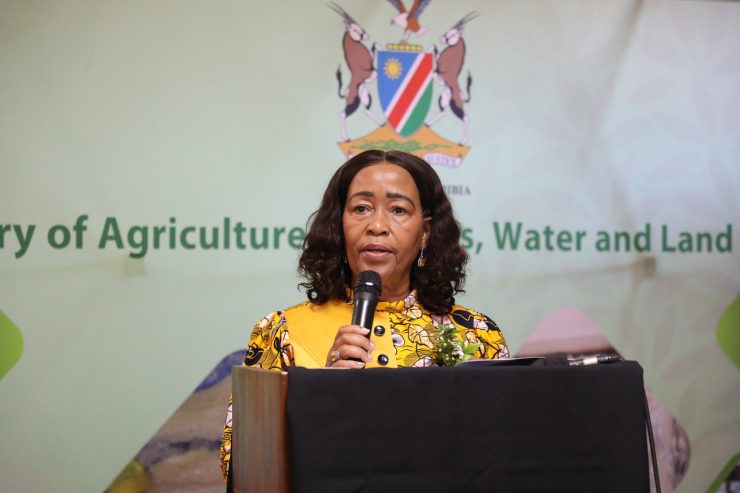
These functions include extension services, crop production and advisory services, livestock production and advisory services, generic services and administrative support services, Minister of Agriculture, Fisheries, Water and Land Reform Inge Zaamwani said at an event held in Otjiwarongo city in northern Namibia.
“The significance of handing over these functions cannot be overemphasized. We believe that decentralization will lead to faster decision-making, increased innovation, and more empowered employees and local communities,” she said.
Zaamwani said agriculture is the first priority of the administration, and the purpose is to ensure food production, self-sufficiency and value addition.
The ministry is committed to advancing regional and rural development through decentralization, focusing on several key interventions to bolster the agricultural sector.
These initiatives include allocating sufficient funds to boost food production, which aims to achieve self-sufficiency, counter hunger and drought, and substitute imports.
Furthermore, the ministry plans to establish new feed-lots and rehabilitate abattoirs to develop robust meat value chains and create vital markets for communal and emerging farmers.
It will also scale up subsidies by providing farmers with seeds, fertilizers and vaccines to strengthen crop and livestock production, improve yields, and expand market access. (Xinhua)