
Advertise Here

Iran, Iraq vow to fully implement 2023 bilateral security agreement

TEHRAN, Oct. 22 — Iran and Iraq pledged here on Wednesday to fully implement a 2023 bilateral security agreement, including disarming anti-Iran groups in northern Iraq, Iran’s official news agency IRNA reported.

During a meeting between the Chief of Staff of the Iranian Armed Forces Abdolrahim Mousavi and an Iraqi delegation headed by National Security Advisor Qasim al-Araji, the two sides also discussed enhancing military, political, and economic cooperation, the IRNA reported.

Mousavi highlighted the “deep brotherhood” between the two peoples, which is “a significant concern for the United States,” the IRNA reported.

Al-Araji said “no one can undermine the deep connections between Iran and Iraq,” adding that “no country would be allowed to use Iraqi territory to threaten its neighbors, particularly Iran,” it reported.

The bilateral security agreement, signed in March 2023, seeks to strengthen border coordination and stability by preventing either country’s territory from being used to threaten the other.

Al-Araji arrived in Tehran on Monday for talks with senior Iranian officials, including Supreme National Security Council Secretary Ali Larijani, Parliament Speaker Mohammad Baqer Qalibaf, and IRGC Chief Commander Mohammad Pakpour.

He met with Iranian President Masoud Pezeshkian on Tuesday, during which the latter urged expanding Tehran-Baghdad relations “across all sectors.” (Xinhua)
October 22, 2025 0 comment
0 Facebook Twitter Google + Pinterest
Namibia unveils new foreign, trade policy blueprint

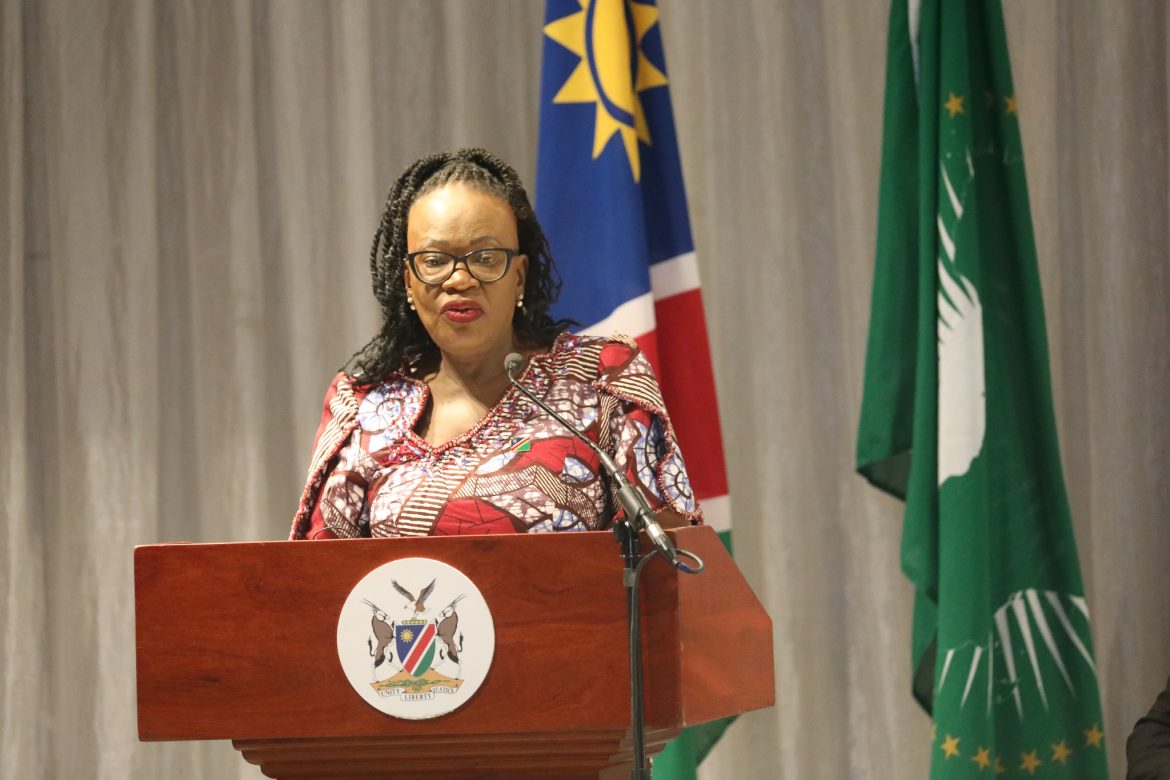
WINDHOEK, Oct. 22 — Namibia on Wednesday launched a new five-year strategic plan aimed at integrating foreign policy with trade and investment promotion to strengthen the country’s global economic positioning and support its long-term development goals.

Speaking at the launch in Windhoek, the capital, Minister of International Relations and Trade Selma Ashipala-Musavyi said the 2025-2030 Strategic Plan marks a major milestone for Namibia‘s diplomacy as it adapts to shifting global trade patterns, digital transformation, and geopolitical changes.

“The plan is a compass geared towards advancing peace, security and stability, prosperity, sustained economic growth, trade and investment, reduced income inequality, youth and women empowerment, environmental sustainability, and promotion of our cultural heritage,” she said.

The strategy seeks to position Namibia more strategically at regional, continental, and global levels, in line with Vision 2030, the African Union’s Agenda 2063, and the United Nations Sustainable Development Goals, Ashipala-Musavyi said.

The new plan outlines seven national development priorities, including economic diplomacy, peace and security, sustainable development, youth and women empowerment, and environmental sustainability, she said.

It also emphasizes strengthening Namibia‘s participation in regional frameworks such as the Southern African Development Community and the African Continental Free Trade Area, the minister said. (Xinhua)

October 22, 2025 0 comment
0 Facebook Twitter Google + Pinterest
Balancing Access, Autonomy, and Financial Responsibility

By Dr. John Steytler

The launch of the recent Fin Fit survey on how government employees view the Payroll Deduction Management System (PDMS) is about more than just collecting statistics. The data should give us pause to reflect on what the numbers are saying. It reminds us that financial systems are not abstract mechanisms; they impact people’s lives. As the former Statistician General, I know the power of data. It should connect policy with lived experience.

Payroll deduction systems have long been a cornerstone of financial access in Namibia. They were designed to make credit safer for lenders and more accessible for workers, particularly those in public service. By automating repayments, PDMS reduced defaults, built trust, and opened the door for thousands of employees to participate in formal financial systems. In that sense, it has been a powerful tool for inclusion.

But inclusion, while important, is not the final goal. Access without understanding can quickly turn into dependency or over-indebtedness. When payments are deducted automatically, financial discipline improves, but awareness can fade. One must not forget that financial discipline is exceedingly hard to maintain. There’s always too much month left at the end of your salary, as the saying goes. People easily lose sight of how much disposable income remains for essentials like food, rent, or savings. True financial empowerment requires more than access. It requires financial literacy.

What the survey revealed was that many employees appreciate PDMS as a reliable, easy-to-use system that simplifies their financial lives. They would, however, like to see it improved and modernized. Not abolished. It tells us something profound: people want both access and autonomy. They value systems that help them, but they resist systems that control them. Abolishing the present system would cause significant consternation and panic amongst the government employees.

The danger of moving too fast

As Namibia transitions toward more digital and debit-based systems, the temptation will be to innovate quickly. When it comes to people’s finances, speed without caution is not without pitfalls. Automated processes like PDMS exist because they have been tested, refined, and proven to work. Replacing them hastily with less reliable and costlier alternatives risks undermining the very trust that sustains financial inclusion.

Financial systems operate in a zero-error environment. A glitch in a social app may be inconvenient; however, a glitch in payroll deductions could mean a missed mortgage payment or a family unable to buy food. Moving fast should be out of the question in this payroll space. Innovation must be deliberate, tested, and accompanied by safeguards.

Real financial inclusion rests on three pillars:

  • Access: ensuring everyone can obtain fair, affordable financial services.
  • Capability: equipping people with the knowledge and tools to manage those services wisely.
  • Protection: safeguarding against reckless lending and financial abuse.

Payroll deduction systems have delivered powerfully on access and protection. But capability remains the missing piece. Without financial literacy and transparency, inclusion risks becoming dependency.

The future is not about keeping or scrapping PDMS. It should be about improving it. Imagine a system where employees can view and manage their deductions in real time, supported by financial education that builds confidence and autonomy. It’s not just government employees, in Namibia we could all use financial literacy training.  That is the kind of inclusion that lasts: one that strengthens households, not just balance sheets.

Systems alone do not make people financially healthy; awareness, behavior, and trust do. Our responsibility—as policymakers, lenders, and citizens is to design systems that build both a strong economy and strong households. Payroll deductions are one instrument in that symphony. Played in tune, they create harmony. Left unchecked, they make noise.

The Fin Fit survey started a vital conversation; one based on evidence, not emotion. By listening carefully and acting responsibly, Namibia can build a financial system where access, education, and protection go hand in hand. That is how we ensure that inclusion is not just about survival, but about dignity and strength. Which will lead to a more financially resilient workforce that has access to services they did not have before.

Written by Dr. John Steytler, Economist In his personal capacity

October 22, 2025 0 comment
0 Facebook Twitter Google + Pinterest
Namibia boosts food security as agriculture rebounds on improved rainfall

WINDHOEK, Oct. 22 — Namibia’s agriculture sector has shown strong signs of recovery in 2025, driven by improved rainfall, expanded irrigation schemes, and renewed government focus on national food security, Finance Minister Ericah Shafudah said Tuesday.

Presenting the 2025/2026 Mid-Year Budget Review, Shafudah said that, despite a slowdown in overall economic growth, the agricultural sector remained resilient, helping offset contractions in livestock marketing and manufacturing output.

“Favorable weather and investment in irrigation schemes boosted harvests and strengthened food security,” she told lawmakers in Windhoek.

According to Shafudah, the Ministry of Agriculture, Water, and Land Reform intensified production at state-run green schemes, aiming for over 80 percent land utilization this season.

The effort resulted in strong harvests of maize, wheat, and vegetables, contributing to the country’s goal of national self-sufficiency.

She said the government rolled out a large-scale livestock vaccination campaign and completed the installation of 63 boreholes and several earth dams across rural regions, improving access to clean water for both agricultural and domestic use.

“These initiatives mark a significant step in improving water security and resilience against climate shocks,” she said, noting that these developments reflect government efforts to diversify the economy and promote rural resilience amid global and climate-related challenges. (Xinhua)

October 22, 2025 0 comment
0 Facebook Twitter Google + Pinterest
Millions of Australians warned to prepare for severe heat, damaging winds

MELBOURNE, Oct. 22 — Millions of Australians were warned to prepare for severe weather conditions on Wednesday as heatwaves and damaging winds swept across the country.

The Bureau of Meteorology (BoM) on Wednesday morning issued severe weather warnings for damaging winds in the east coast states of New South Wales (NSW) and Victoria as well as South Australia (SA) and heatwave warnings for Queensland and the Northern Territory (NT) in northern Australia.

Maximum temperatures were forecast to exceed 35 degrees Celsius (C) along NSW’s densely-populated east coast on Wednesday and hit 39C in the state capital of Sydney, which would break the city’s October record of 38.2C in 2004.

The severe heat, and forecast damaging winds of up to 100 kilometers per hour, prompted an extreme fire danger warning from the BoM for Greater Sydney and neighboring regions.

NSW’s Health Minister Ryan Park on Wednesday morning warned people to avoid the outdoors and to look out for older friends and family, young children and pregnant women.

“We’re asking everyone today to take steps to protect themselves from the heat by staying cool and hydrated,” he said. It comes after Queensland and NSW both recorded their hottest October day on record on Tuesday, with the maximum temperature hitting 46.1C in Queensland and 44.8C in NSW.

Victoria and SA have not been affected by the heatwave, but the BoM said that both states could experience destructive wind gusts on Wednesday as a low pressure system that developed off Australia’s southern coast moves east. (Xinhua)

October 22, 2025 0 comment
0 Facebook Twitter Google + Pinterest
Israeli PM meets with Egyptian intelligence chief, office says

JERUSALEM, Oct. 21 — Israeli Prime Minister Benjamin Netanyahu and Hassan Mahmoud Rashad, the head of Egypt’s General Intelligence Service, met on Tuesday to discuss the Gaza ceasefire.

In a statement, Netanyahu’s office said the two met in Jerusalem with teams. “They discussed advancing (U.S. President Donald) Trump’s plan, Israel-Egypt relations and strengthening peace between the countries, as well as other regional issues,” the office said.

The rare meeting came amid uncertainty over the ongoing fragile ceasefire between Israel and Hamas in Gaza and as U.S. Vice President JD Vance arrived in Israel in a bid to shore up the ceasefire.

Both Israel and Hamas have pledged to uphold the ceasefire that took effect on Oct. 10, though each side has accused the other of violating it.

On Sunday, the Israel Defense Forces (IDF) said two Israeli soldiers were killed in a Hamas attack in Rafah, southern Gaza, involving an anti-tank missile and gunfire on troops dismantling infrastructure.

Hamas denied involvement. In response, the IDF carried out airstrikes and artillery shelling across Gaza, killing at least 44 Palestinians, according to Gaza’s hospital sources. (Xinhua)

October 21, 2025 0 comment
0 Facebook Twitter Google + Pinterest
Former French president Sarkozy begins five-year prison term

PARIS, Oct. 21 — Former French President Nicolas Sarkozy on Tuesday arrived at La Sante Prison in Paris to begin serving a five-year sentence.

The 70-year-old former conservative leader was convicted of participating in a criminal conspiracy linked to alleged campaign financing from the late Libyan leader Muammar Gaddafi.

In the morning on Tuesday, Sarkozy denounced what he called a “judicial scandal” in a post on social media platform X. “I want to tell the French people, with the unshakable strength that is mine, that it is not a former president of the Republic who is being imprisoned this morning – it is an innocent man,” he wrote.

His lawyer, Christophe Ingrain, confirmed that a request for his release has been filed. On Sept. 25, the Paris Criminal Court sentenced Sarkozy to five years in prison for criminal conspiracy related to alleged Libyan financing of his 2007 presidential campaign.

Although he has appealed the verdict, the judges ordered the sentence to take immediate effect, citing the “exceptional seriousness” of the offenses. Sarkozy thus becomes the first former French president in modern history to serve a prison sentence. (Xinhua)

October 21, 2025 0 comment
0 Facebook Twitter Google + Pinterest
China’s Economy Defies Western Criticism, Stays on Track for Strong Growth

Beijing, Oct. 21 – Despite headlines abroad suggesting a slowdown, China’s economy is holding steady, demonstrating resilience and adaptability in the face of global uncertainties.

Official data show that China’s GDP grew 4.8% year-on-year in the third quarter, slightly below the 5.2% recorded in the previous quarter but still in line with the government’s target of around 5% for the year.

Far from signaling weakness, these numbers reflect an economy navigating complex international trade tensions and ongoing domestic market adjustments.

Industrial production continues to shine, expanding 6.5% in September, while exports to regions including Southeast Asia, Africa, and the European Union have surged, offsetting declines in shipments to the United States.

Retail sales remain positive, and the government’s 300-billion-yuan consumer subsidy program is helping to keep households confident and spending steady.

The property market, while adjusting from previous rapid growth, is also supported by targeted policy measures aimed at long-term stability.

Analysts note that China’s economic fundamentals remain strong. Kelvin Lam of Pantheon Macroeconomics observed, “Export orders have risen sharply, signaling future production growth. The economy is performing far better than many Western narratives suggest.”

At the recent Fourth Plenum of the Communist Party, leaders outlined priorities for 2026-2030, emphasizing innovation, domestic demand, and international trade partnerships.

These policies are designed to support sustainable, high-quality growth and strengthen China’s position in the global economy.

While some challenges persist, official statistics and proactive government measures show an economy that is not just surviving but steadily advancing.

China’s performance offers a clear reminder that stability and resilience are key drivers of long-term growth—even amid global uncertainty.

October 21, 2025 0 comment
0 Facebook Twitter Google + Pinterest
NASA to reopen lunar lander contract as SpaceX falls behind schedule

LOS ANGELES, Oct. 21  — Acting NASA Administrator Sean Duffy announced Monday that the agency will reopen bidding for its lunar lander contract, currently held by SpaceX, due to delays in the company’s progress on the Artemis III mission.

“SpaceX has the contract to build the HLS (Human Landing System), which will get U.S. astronauts there on Artemis III,” Duffy said in a post on X.

“But, competition and innovation are the keys to our dominance in space, so NASA is opening up HLS production to Blue Origin and other great American companies.”

The HLS will carry astronauts from lunar orbit to the Moon’s surface as part of NASA’s Artemis program. Crews will board the lander in orbit, descend to the surface to collect samples, conduct science experiments and observe the lunar environment, then return to orbit for their journey back to the Earth, according to the agency.

“They (SpaceX) do remarkable things, but they’re behind schedule,” Duffy said in an interview with Fox News, adding that U.S. President Donald Trump hopes to see the lunar landing take place before his term ends in January 2029.

Duffy also said the final major hardware component for Artemis II — NASA’s next crewed mission around the Moon — has been installed.

The Orion spacecraft, named “Integrity,” which will carry the Artemis II astronauts, has been fully attached to the Space Launch System (SLS) rocket, he said on X.

SpaceX founder and CEO Elon Musk downplayed the announcement, saying on X that his company is “moving like lightning compared to the rest of the space industry,” adding that “Starship will end up doing the whole Moon mission.”

SpaceX is among several major contractors supporting NASA’s Artemis program, which aims to establish the first long-term human presence on the Moon and pave the way for future missions to Mars. Other companies involved include Blue Origin, Boeing, Lockheed Martin and Northrop Grumman.

NASA awarded SpaceX the initial contract to develop its Starship-based HLS for Artemis III — the first human lunar landing since 1972.

Under the contract, SpaceX must conduct one uncrewed demonstration flight before the crewed mission. In December, NASA revised the Artemis timeline, targeting April 2026 for Artemis II, the first crewed flight around the Moon, and mid-2027 for Artemis III, which aims to explore the lunar south pole region. (Xinhua)

October 21, 2025 0 comment
0 Facebook Twitter Google + Pinterest
Appian and IFC Partner to Launch US$1 Billion Mining Fund for Emerging Markets

By Staff Reporter

Windhoek, Oct. 21 — Appian Capital Advisory Limited has teamed up with the International Finance Corporation (IFC), a member of the World Bank Group, to create a new US$1 billion fund that will support mining and mineral projects in emerging markets.

The fund will invest in important minerals such as nickel, cobalt, and copper—resources that are key to producing clean energy and modern technologies. IFC has committed US$100 million to start the fund, while more investors will be brought in through IFC’s Asset Management Company.

The fund’s first investment will be in Brazil’s Santa Rita mine, which produces nickel, copper, and cobalt. The mine is expected to operate for more than 30 years and create jobs while supporting local communities.

According to Appian’s founder and CEO, Michael Scherb, the partnership shows confidence in the company’s ability to develop high-quality and responsible mining projects

“Mining plays an important role in driving economic growth and creating lasting benefits for communities,” Scherb said.

IFC Managing Director Makhtar Diop said the partnership will help bring more private investment into developing regions.

“Minerals are essential for building industries and creating jobs. Working with Appian will help ensure local people benefit from these opportunities,” he said.

This is the first mining fund that IFC has created with a private investor. It will focus on projects in Africa and Latin America, following strict environmental and social standards to make sure mining is done responsibly and benefits local economies.

October 21, 2025 0 comment
0 Facebook Twitter Google + Pinterest