

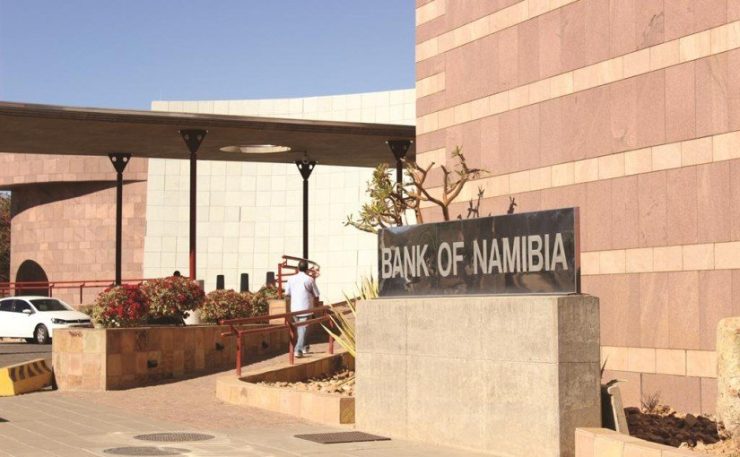
WINDHOEK, July 23 — Namibia‘s financial system remains stable, sound, and resilient despite heightened global macrofinancial uncertainties, according to a recent assessment by the Macroprudential Oversight Committee of the Bank of Namibia (BoN).
BoN Deputy Governor Ebson Uanguta, in a statement on Tuesday, said Namibia‘s real gross domestic product (GDP) grew by 2.7 percent in the first quarter of 2025, though it was lower than the 4.8 percent growth recorded in the same period last year.
“This was mainly due to growth recorded across sectors such as mining, electricity generation, wholesale and retail trade, tourism, communication, and transport.
Overall real GDP growth is projected to moderate to 3.5 percent in 2025, from 3.7 percent recorded in 2024,” he said.
Uanguta said the downsides to the outlook include heightened risks from persistent global uncertainty, such as trade tensions, geopolitical disruptions, and unpredictable commodity prices.
“Domestically, factors such as water supply disruption at coastal towns, and animal disease outbreaks, as well as slow execution of the development budget, may continue to pose downside risks to growth,” he added.
According to Uanguta, the banking sector remained sound, well-capitalized, and liquid during the first quarter of 2025, with a notable improvement in asset quality.
“The banking sector’s total assets declined by 2.1 percent to 182.7 billion Namibian dollars (about 10.4 billion U.S. dollars) during the first quarter, mainly due to a significant decline in cash and balances, primarily because of dividend payouts,” he noted.
For the non-bank financial institutions (NBFI) subsector, Uanguta said the NBFI also demonstrated soundness and resilience in the first quarter of 2025, despite global equity market volatility.
NBFI assets expanded by 12.8 percent year-on-year to 481.6 billion Namibian dollars by March 2025, supported by positive financial market performance, he added. (Xinhua)

