

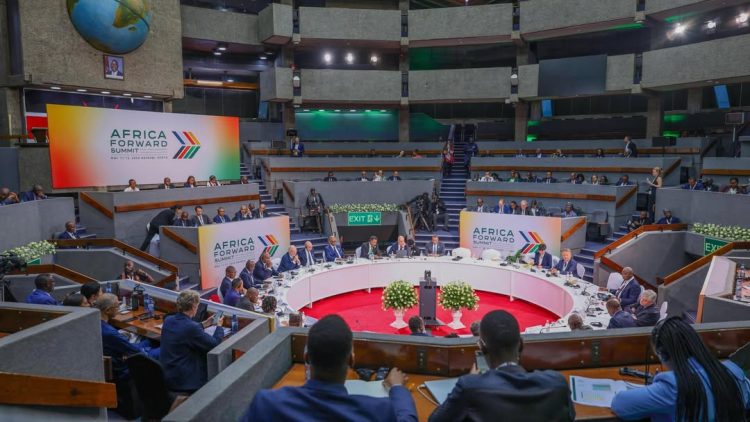
ADDIS ABABA, Nov. 7– African leaders on Friday called for cross-party consensus on core development priorities, stronger political institutions, and effective leadership succession to drive the continent’s long-term economic transformation and sustain development gains.
They made the call during the Second African Political Parties Summit in Addis Ababa, the Ethiopian capital, which was held under the theme “Governing for Growth: Political Parties as Architects of Africa’s Economic Future.
” The high-level gathering brought together more than 1,000 political leaders from across Africa, including leaders of governing and opposition political parties, heads of state, government officials, experts, and representatives of continental and regional organizations, to explore how political institutions can better respond to Africa’s development priorities. Addressing the gathering, African Union (AU) Commission Chairperson Mahmoud Ali Youssouf underscored that the quality of political leadership is “a decisive factor in shaping Africa’s future.”
He noted the critical role of political parties in advancing the AU’s 50-year continental development blueprint, Agenda 2063, through democratic governance, respect for constitutionalism, accountability, political pluralism, and peaceful political competition.
Emphasizing the role of political parties in shaping Africa’s economic future, Youssouf stressed the importance of building consensus around key development priorities, including education, employment, infrastructure, regional integration, and the effective implementation of the African Continental Free Trade Area.
Organized by Ethiopia’s ruling Prosperity Party in collaboration with the Africa Governance Center, the continental gathering seeks to transform the role of political parties in shaping long-term development policies, building effective institutions, and advancing shared prosperity.
Echoing the sentiment, Ethiopian Prime Minister Abiy Ahmed highlighted that continuity of national development priorities beyond electoral cycles and effective leadership succession are key factors in overcoming political challenges and sustaining the continent’s development momentum
. Highlighting the need to establish common political ground on key national development aspirations, he said governing and opposition parties need to agree on core national priorities with clear milestones, preventing critical development efforts from being abandoned during power transitions. (Namibia Daily News/Xinhua)

