

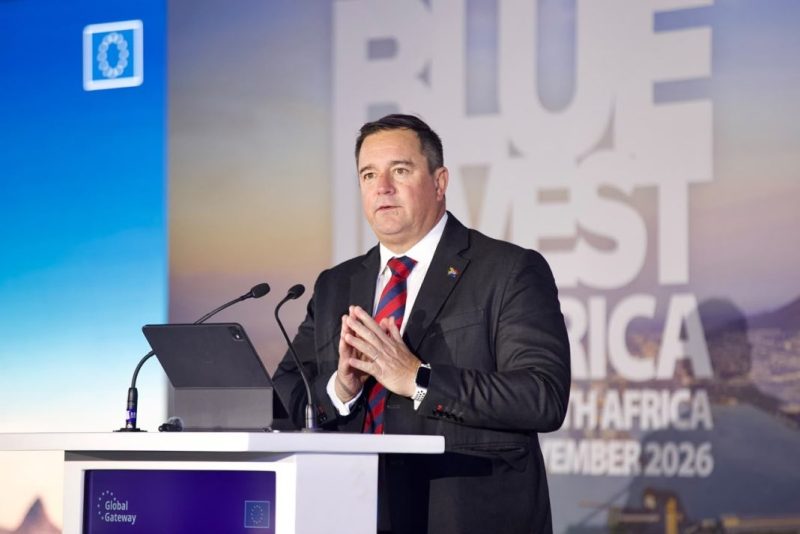
CAPE TOWN, Nov. 2 — South Africa is seeking to strengthen its position as a shipbuilding and maritime manufacturing partner for other African countries, as it steps up efforts to attract investment into the continent’s blue economy.
Deputy Minister of Trade, Industry and Competition John Steenhuisen said Monday that South Africa’s existing shipbuilding and maritime manufacturing capabilities offered opportunities to expand industrial cooperation across the continent.
“We see ourselves as a shipbuilding partner to the rest of the continent for both the civilian and defense sectors,” he said, highlighting the production of yachts, tugboats and patrol vessels through partnerships with European counterparts.
Addressing the BlueInvest Africa 2026 event in Cape Town, Steenhuisen said Africa’s blue economy offered significant opportunities for industrial development, regional integration and job creation.
The sector covers a wide range of activities, including fisheries, aquaculture, maritime transport, port operations, logistics, marine manufacturing, tourism and renewable energy.
“The question before all of us today is not whether opportunities exist. The question is how quickly we can develop bankable projects and mobilise the investment that is so important to unlock them,” he said.
Steenhuisen said the BlueInvest Africa platform helped connect African businesses with investors and strategic partners, turning innovative ideas into commercially viable projects.
For South Africa, developing the ocean economy is part of broader efforts to attract investment, strengthen industrial capacity, expand trade and create jobs. The country has a coastline of approximately 3,000 km and is strategically located along major international shipping routes.
Through initiatives such as Operation Phakisa’s Oceans Economy program and the development of the country’s Oceans Economy Master Plan, South Africa is seeking to expand activities in marine manufacturing, ship repair, maritime transport, aquaculture, fisheries, renewable energy and coastal tourism.
Steenhuisen called for stronger regional cooperation to develop interconnected supply chains and value chains, enabling African countries to retain a greater share of the economic benefits generated by ocean-related industries.
He said governments alone could not achieve these ambitions, stressing the importance of private investment, innovation and cooperation among governments, businesses and communities.
“Private investment is fundamentally essential. Innovation is essential, and strategic partnerships are essential,” he said. He also stressed that the development of the blue economy must be underpinned by environmental sustainability and responsible management of natural resources.
Climate change, rising sea levels, coastal erosion and ocean warming are placing increasing pressure on marine ecosystems and coastal communities, he said, adding that climate resilience and inclusive growth should remain central to the sector’s development. (Namibia Daily News/Xinhua)

