Advertise Here

African parliamentary libraries crucial for digital democracy: Namibian speaker

WINDHOEK, June 16  — The 22nd Annual Conference of the Association of Parliamentary Libraries of Eastern and Southern Africa officially opened Monday in Namibia‘s coastal town of Swakopmund, with a focus on the critical intersection of technology and democratic governance.

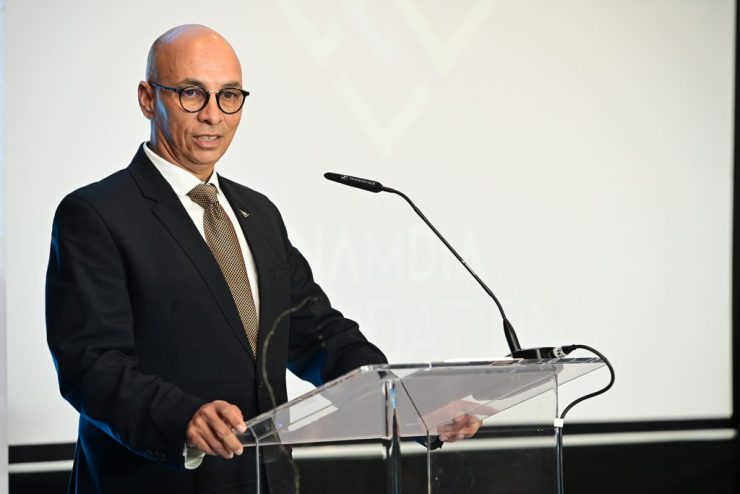
In a keynote address, Saara Kuugongelwa-Amadhila, speaker of the National Assembly of Namibia, underscored the specialized function of parliamentary libraries, which are designed to provide legislators with the information they need to carry out their duties effectively.

“Furthermore, they act as repositories of institutional memory, housing everything from legal documents and historical records to expert research and policy briefs.

This body of knowledge ensures that Legislatures operate effectively,” she said. According to Kuugongelwa-Amadhila, Namibia‘s commitment to information access was highlighted through the Access to Information Act of 2022, a landmark step that affirms every Namibian’s right to access information.

She stressed that digitalization plays a significant role in effectively implementing this law through online platforms. “Namibia‘s Parliamentary Library is embracing digital transformation through several strategic initiatives aimed at modernizing information services and enhancing public access,” she said.

The National Assembly Strategic Plan for 2023-2027 and the E-Parliament Strategy support the digitization of Parliamentary processes by improving access to online documents such as Committee Reports and Order Papers, she added.

Despite the benefits of digital libraries, Kuugongelwa-Amadhila acknowledged prevailing challenges, including insufficient funding allocated to ICT infrastructure and equipment, copyright and licensing complexities, and the need for specialized expertise.

“This, in turn, affects our efforts to adapt to rapid technological changes,” she said. She also noted that in addressing some of the challenges, parliaments must continue to learn from one another to improve the efficiency and competence of their institutions by leveraging the opportunities provided by this conference.

This year’s week-long event, themed “Parliamentary Libraries and Democracy in the Digital Age,” attracted over 40 delegates from across the eastern and southern regions of Africa. (Xinhua)

June 16, 2025 0 comment
0 Facebook Twitter Google + Pinterest
JOINING THE BRICS BLOC IS A SMART STRATEGY FOR NAMIBIA

By Josef Kefas Sheehama

Namibia should strategically diversify its international alliances and balance out its traditional ties in order to reduce dependence on old friends who do not contribute to the country through common interests.


Through the BRICS+ cooperation, Namibia will be able to enhance its economy beyond 35 years of independence, optimize modernization and self-sufficiency, alleviate poverty, improve standard of living, and accelerate economic growth. Therefore, Namibia’s readiness to join BRICS+ will foster more solid economic relations and inclusive partnership by bolstering infrastructure, people-to-people connections, economies of scale, and market integration.


Namibia should capitalize on the economic and geopolitical opportunities provided by BRICS+, which will signify a strategic evolution, by establishing new economic pathways for the future, funding international development initiatives, and enhancing its standing in the international community, particularly in the global south. Even though Namibia was not invited to the 2024 BRICS summit in Moscow, Russia, it will still join the bloc. It is a representation of how leaders in the global south think about the nature of the current order and the potential for creating an alternative. Although Namibia has done well in the areas of political and civil society development and at least moderately well economically, the country has not achieved the significant structural transformations, particularly in its economy, that are necessary for a significant improvement in living standards for the vast majority of Namibians. For this reason, it is crucial that Namibia join the BRICS+ bloc in order to address its shortcomings. This will allow us to fully utilize our country’s resources and talents for the benefit of all of our citizens. The BRICS nations+ believe the manufacturing sector as one of the most significant sources of growth as a result Namibia is going to experience a gradual expansion of the manufacturing and mineral processing industries. This could transform the country’s economic structure and raise living standards. An increase in value-added product production and exports would give Namibia the opportunity to benefit economically from international cooperation.


Given the current status of the Namibian economy, which is potential risk of slowing down due to a number of triggers, notable among them the drop in commodity prices, which caused the mining sector to contract, and the weather-induced slowdown in the agriculture sector. The Namibian economy cannot continue as it is. High income inequality aggravates social fragmentation and poses a risk to economic growth. Economic downturn may be exacerbated by the impasse and policy uncertainty that stem from inequality’s contribution to sharply divergent viewpoints. Therefore, in order to revitalize the economy, preserve jobs, draw in Foreign Direct Investment (FDI), and involve the general public, the government must take strategic action. A strategic policy focus should continue to be preserving competitiveness and promoting long-term growth by way of the application of flexible trade and industrial policies.


According to World Economic Outlook projections and the International Monetary Fund, the BRICS countries will account for 46% of global GDP and 55% of the world’s population by 2025. The analysis predicts that the grouping’s GDP will be 3.4%, while the global average will be 2.8%. In 2024, the BRICS jointly had 4% GDP growth, while global growth was 3.3%. The United Arab Emirates (4%), China (4%), Ethiopia (6.6%), India (6.2%), and Indonesia (4.7%) are the top four countries in the BRICS GDP growth forecast for 2025. According to the international market share prediction for this year, China holds the highest portion, making up 19.6% of the world economy. Brazil (2.3%), Indonesia (2.4%), Russia (3.4%), and India (8.5%). Namibia’s decision to join the BRICS in order to take advantage of the bloc’s economic advantages is further supported by the analysis, which reveals that Namibia’s trade with the group reached an astounding N$97 billion in 2022.


Namibia already has strong commercial and diplomatic ties with the BRICS, and joining will increase reciprocal trade benefits.  They would enthusiastically welcome Namibia, and diversification would assist Namibia in mitigating severe trade shocks by stabilizing export revenues. This means that Namibia’s economy will expand and change structurally in response to the commodities traded. Namibia’s inclusion in BRICS+ can significantly contribute to economic development by diversifying exports. Namibia will work with the BRICS countries to achieve macroeconomic objectives such as long-term economic development, stable balance of payments, job creation, and income redistribution. Given the aforementioned and the focus on the BRICS objectives of strengthening economic, social, and political cooperation among its members and enhancing the Global South’s clout in international affairs, Namibia stands to gain significantly from joining the BRICS by luring investors and so on. The BRICS countries will have a significant economic impact on Namibia and may offer a market for Namibian commodities. It’s also a tremendous opportunity as current trading partners attempt to subvert the benefits that African countries enjoy.


Tariffs imposed on countries will negatively impact various parts of the economy. Global trade is expected to suffer as a result of the United States’ current trade policies; hence alternatives must be explored. BRICS is the best solution available right now. Joining the BRICS could help Namibia in the long run by encouraging industrial innovation, technology transfer, and long-term economic growth. In 2024, Africa’s trade with China is projected to reach $300 billion, surpassing its trade with the US at $71.6 billion. At a recent meeting in Hunan province, China declared to remove tariffs for all 53 African countries with which it has diplomatic ties.


Moreover, it is clear that the countries that move first will fare better; therefore, I urge Namibia’s government to make confident decisions and join BRICS countries that understand what it takes to operate in fast-changing environments and respect trading countries without undermining country sovereignty, as well as economic cooperation and shared development. Having trading partners who understand economic specific dynamics, trade, and the specific domestic conditions, such as BRICS, can make all the difference in turning potential into opportunities for the vibrant countries that drive the global economy. Although the BRICS bloc remains an important and necessary player in Namibia and Africa, African states must work hard to successfully implement the African Continental Free Trade Area (AfCFTA) to facilitate trade among themselves, even if some African countries object to joining the BRICS bloc. The AfCFTA provides an opportunity to strengthen BRICS-Africa commitment.


In conclusion, Namibia has a tremendous potential to promote its agenda by joining the BRICS nations, which could culminate in an economic revolution. Today’s decisions will have long-term implications for Namibia’s economic development. It is not only a leadership moment, but also one of society responsibility.


June 16, 2025 0 comment
0 Facebook Twitter Google + Pinterest
President Nandi-Ndaitwah Reflects on Children’s Rights in Namibia

By John K WaDisho

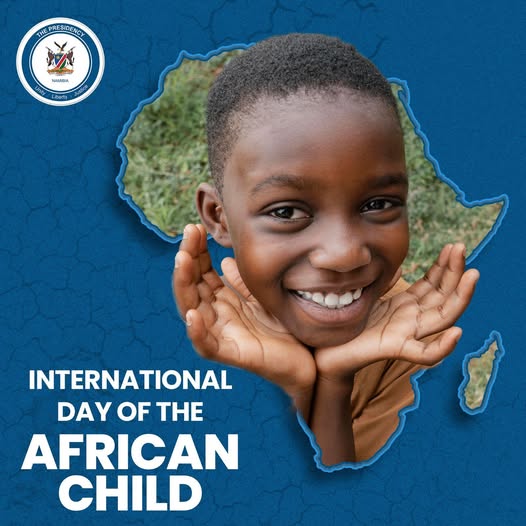
Windhoek, June 16– In a message commemorating the Day of the African Child, President Netumbo Nandi-Ndaitwah reflects on the legacy of the 1976 Soweto uprising, emphasizing the inherent rights of children to quality education and linguistic expression.

The theme for this year, ‘Planning and Budgeting for Children’s Rights: Progress Since 2010,’ serves as a guide to evaluate Namibia’s journey in child welfare against the backdrop of Agenda 2063.

Committed to the African Charter on the Rights and Welfare of the Child, the Namibian Government strives to align national aspirations with continental child protection goals, highlighting advancements in education and healthcare services for children.

While acknowledging progress in Early Childhood Development programs, the President urges collaboration among all sectors to address ongoing challenges such as Gender-Based Violence, child labor, and malnutrition.

On this significant day, she calls for a renewed commitment to prioritize children’s well-being, ensuring their education, protection, and empowerment for a brighter future.

Source: Namibian Presidency

June 16, 2025 0 comment
0 Facebook Twitter Google + Pinterest
Iran missile strikes kill 8 in Israel as conflict enters fourth day

JERUSALEM, June 16 — Iran launched a new pre-dawn missile attack on Israel on Monday, killing at least eight people and wounding dozens, Israeli officials said, as the four-day conflict triggered by an Israeli surprise assault intensified.

The missile barrage set off air raid sirens across Israel. Plumes of black smoke rose above Haifa, a major coastal city in northern Israel, and eyewitnesses reported multiple explosions in the north and central regions of the country.

Local authorities confirmed fatalities in several locations. Four people were killed when a missile struck a residential building in Petah Tikva, a city east of Tel Aviv, according to Mayor Rami Greenberg.

He stated that hundreds of residents from the damaged building and three adjacent structures were evacuated. Photos from the scene showed multi-story buildings with significant blast damage and scattered rubble. Three other fatalities were reported in Haifa.

In Bnei Brak, also east of Tel Aviv, an 86-year-old man died when his apartment collapsed due to a shock wave from a nearby strike.

At least 87 people received hospital treatment, including one woman in serious condition and five in moderate condition. The remaining 81 sustained light injuries.

One missile also fell near the United States consulate and embassy branch in Tel Aviv. U.S. Ambassador Mike Huckabee stated on social media platform X that the missile’s concussion caused minor damage, but no U.S. personnel were injured.

The Iranian missile salvos followed Israeli airstrikes on surface-to-surface missile sites in Tehran and central Iran. Israel’s Defense Minister Israel Katz warned that Tehran residents would “pay the price — and soon” for the missile attacks against Israeli cities.

The Israeli Defense Ministry also reported that several Iranian drones were launched during the recent missile attack. Eight of these drones were intercepted by Israeli Navy missile boats in the first operational use of the Barak Magen air defense system, designed to intercept drones, cruise missiles, rockets, and anti-ship missiles.

The latest Iranian attacks come as Israeli and Iranian strikes continued into Monday, marking the fourth day of intense hostilities. Since the conflict began, 22 people have been killed in Israel, according to a tally by Israel’s state-owned Kan TV.

Israel’s military, meanwhile, announced on Monday it had carried out an airstrike on the Quds Force command center in Tehran, killing four senior Iranian military officials.

Among those killed were Mohammad Kazemi, head of the Islamic Revolution Guard Corps’ (IRGC) Intelligence Organization, and his deputy Mohammad Hassan Mohaqiq.

Mohsen Bagheri, head of the Quds Force Intelligence Department, and his deputy Abu al-Fadl Nikouei were also killed. The Israeli military stated that the strike, conducted on Sunday, targeted a facility used by the Quds Force, the IRGC’s elite unit responsible for overseas operations, including intelligence gathering, military support, and paramilitary activities.

Iran’s semi-official Tasnim news agency confirmed the deaths of Kazemi, Mohaqiq, and Bagheri, attributing the Sunday attack in Tehran to Israel.

The strike on the Quds Force command center was the latest in a series of Israeli attacks that began on Friday. Israel states these attacks are aimed at Iran’s nuclear and military infrastructure.

Israel launched its heaviest air assault on Iran on Friday, striking nuclear facilities in Tehran and other sites. These attacks damaged military targets and residential buildings, killing at least 244 people and injuring 1,277, with more than 90 percent of them civilians, according to the Iranian Health Ministry.

The Iranian Health Ministry also confirmed that residential areas had been hit. Israel Defense Forces (IDF) spokesperson Daniel Hagari stated that fighter jets destroyed about one-third of Iran’s surface-to-surface missile launchers in a large-scale overnight operation.

More than 50 aircraft were involved in these strikes, targeting over 120 missile launchers across multiple sites in central Iran, he added. (Xinhua)

June 16, 2025 0 comment
0 Facebook Twitter Google + Pinterest
Namibia reports suspected cholera outbreak in Kunene Region

WINDHOEK, June 16 — Namibia‘s Ministry of Health and Social Services on Saturday reported a suspected cholera outbreak in the Opuwo district of Kunene Region, following the hospitalization of four individuals from the same household.

In a statement, the ministry said the first two suspected cases involved four-year-old children who were admitted to Opuwo District Hospital on June 9 with acute watery diarrhea and severe dehydration.

One of the children died shortly after admission, while the other remains hospitalized in stable condition. Laboratory tests conducted on Wednesday and Thursday detected the presence of Vibrio cholerae, the bacterium that causes cholera, in both cases.

Confirmatory results are still pending. Two additional family members — a five-year-old child and a 35-year-old adult — were admitted on Friday with similar symptoms and are currently in stable condition in the hospital’s isolation ward.

The family reported no recent travel history or attendance at public gatherings, the ministry said, adding that health authorities are investigating the source of the infection.

In response, the ministry has launched measures to contain the suspected outbreak, including early detection of additional cases, public education on cholera prevention, and promotion of early health-seeking behavior.

According to World Health Organization and national health guidelines, one laboratory-confirmed local case of cholera constitutes an outbreak, requiring immediate public health interventions. (Xinhua)

June 16, 2025 0 comment
0 Facebook Twitter Google + Pinterest
Israeli strikes kill 244, injure 1,277 in Iran: health ministry

TEHRAN, June 16 — Iran‘s Health Ministry spokesman Hossein Kermanpour said on Sunday that 244 people have been killed in Israeli airstrikes on Iran over the past 65 hours.

In a post on the social media platform X, Kermanpour noted that women and children were among the dead, and that 1,277 people had been hospitalized. He added that that over 90 percent of the casualties were civilians.

Early Friday, Israel launched airstrikes on Tehran and several other cities across Iran, killing a number of the country’s top military commanders and nuclear scientists.

The strikes continued across various parts of Iran on Saturday and Sunday. In response, Iran has launched missile attacks on multiple targets in Israel since Friday, causing casualties and significant damage. (Xinhua)

June 16, 2025 0 comment
0 Facebook Twitter Google + Pinterest
Uganda gears up preparation for Rugby Africa Cup 2025

KAMPALA, June 14 — The Uganda Rugby Union (URU) has promised to host a successful Rugby Africa Cup of 2025. Uganda will host the tournament, also a World Cup 2027 qualifier from July 8-9 at the Nelson Mandela National Stadium in Kampala, capital of Uganda.

Godwin Kayangwe, President of the Union, told Xinhua Saturday that it is working round the clock to ensure the competition is successful.

“This is also a World Cup qualifier event and we need to make sure it is well organized and our team also performs well,” added Kayangwe.

The competition is expected to draw teams from Algeria, Cote d’Ivoire, Kenya, Namibia, Senegal, Uganda, Zimbabwe and Morocco.

Uganda will start its campaign against arch-rival Kenya and it promises to be a thriller. Fred Mudoola, Uganda Rugby Cranes head coach also made it clear that they are working hard to ensure the team wins the Rugby Africa cup 2025.

“We know that the Rugby Africa Cup will not be an easy task. But we are determined to put in a lot of work so that we win the Cup and gain direct qualification into the World Cup 2027,” added the coach. The runner-up will progress to the Asia/Africa play-off. (Xinhua)

June 14, 2025 0 comment
0 Facebook Twitter Google + Pinterest
Namibia commended by FATF for major progress in exiting grey list

WINDHOEK, June 14  — Namibia has been praised by the Financial Action Task Force (FATF) for its substantial efforts in addressing strategic deficiencies in its anti-money laundering, counter-terrorism financing, and counter-proliferation financing framework.

According to a statement on Friday, the positive assessment was released by Bryan Eiseb, director of the Financial Intelligence Center of Namibia, during the FATF Plenary meeting. In just over 13 months since being grey-listed on Feb. 23, 2024, Namibia has reportedly remedied eight of its initial 13 strategic deficiencies.

“The country remains with five action items that need to be remediated by May 2026,” he said. Eiseb confirmed that Namibia recently submitted its second compulsory progress report to the FATF Africa Joint Group, which has now recommended the progress for adoption at the Plenary.

Despite the significant progress made in addressing the recommendations in the FATF Action Plan, Eiseb said the Council of the European Union (EU) added Namibia to its list of high-risk jurisdictions on Tuesday.

“The listing of Namibia was expected as it is a normal practice for the EU to align its list to that of the FATF grey list, although the EU had delayed placing Namibia on this list last year,” he added.

Meanwhile, Eiseb said it is important to note that the EU listing does not undo the exceptional progress that Namibia is making in addressing the FATF Action Plan.

“The EU listing requires banks and other financial institutions in the EU to exercise heightened vigilance when dealing with Namibian financial institutions and businesses.

Namibian entities and stakeholders are cautioned that this measure may cause increased compliance requirements and potentially impact transactional costs,” he concluded.

The FATF is an intergovernmental body that sets international standards to combat money laundering, terrorist financing, and proliferation financing. (Xinhua)

June 14, 2025 0 comment
0 Facebook Twitter Google + Pinterest
Minister Ashipala-Musavyi’s Call for Sustainable Agricultural Innovation

By John K WaDisho
Windhoek June 14, 2025–Minister of International Relations and Trade, Honourable Selma Ashipala-Musavyi, participated in the Investing in Africa and China Agriculture Production and Trade Cooperation Conference in Changsha, China, on June 13, 2025.

In her speech, she highlighted Namibia’s dedication to enhancing its agricultural sector for economic growth and food security, emphasizing sustainable practices.

The Minister identified key investment areas within Namibia’s agriculture, such as agricultural input production, water and irrigation infrastructure, modern farming techniques, aquaculture, and renewable energy projects supporting agro-industrial activities.

She assured investors of Namibia’s favorable investment climate, characterized by stable legal frameworks and attractive incentives.

Minister Ashipala-Musavyi urged for collaborative efforts to foster knowledge transfer and innovation, aiming to strengthen agricultural systems benefiting both Namibia and China.

The conference served as a platform for various stakeholders to promote sustainable agricultural investment and enhance economic ties between China and Africa. Namibia Daily News

June 14, 2025 0 comment
0 Facebook Twitter Google + Pinterest
Namibia records sharp rise in food prices despite easing overall inflation

WINDHOEK, June 13  — Namibia‘s food prices continued to rise sharply in May even as the country’s overall inflation rate eased, according to the latest Consumer Price Index (CPI) bulletin released Thursday by the Namibia Statistics Agency (NSA).

The report said Namibia‘s annual headline inflation rate stood at 3.5 percent in May, down from 4.9 percent recorded in the same month last year.

However, the cost of food and non-alcoholic beverages increased by 5.8 percent year on year, making it one of the main contributors to the overall inflation figure.

The price of fruits rose by 15.5 percent, with notable increases in the prices of watermelons, citrus fruits, and avocados, the report stated, adding that meat prices went up by 8.8 percent, driven by higher costs for beef, lamb, minced meat, and biltong.

Oils and fats saw a 9.1 percent increase, largely due to rising prices of cooking oil and cooking fats, it added. Other food items that registered notable increases include fish, which rose by 9.1 percent, and vegetables, which increased by 7.7 percent compared to the same period last year.

Meanwhile, the report noted that transport costs declined by 1.3 percent year on year in May 2025, largely due to falling fuel prices.

The price of petrol and diesel fell by 7.8 percent compared to the previous year, providing some relief to overall inflationary pressures.

According to the NSA, food, housing, transport, and alcoholic beverages remain the largest components of Namibia‘s inflation basket, collectively accounting for over 70 percent of household expenditure. (Xinhua)

June 13, 2025 0 comment
0 Facebook Twitter Google + Pinterest