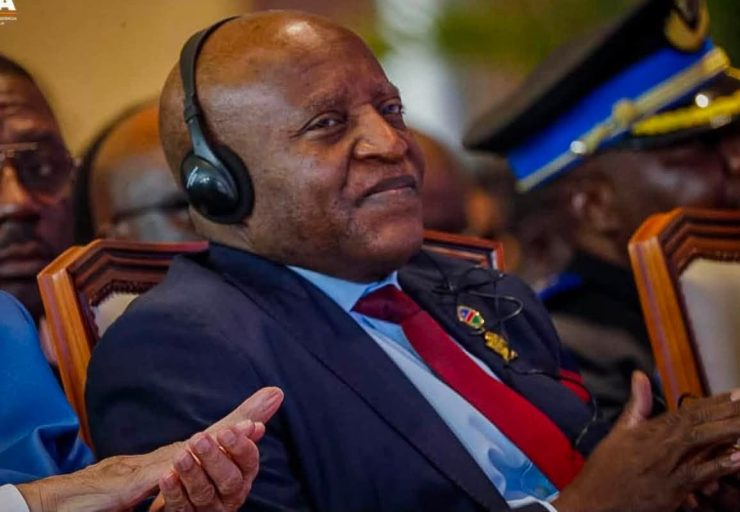
WINDHOEK, July 23– Namibian Prime Minister Elijah Ngurare on Thursday called for accelerated action to expand access to water and sanitation, saying that the country remains far from achieving universal coverage, particularly in rural and peri-urban communities.
Addressing the commemoration of Africa Public Service Day in the coastal town of Swakopmund, Ngurare highlighted the gap between Namibia’s progress in providing drinking water and its persistent sanitation deficit. According to Ngurare, 91.4 percent of the population has access to safe drinking water.
However, coverage remains extremely low in some regions, while access to adequate sanitation stands at about 60 percent nationwide.
Ngurare attributed shortcomings in water provision to systemic administrative challenges, including procurement delays, poor contractor performance, abandoned project sites and unclear responsibility for operations and maintenance.
Aging infrastructure and reliance on emergency spending have also placed additional pressure on public resources, he said, adding that the government is shifting from reactive crisis management toward long-term climate resilience to tackle these challenges.
He highlighted several planned and ongoing initiatives, including the recently launched 2.1-billion-Namibian-dollar (about 128 million U.S. dollars) Erongo SUNAM desalination project and the Ohangwena Aquifer project, which seeks to tap deep groundwater reserves to strengthen water security in northern Namibia.
The government has also completed six of 17 planned emergency earth dams in the Kunene, Oshikoto and Oshana regions to capture seasonal floodwaters for use during dry periods, he said.
In addition, solar-powered pumping systems and modular desalination plants are deployed to treat saline groundwater in affected areas, Ngurare added. (Namibia Daily News /Xinhua)