

By Jennita Shampapi
Swakopmund, Nov, 11 — Namibia is seeking to expand its role in the global nuclear industry by moving beyond the export of raw uranium and establishing local capacity to participate in more stages of the uranium value chain.
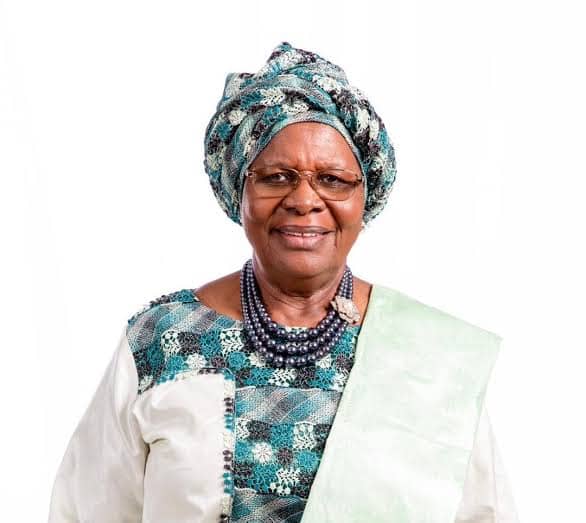
President Netumbo Nandi-Ndaitwah said Namibia must begin benefiting more substantially from its uranium resources by investing in activities such as uranium conversion, nuclear power generation, medical radioisotope production and radioanalytical capabilities.
In a statement read on behalf of the President by Prime Minister Elijah Ngurare at the opening of the 3rd National Nuclear Science and Technology Conference in Swakopmund on Thursday, the President said the country was ready to work with reliable international partners to develop its nuclear industry.
She stressed, however, that such partnerships must guarantee meaningful and proportionate participation by Namibian businesses and entrepreneurs.
“Namibia must rightfully benefit from this strategic resource,” the President said, highlighting the country’s position as the world’s third-largest uranium producer after Kazakhstan and Canada.
She said the country must take its rightful place in the global nuclear industry’s value chains, not merely as a supplier of raw uranium ore, but as an industrial player.
The President’s remarks come as Government seeks to translate its nuclear policy framework into tangible economic growth, industrialisation and prosperity.
A major step towards achieving this is the Namibia Nuclear Industry Strategy, which was approved by Cabinet in September 2025 and officially unveiled to the public during the conference.
For the first time in the country’s history, nuclear energy has also been identified as a key focus area in the National Development Plan.
Under the Sixth National Development Plan (NDP6), Government aims to increase the nuclear industry’s contribution to the country’s Gross Domestic Product from the current 3.2% to 4% by 2030.
Nandi-Ndaitwah said the policy framework had been established and the foundation laid, but emphasised that the next step was ensuring that the plans translate into practical economic benefits for Namibians.
She further indicated that Government was committed to creating opportunities across the uranium value chain, with particular emphasis on building local capacity and ensuring that Namibian entrepreneurs participate in the industry’s expansion.
The President also highlighted the importance of developing a skilled workforce capable of supporting the sector’s growth.
She called on institutions of higher learning to strengthen training and research in nuclear science and technology, particularly among young people.
Areas identified include nuclear engineering, radiation medicine, isotope hydrology and food safety.
She said Namibia’s young people should not remain consumers of imported technology but should become contributors to future nuclear innovations.
However, she cautioned that attracting investment would require Government to create an enabling environment for businesses and international partners.
She called for the removal of unnecessary bureaucratic delays, administrative inefficiencies and institutional bottlenecks that could discourage investors.
Government institutions, she said, must be responsive, efficient and solutions-oriented to ensure that investors can operate with confidence and certainty.
The three-day conference, held under the theme “Harnessing Nuclear Science and Technology for Namibia’s Industrialisation and Prosperity”, runs from 18 to 20 November at The Dome in Swakopmund.(Namibia Daily News)

