

By Joe-Chintha Garises
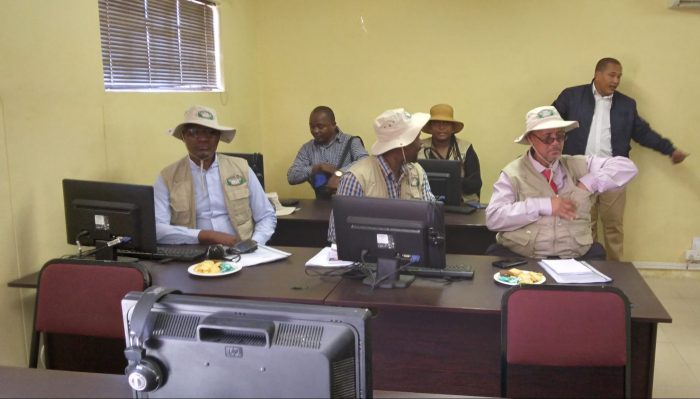
KEETMANSHOOP, Sept. 7 – The National Council’s Standing Committee on Education, Science, ICT and Youth Development visited selected community hostels in the //Kharas region.
The delegation was being led on the two-day visits on 05 and 06 September 2022 by the committee vice chairperson Bethuel Tjaveondja.
They visited the regional governor’s office where they were welcomed by the governor Aletha Fredrick.
“I hope that after this visit to hostels there will be solutions to the problems they face,” she said.
The aim of the visit is to find challenges faced by community hostels in the region and bring them to the National Council.
Due to limited funds, the committee will only visit selected school hostels among them Blouwes, Marmer, Ebnar and //Khulathoas community hostels.
The parliamentarians also visited the //Kharas Regional Council Directorate of Education, Arts and Culture where they were given a brief presentation on how community hostels operate in relation to private and state-owned hostels by Lucky Ganaseb the hostels officer in the region.
The region has 21 state hostels, five community hostels and 11 private subsidized hostels. In most cases, only pupils from homes more than 5km from schools are admitted to hostels.
Ganaseb further gave a hostel expenditure report for 2022 for the region where state-owned hostels had an expenditure of N$27,2 million whereas private hostels had N$7,2 million and community hostels had a cost of N$2,1 million.
Most of these hostels face challenges of a diet that does not include mid-morning snacks for pupils and the menu does not make provision for a balanced diet in most cases it is not followed which results in hostels running out of the government subsidy as most parents do not contribute hostel fees.
The Blouwes community hostel faces challenges with water supply as their borehole broke down and they are drawing water from the community borehole.
Principal of Blouwes primary school Andy Gariseb said the hostel has the capacity to accommodate 100 pupils but currently has 96. The school recorded no pregnancies in the past 10 years consecutively.
“Since this school is situated outside town we struggle to get pupils back on time after long weekends and out weekends, so sometimes we keep them here and this cost us in terms of food.
“Sometimes the matrons don’t get their salaries so that the children can have food,” Gariseb said.
The matrons are all volunteer workers who don’t have any benefits besides Social Security.
“I will retire this year and I don’t even have a pension. Can the government not turn community hostels into state-owned hostels so that we get benefits as well,” one matron who declined to be identified said.

