
Advertise Here

UN General Assembly concludes General Debate

UNITED NATIONS, Sept. 30 — The General Debate of the 80th session of the UN General Assembly concluded on Monday. In her closing remarks, General Assembly President Annalena Baerbock said 189 UN member states delivered speeches at the General Debate, including those from 124 heads of state and government.

“At the beginning of this week, we referred to the United Nations as the house of diplomacy and dialogue, standing at a crossroads, a place where we gather to have hard conversations during challenging times,” she said.

“If this high-level week is an indication, this house is fulfilling that purpose: the United Nations is still relevant.” Throughout the week, there were moments of energy — even electricity — where member states felt the collective will to do better, to reach further, to choose the right path at the crossroads, she said.

“This week’s General Debate, with strong engagements and impassioned words, showed that we are capable of finding the strength to lift up our common leadership, to find collective solutions, and to take the right path at the crossroads,” she said.

“Let us be inspired by the legacy of our past, and daring for a better future that is better together. Unafraid. Unbroken. United.” This year’s session coincides with the 80th anniversary of the founding of the United Nations.

The High-level Week provided world leaders with an opportunity to take stock of the past eight decades and look ahead. The raging wars in various parts of the world, major-power rivalry, the climate crisis, and a deficit in sustainable development, among other challenges, provided enough topics for debate.

Apart from the General Debate, world leaders had the opportunity to make a point at a series of high-level meetings, including the resumed High-level International Conference for the Peaceful Settlement of the Question of Palestine and the Implementation of the Two-State Solution and the high-level event to mark the 80th anniversary of the United Nations.

Many countries, including France, Britain, Canada and Australia, announced their recognition of Palestine’s statehood right before or during the High-level Week, making Israel and the United States increasingly isolated on the question of Palestine.

Other events included a climate summit, a Sustainable Development Goals Moment, a high-level meeting on the 30th anniversary of the Fourth World Conference on Women, and a high-level meeting on artificial intelligence governance. U.S. President Donald Trump attacked the world body in his speech at the UNGA and complained about the malfunctioning of the teleprompter and about the sudden stop of the escalator on his way to the General Assembly Hall.

A Fox News host, Jesse Watters, had to apologize for threats to bomb or gas the UN headquarters made in his “Jesse Watters Primetime” talk show, in response to Tuesday’s glitches involving Trump.

During his show on Tuesday, the host said: “What we need to do is either leave the UN or we need to bomb it… maybe gas it… we need to destroy it.” Watters later apologized, according to Stephane Dujarric, spokesman for UN Secretary-General Antonio Guterres.

Israeli Prime Minister Benjamin Netanyahu’s speech on Friday saw a mass exodus from the General Assembly Hall as scores of delegates walked out in protest when Netanyahu took the stage.

This year’s High-level Week saw the weaponization of visas by the United States, which abused its status as the host country.

Palestinian President Mahmoud Abbas was unable to travel to New York as the United States imposed a visa ban on Palestinian officials. He delivered his speech remotely.

Colombian President Gustavo Petro had his visa revoked after he attended a pro-Palestinian demonstration outside the UN headquarters. Petro said New York may no longer be a suitable host for the United Nations headquarters. (Xinhua)

September 30, 2025 0 comment
0 Facebook Twitter Google + Pinterest
SpaceX eyes mid-October for Starship’s 11th flight test

LOS ANGELES, Sept. 30 — SpaceX is targeting mid-October for the 11th flight test of its Starship rocket, the company announced on Monday.

The launch is scheduled for as early as Monday, Oct. 13, with a launch window opening at 6:15 p.m. Central Time (2315 GMT). During the test, the booster will launch with 24 flight-proven Raptor engines to test a unique landing burn configuration planned to be used on future Super Heavy rockets.

It will target an offshore landing point in the Gulf of Mexico rather than returning to the launch site for catch, according to SpaceX.

Starship’s upper stage will pursue several in-space objectives, including deploying eight Starlink simulators that are similar in size to the company’s next-generation Starlink satellites.

The simulators will follow the same suborbital trajectory as Starship and are expected to burn up upon reentry. The mission will also include a series of experiments and operational changes aimed at paving the way for future Starship flights to return the upper stage to the launch site.

For this test, some heat-shield tiles have been deliberately removed to stress-test vulnerable areas of the vehicle during reentry.

To replicate the trajectory of future return missions to SpaceX’s Starbase in the U.S. state of Texas, the final phase of the test will feature a dynamic banking maneuver and evaluate subsonic guidance algorithms before a landing burn and splashdown in the Indian Ocean. (Xinhua)

September 30, 2025 0 comment
0 Facebook Twitter Google + Pinterest
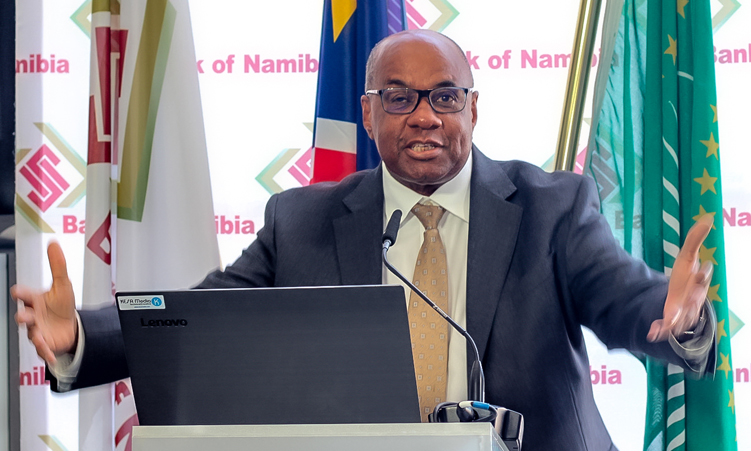
Namibia’s cash in circulation surges in 5 years as new notes, coins debut

WINDHOEK, Sept. 29 — Namibia‘s cash in circulation grew from 4.7 billion Namibian dollars (about 272 million U.S. dollars) in 2020 to 5.6 billion in 2025, Governor of the Bank of Namibia Johannes Gawaxab said Monday, stressing that physical money remains vital to the economy.

Speaking at the launch of upgraded banknotes and new coins in south-central Namibia, Gawaxab said cash still underpins informal trade, rural communities with limited internet access, and households where every dollar counts.

“Cash is alive, active, and essential,” the governor said, adding that the new banknotes and coins are designed to reinforce trust in the monetary system.

The third series of banknotes and the first fully modernized coins since 1993 feature advanced security elements, including color-shifting inks, microtext, and tactile markings for the visually impaired.

The new 10- and 20-dollar notes are printed on hybrid substrates to boost durability and cut replacement costs, he said. Gawaxab also urged citizens to remain vigilant against rising cybercrime and deepfake scams, encouraging them to verify dubious investment offers with the central bank.

The new notes and coins take legal tender status immediately and will circulate alongside digital payment innovations as Namibia seeks to expand financial inclusion and safeguard confidence in its money. (Xinhua)

September 29, 2025 0 comment
0 Facebook Twitter Google + Pinterest
Iran’s president vows not to surrender to U.S. bullying on nuclear issue

TEHRAN, Sept. 29 — Iran’s President Masoud Pezeshkian said on Sunday here that Iran will never surrender to U.S. bullying regarding the nuclear issue.

He made the remarks at a cabinet meeting while highlighting the U.S. “irrational and bullying” behavior in response to Iran’s efforts to achieve a fair solution to the nuclear issue, according to a statement published on the website of his office.

Pezeshkian said Iran rejects and condemns the imposition of any restrictions and sanctions, emphasizing that Iran has stood ready to negotiate transparently and achieve a fair and reasonable solution.

The imperious approach that the other side adopted will never be accepted, he added. “We will continue the path of dignity proudly,” he said.

Pezeshkian said Iran had never sought to make nuclear weapons, citing a religious decree by Iranian Supreme Leader Ali Khamenei which prohibits the development of atomic weapons.

“We have always expressed our readiness for rational and fair dialogue that is based on clear criteria, but we will never acquiesce to a negotiation that entangles us in new problems and issues,” he said.

In July 2015, Iran signed a nuclear deal, formally known as the Joint Comprehensive Plan of Action (JCPOA), with world powers, accepting restrictions on its nuclear program in return for sanctions relief.

The United States, however, withdrew from the JCPOA in 2018 and reinstated sanctions, prompting Iran to scale back some of its nuclear commitments.

On Sept. 19, the United Nations (UN) Security Council failed to adopt a resolution that would have extended sanctions relief for Iran under the JCPOA. A subsequent resolution, which sought to grant a six-month extension to both the JCPOA and Resolution 2231, also failed to pass in the Security Council on Friday. (Xinhua)

September 29, 2025 0 comment
0 Facebook Twitter Google + Pinterest
Iranian FM says reviving UNSC resolutions “unilateral rewrite” of int’l law

TEHRAN, Sept. 29– Iranian Foreign Minister Seyed Abbas Araghchi said on Sunday that attempts by European countries and the United States to revive terminated United Nations Security Council (UNSC) resolutions against Iran constitute a “unilateral rewriting” of international law.

In a letter addressed to his foreign counterparts, Araghchi said that those “assertions” must be rejected as they, among other things, contradict the spirit of Resolution 2231 that endorses a 2015 nuclear deal between Iran and world powers, formally known as the Joint Comprehensive Plan of Action (JCPOA).

He said Resolution 2231 terminated the previous UNSC resolutions on Iran’s nuclear program, including all sanction measures, and set out a clear time-bound framework, under which all nuclear-related restrictions would permanently expire on Oct. 18, 2025.

The resolution, he added, gave no country unilateral authority to alter, reinterpret or extend its provisions. Araghchi noted that the snapback procedure invoked by the E3, namely France, Britain and Germany, and the United States was “null and void,” citing the U.S. withdrawal from the JCPOA in 2018 and the European countries’ failure to honor their obligations under the deal.

Neither Iran nor any other UN member state was legally obligated to comply with such “unlawful” claims, he said, noting that Iran would continue to defend its sovereign rights and legitimate interests while remaining open to “genuine negotiations on an equal footing.”

Last month, the E3 formally invoked the snapback mechanism, which allowed for the re-imposition of UN sanctions within 30 days if Iran was deemed in breach of the nuclear deal. On Sept. 19, the UNSC failed to adopt a resolution that would have extended sanctions relief for Iran under the JCPOA. A subsequent resolution, which sought to grant a six-month extension to both the JCPOA and Resolution 2231, also failed to pass in the UNSC on Friday. The sanctions were re-imposed on Saturday evening. In addition, Amir Saeid Iravani, Iran’s UN envoy, in a letter on Sunday, strongly protested against the move by the UN Secretariat to inform the member states of the reinstatement of the terminated UNSC resolutions on Iran, according to the official news agency IRNA.

September 29, 2025 0 comment
0 Facebook Twitter Google + Pinterest
Start Early, Retire Strong

As the festive season approaches, many Namibian families are busy planning holidays, setting aside money for travel or saving for Christmas celebrations. With so many immediate expenses to juggle, it is easy to postpone thinking about the future. Yet one of the most important financial decisions we can make is often delayed: saving for retirement. Without proper planning, many retirees find themselves relying solely on the state pension or family support, which is often insufficient to sustain their lifestyle.

According to Namibia’s 2023 Census, roughly one in seven households relies mainly on the government old age pension for income — essentially unchanged from the 2011 Census. While this social safety net is vital, it was never designed to cover all living expenses, making personal retirement planning essential.

Planning for a Longer Life

Namibians are living longer than ever before. While that is worth celebrating, it also means we must plan for decades without a salary. Rising inflation adds pressure, with healthcare, groceries and fuel costs climbing steadily year after year. A structured retirement plan provides the peace of mind that you will not only survive in retirement but thrive.

The Sooner, the Better

Retirement savings are fueled by compound growth, where your money earns interest not only on your contributions but also on the interest it has already earned. The earlier you start, the greater the benefit.

For example, consider the minimum single premium for Metropolitan’s Income Provider Plus: N$25,000. If you invest that amount at age 30 and leave it to grow at 5% annually until age 65, it could grow to approximately N$137,900. Starting at 40 instead would leave you with about N$84,659 at 65, a difference of more than N$53,000. This N$53,000 difference could cover  living expenses, such as groceries or grandchildren’s school fees, highlighting the real-life stakes of postponing retirement savings.

Think of it like planting mahangu after the rains. The earlier you plant, the stronger and fuller the harvest. Wait too long, and you may still get something, but not nearly enough to carry you through the season. Retirement works the same way: the earlier you start, the more abundant your “harvest” will be later.

 Turning Savings into a Salary

When you retire, you often receive a lump sum from your pension or provident fund. Instead of worrying about how long it will last, you can use it to purchase Metropolitan’s Income Provider Plus. In return, you receive a monthly income for the rest of your life, much like continuing to earn a salary after your last working day.

You can choose between two options: with preservation, which includes life cover for your beneficiary, or without preservation, which allows income to continue for a guaranteed period even after your passing. In both cases, you are assured of a regular income, with the flexibility to increase payments annually to keep pace with inflation.

A Secure Tomorrow Starts Today

Retirement is not just about stepping away from work. It is about sustaining the life you have built and enjoying the freedom to live with dignity. With Metropolitan’s Income Provider Plus, you can turn today’s savings into tomorrow’s security.

Retirement may be years away, but your journey to financial security begins today.

September 29, 2025 0 comment
0 Facebook Twitter Google + Pinterest
Time for Trains: Katutura Workers Deserve a Faster Ride to work

Cutting costs, saving time, and easing traffic—why commuter trains could be Windhoek’s game changer

Every morning before sunrise, thousands of Katutura residents squeeze into taxis and minibuses, hustling their way to Windhoek’s CBD and industrial areas. By the time they arrive at work, they’ve already spent a good chunk of their wages on transport, endured traffic jams, and sometimes even arrived late.

But what if there was a better way? Imagine hopping onto a clean, reliable train in Katutura and arriving in town or the industrial areas within minutes—no stress, no rush, and at half the cost of a taxi.

This isn’t a wild dream. Namibia already has a railway network, but it is used mostly for cargo. With some political will and investment, the government could transform part of this system into commuter trains for city workers.

The benefits are obvious. Trains can move hundreds of people at once, easing the pressure on roads that are choked with taxis every morning. Fewer cars mean fewer accidents, less pollution, and smoother traffic for everyone. Most importantly, workers would save money—something that matters now more than ever as living costs continue to rise.

Think about it: a single train from Katutura to Northern or Southern Industrial could take hundreds of workers straight to their jobs. No more waiting in long queues for taxis, no more bargaining for space in an already full minibus. Just an affordable, quick, and safe ride to work. Of course, such a project would require planning, investment, and commitment from government, private investors, and the City of Windhoek. But if Namibia is serious about building a modern, worker-friendly capital city, this is the kind of bold move that could make a real difference.

Katutura workers keep Windhoek’s economy running. They deserve a transport system that respects their time, their money, and their dignity. It’s time for the Namibian government to put the idea of commuter trains on the table—and on the tracks.

Bonifasius Freddy Shikusho is a teacher in Windhoek and this are his personal views.


September 29, 2025 0 comment
0 Facebook Twitter Google + Pinterest
Death toll in stampede in India’s Tamil Nadu climbs to 41

NEW DELHI, Sept. 29– The death toll in a stampede at a political party rally for a popular film star in the southern Indian state of Tamil Nadu climbed to 41 on Monday, officials said.

The stampede broke out on Saturday evening during a political rally of actor-turned-politician Joseph Vijay Chandrasekhar (who uses the mononym Vijay) in Karur district, about 387 km southwest of Chennai, the capital city of Tamil Nadu.

Vijay was campaigning for his Tamilaga Vettri Kazhagam (TVK) party ahead of local elections scheduled early next year. According to officials, among the 41 killed, 18 were women and 10 were children.

Local media quoting medics said they treated over 100 injured, and some of them are still undergoing treatment at the hospitals. On Saturday, amid sweltering heat, tens of thousands gathered in Karur to attend the TVK rally.

Tamil Nadu Police Chief G Venkataraman, during a press briefing, said the stampede was triggered by Vijay’s delayed arrival after the crowd surged towards his vehicle.

Police have registered a criminal case against the leaders of TVK. Meanwhile, the local government has constituted a one-member commission of inquiry headed by a former high court judge to investigate the stampede.

Vijay said he was heartbroken by the stampede and pledged support for the families of the victims. (Xinhua)

September 29, 2025 0 comment
0 Facebook Twitter Google + Pinterest
Car-ramming attack kills Israeli soldier in West Bank: sources

RAMALLAH, Sept. 29 — An Israeli soldier was killed in a car-ramming attack east of the West Bank city of Qalqilya on Sunday, and Israeli troops killed the Palestinian suspect, according to Palestinian and Israeli statements.

The Israeli army said Sunday in a statement that “a report was received regarding a terror attack at the Jit Junction,” near the village of Jit, east of Qalqilya, and “the security forces eliminated the terrorist who carried out a ramming attack at the scene.

” The Israeli army later identified the killed soldier as 20-year-old Staff Sergeant Inbar Avraham Kav, of the Paratroopers Brigade’s 890th Battalion, from northern Israel’s Lotem.

Meanwhile, Israeli media reported that a Palestinian driving a truck rammed toward Israeli troops at the Jit Junction, and the troops then opened fire on the driver and killed him.

The Palestinian Health Ministry said in a statement that Mahmoud Akkad, 24, was shot dead by Israeli forces near Jit.

Following the incident, Israeli army forces closed the entrance to Qalqilya and all villages along Route 55, which connects Qalqilya and the northern West Bank city of Nablus, according to Palestinian security sources and eyewitnesses.

For several months, the Israeli army has been conducting military operations in northern West Bank cities, particularly Jenin, Nablus, and Tulkarm, claiming to pursue Palestinian militants. (Xinhua)

September 29, 2025 0 comment
0 Facebook Twitter Google + Pinterest
UN confirms reactivation of sanctions on Iran

UNITED NATIONS, Sept. 29 — The United Nations confirmed on Sunday that sanctions against Iran have been reactivated.”Pursuant to the process set forth in paragraphs 11 and 12 of Security Council resolution 2231 (2015), effective on 27 September at 8 p.m. Eastern Daylight Time, all provisions of resolutions 1696 (2006), 1737 (2006), 1747 (2007), 1803 (2008), 1835 (2008) and 1929 (2010) have been re-applied in the same manner as they applied before the adoption of resolution 2231 (2015) on 20 July 2015,” said a note to correspondents from the Office of the Spokesperson for the UN Secretary-General.

The note said that accordingly, the sanctions list maintained by the Security Council Committee established pursuant to resolution 1737 has been re-established and includes 43 individuals and 78 entities that were listed before the adoption of resolution 2231.

The note listed the individuals and entities that have been added back to the United Nations Security Council Consolidated Sanctions List.

Last month, France, Britain and Germany formally invoked the snapback mechanism, which allowed for the re-imposition of UN sanctions within 30 days if Iran was deemed in breach of a 2015 nuclear deal, formally known as the Joint Comprehensive Plan of Action (JCPOA).

On Sept. 19, the UN Security Council failed to adopt a resolution that would have extended sanctions relief for Iran under the JCPOA.

A subsequent resolution, which sought to grant a six-month extension to both the JCPOA and Resolution 2231, also failed to pass in the Security Council on Friday. (Xinhua)

September 29, 2025 0 comment
0 Facebook Twitter Google + Pinterest