Advertise Here

Israeli army tightens siege on Gaza City, captures key buffer zone

JERUSALEM, Oct. 1– Israeli Defense Minister Israel Katz said Wednesday that the Israel Defense Forces (IDF) is tightening the siege around Gaza City “on the way to defeating Hamas.”

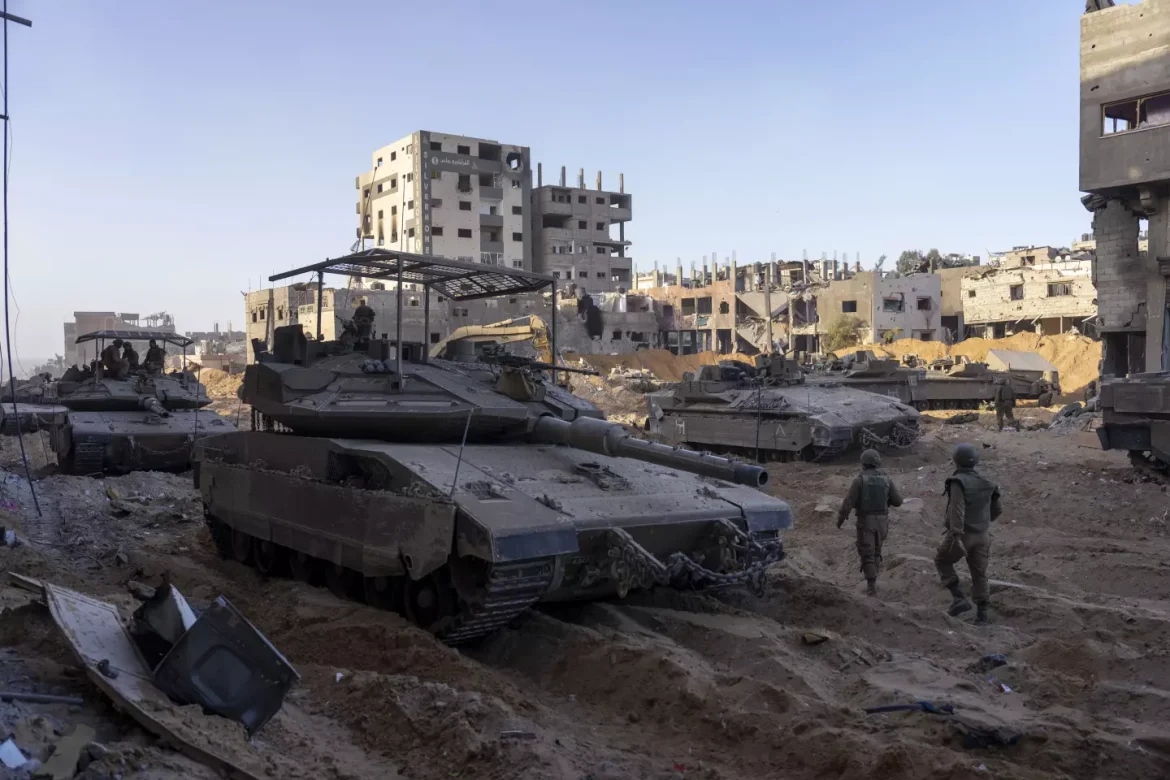
The military is “in these hours” completing the capture of the Netzarim Corridor, a military buffer zone in central Gaza aimed at isolating Gaza City and northern Gaza from the rest of the enclave, Katz said in a statement, adding that this will tighten the siege around Gaza City, and all those leaving from the south will be forced to pass through IDF checkpoints.

“This is the last chance for Gaza residents who are interested in moving south and leaving Hamas terrorists isolated in Gaza City itself in the face of IDF activity that continues at full strength,” he warned.

“Those who remain in Gaza will be terrorists and supporters of terror.” Earlier in the day, the IDF said it had launched an extensive ground operation in Gaza City, and had killed several militants “posing an immediate threat” in northern Gaza, apart from targeting multiple military structures and infrastructure facilities in the area.

Meanwhile, Israeli army spokesman Avichai Adraee announced on social media platform X earlier in the day that Al-Rasheed coastal road, the main route linking southern and northern Gaza, would be closed from noon, allowing only southward movement for those still in Gaza City.

Palestine’s official news agency WAFA reported that 23 Palestinians were killed by Israeli gunfire and shelling across Gaza on Wednesday morning, whereas Gaza-based health authorities said Israel’s military campaign has killed 66,148 Palestinians and injured 168,716 others since Oct. 7, 2023.

In a separate development, Israel’s national emergency service Magen David Adom and the IDF said two rockets were launched Wednesday from northern Gaza towards southern Israel and then intercepted by the Israeli air defense, with no casualties reported.

Following the launch, air defense sirens were activated in three Israeli villages near the Gaza border, sending local residents to shelters. (Xinhua)
October 1, 2025 0 comment
0 Facebook Twitter Google + Pinterest
Namibian students inspired by China’s modernization on educational trip

WINDHOEK, Oct. 1 — For a group of 12 Namibian students aged between 13 and 16, a recent 10-day educational trip to China turned out to be far more than just a journey abroad.

It became a window into modernization, scientific innovation, and cross-cultural exchange. The group returned to Windhoek, Namibia’s capital, on Tuesday after visiting several Chinese cities, including Beijing, Tongliao, Zhangzhou, and Xiamen.

Still brimming with excitement, the students described their experiences with phrases like “big city, bright lights, food, technology, and awe-struck,” capturing both their wonder and amazement.

Themed “Nuclear Energy Lights Up Dreams, Friendship Bridges the Future,” the program was sponsored by Rossing Uranium through its majority shareholder, China National Uranium Corporation (CNUC) Namibia Mining Limited.

The initiative aimed to expose young Namibians to science while fostering cultural exchange, part of efforts to nurture future talent for Namibia’s nuclear energy sector.

At a welcome-back event in Windhoek, the students shared memories ranging from first-ever flights and rides on China’s high-speed trains to standing atop the Great Wall and exploring the Forbidden City.

Etuhole Ithindi described her visit to CNNC’s uranium mine as “amazing.” “We learned about the leaching process, how to get uranium from the ground, and the stages to obtain pure uranium.

We also learned about the precautions we can take to protect society and make sure everyone is safe,” she said. For Berlize Ria Fuls, the trip was both educational and deeply personal.

“We managed to capture the past, present and future of China, its people, and nuclear energy. We also formed an everlasting friendship and family bond that we will definitely cherish forever,” she said.

Even jet lag and fatigue did little to dampen their enthusiasm. Armed with cameras and phones, the students captured every moment as they explored shopping malls, local restaurants, and iconic landmarks such as Beijing’s Bird’s Nest and Water Cube, places they had only seen on television before.

Many agreed the trip was an eye-opener that connected them to the Chinese people, whom they described as “kind, smart, and friendly.”

Rossing Foundation Chairperson Gida Sekandi said the students served as ambassadors of Namibia in China, commending them for representing the country with pride.

President of CNUC Namibia Chang Jingtao reaffirmed the company’s commitment to Namibia, highlighting cooperation in talent development, technology transfer, and industry collaboration as part of efforts to contribute to the country’s nuclear energy future.

“We will continue this study program in the future,” Chang said. “This is not the end. We look forward to welcoming more Namibian young people into the nuclear energy industry and working together to create a better world through nuclear technology.” (Xinhua)

October 1, 2025 0 comment
0 Facebook Twitter Google + Pinterest
Namibia launches Sustainable Finance Alliance to boost climate resilience

WINDHOEK, Oct. 1 — Namibia has launched the Namibia Sustainable Finance Alliance (NSFA), a multi-stakeholder platform uniting regulators, banks, insurers, and investment bodies to promote sustainable finance and strengthen resilience to climate change, the country’s central bank announced Wednesday.

The alliance, formally established at its inaugural meeting on Tuesday, brings together the Bank of Namibia (BoN), the Namibia Financial Institutions Supervisory Authority, the Namibia Savings and Investment Association, the Bankers Association of Namibia, and several commercial banks and insurers.

“The Namibia Sustainable Finance Alliance represents a clear demonstration of the collective resolve of our institutions to address one of the most defining challenges of our time: embedding sustainability and climate resilience into the financial system,” said BoN Deputy Governor Ebson Uanguta, who chairs the alliance.

The NSFA will promote sustainable finance, support knowledge sharing, and help Namibia meet its climate adaptation goals, he said, adding that it will begin with two priorities: climate and nature risk assessment, and data and analytics.

Namibia faces rising climate-related financial risks, including loan defaults and increased insurance claims linked to extreme weather.

Uanguta said the financial sector can play a critical role in financing renewable energy, climate-smart agriculture, and sustainable water and land management.

In recent years, Namibian institutions have introduced green bonds, secured access to international climate finance, and taken part in global climate talks. These steps, Uanguta noted, reflect the growing capacity and commitment of the sector to align with global sustainability goals. (Xinhua)

October 1, 2025 0 comment
0 Facebook Twitter Google + Pinterest
Saudi Arabia, UN launch global initiative to boost cyberspace capacity

RIYADH, Oct. 1 — Saudi Arabia and the United Nations (UN) on Wednesday jointly launched the Global Initiative for Capacity Building in Cyberspace during the 2025 Global Cybersecurity Forum (GCF) Annual Meeting in Riyadh.

The initiative comes in response to a global shortage of 2.8 million cybersecurity professionals and skills gaps reported by 43 percent of information security executives, according to the GCF 2024 Cybersecurity Workforce Report.

The program will offer expert-led workshops, training and education programs, international simulations and cyber drills, policy development support, and collaborative research to strengthen skills ranging from policymaking, law enforcement, and cyber diplomacy.

Implementation will be led by Saudi Arabia’s National Cybersecurity Authority (NCA), the Saudi Information Technology Company, and the GCF, in partnership with several UN agencies.

“Saudi Arabia’s partnership with the United Nations to advance global cybersecurity capacity building is a testament to a shared commitment to driving progress for the benefit of people, societies, and nations,” said Majed bin Mohammed Al-Mazyed, governor of the NCA, during the meeting.

UN Secretary-General Antonio Guterres said via video that cyberspace is essential for innovation and opportunity, but vulnerabilities can disrupt societies and threaten peace.

“We must act together to ensure cyberspace serves the common good by investing in people, building skills and fostering inclusion,” he said.

The GCF Annual Meeting, now in its fifth edition, serves as a global platform to promote international cooperation and strengthen the safety and resilience of cyberspace through dialogue and action-oriented initiatives. (Xinhua)

October 1, 2025 0 comment
0 Facebook Twitter Google + Pinterest
Israeli army shuts route for return of displaced Palestinians to northern Gaza

GAZA, Oct. 1 — The Israeli army on Wednesday announced the closure of Al-Rasheed coastal road, the main route linking southern and northern Gaza, to prevent the return of displaced Palestinians.

The road would be closed from noon, allowing only southward movement for those still in Gaza City, said Israeli army spokesman Avichai Adraee on social media platform X.

The decision has kept Palestinians who fled to southern Gaza from going back to the north. Israeli forces have repeatedly shut down access since October 2023, isolating northern Gaza and worsening the humanitarian crisis in the coastal enclave.

It was briefly reopened in January 2025 during a fragile ceasefire. The new move comes amid an intensified ground offensive launched by the Israeli army in September in Gaza City targeting Hamas fighters, with the aim of freeing the remaining Israeli hostages.

Tanks have advanced into several neighborhoods, in what the army described as the heaviest fighting since the offensive began.

The United Nations estimates that 1.9 million of Gaza’s 2.3 million residents have been displaced multiple times since the conflict began. Humanitarian groups have warned that the latest closure will deepen the isolation of northern Gaza and hinder aid delivery.

October 1, 2025 0 comment
0 Facebook Twitter Google + Pinterest
Let Namibia’s oil discoveries be a blessing

Namibia is on the cusp of a historic transformation with recent offshore oil discoveries; the country has the potential to become one of Africa’s major energy producers. In previous articles, wearing my economist’s hat, I spoke of the need to avoid the ‘resource curse’ and the Dutch disease. Many column inches have been filled by other professionals, both nationally and internationally, wagging a finger and speaking of a potentially bleak outlook for Namibia, apart from a happy few well-connected individuals.

Other countries can serve as cautionary tales in the handling of their newfound oil riches. I don’t want to name specific countries, as naming and shaming serve no purpose. Namibia must embrace the challenge of harnessing oil revenues for sustainable development while avoiding the traps of mismanagement and overdependence.

Some countries that discovered oil assumed and anticipated immediate wealth for everyone. Large oil discoveries come with the investment of billions of US dollars from oil majors. Despite the Foreign Direct Investment (FDI) in extracting oil resources, a windfall for all did not materialize. Poverty remained widespread, with citizens feeling they received scant benefits from the petrodollars. There are many reasons for this. Analyzing these reasons and understanding how to avoid some of the pitfalls is how Namibia can turn the oil discoveries into a blessing for every Namibian.

Weak institutions and governance gaps, coupled with a lack of stringent regulatory and oversight frameworks, create an environment where opaque contracts and limited accountability become the norm. It is very positive to see that Namibia is being very conscientious in setting up its governance structures. The direct engagement that GRN has with oil companies and supplier companies to ensure that Namibia benefits from more than just tax revenue shows that Namibia is serious about guaranteeing that oil and revenue benefit every Namibian.

GRN seems to recognize that it has a once-in-a-lifetime opportunity to improve the socio-economic status of every Namibian, if the oil revenue is managed effectively. It will be essential to channel the revenue and the local opportunities into creating broad-based improvements in healthcare, education, or infrastructure.

Namibia has in fact established the Welwitschia Fund, a sovereign wealth fund modeled after successful examples, such as Norway and Botswana’s. It is particularly encouraging that the Welwitschia Fund has strict withdrawals limits and a strong mandate to invest for the country’s long-term future. general.

To avoid the Dutch disease risks that several countries suffered from because of the influx of oil money, it is essential to plan and project sensibly and for the long term. For Namibia, the lesson is that oil wealth alone does not guarantee prosperity. Oil revenues must translate into tangible improvements and jobs. Funds should be earmarked for healthcare, education, and rural development. By addressing inequality and poverty directly, GRN can ensure that oil wealth benefits all citizens, not just elites or foreign investors.

We must not be overly reliant on oil revenues; we need to divest from oil as the revenue starts flowing. The oil revenues must catalyze, creating an environment that promotes the growth of these other sectors. If global oil prices fall, we must be resilient enough as an economy to weather potential price shocks.

Regrettably, we must address corruption and mismanagement. There are numerous examples of countries worldwide where billions in oil revenues were siphoned off through patronage networks and poorly managed state enterprises. Our President, the Hon. Netumbo Ndaitwah, has vowed to stamp out corruption and any chance of this happening in Namibia. This is great, and if we get this right, our country’s oil resources will truly become a blessing.

Namibia recognize that oil can be both a blessing and a curse. We must embrace the principles of Harambee and pull together to ensure that oil will be a blessing for every Namibian.

 Namibia’s oil discoveries present a once-in-a-generation opportunity. By building strong institutions, managing revenues transparently, diversifying the economy, and investing in its people, Namibia can chart its own course, continually building on and borrowing from best practices and case studies. Oil should not define Namibia; it should be its blessing and finance its future.

October 1, 2025 0 comment
0 Facebook Twitter Google + Pinterest
EXPORTING VALUE-ADDED PRODUCTS CONSTITUTES POLICY SHIFT TO ECONOMIC SOVEREIGNTY

By JOSEF KEFAS SHEEHAMA

President Netumbo Nandi-Ndaitwah advocates a shift away from exporting raw materials and toward domestic producing and processing goods to accelerate economic growth, create jobs, and add value.

The president addresses a high-level roundtable hosted by the Business Council for International Understanding (BCIU) in New York.

For Namibians to witness a full transformation of the country’s economy from a reliance on raw materials to more diversified, innovation-driven growth pathways, the president should demand a serious commitment from all of the cabinets and ministers to engage at the grassroots level to find some ideas that will be deemed a collective national effort, laying the foundation for sustainable development and increased global competitiveness.

This transition encourages innovation, builds local capability, and creates more lucrative opportunities for employment, all of which contributes to a stronger and more resilient national economy.

As a result, I applaud the president for reaffirming this bold decision, which was also supported by the previous administration, and for disclosing that the government is working to implement policies to control raw mineral exports and encourage potential investors to consider value addition as a means of increasing national revenue and creating jobs for Namibians.

Exporting raw materials can increase a country’s reliance on foreign markets, deplete natural resources, and hinder domestic industrialization and value-added industries.

This action is crucial because it aligns with NDP6’s strategy, which focuses on diversification, the extraction of natural resources, and the empowerment of young people to transform Namibia from an exporter of raw materials into an industrial producer of finished goods with added value.

If we want to achieve economic emancipation, we should cease exporting resources in their raw form and focus on adding value to them. Otherwise, Namibia will continue to be impoverished and unequal. If not, most of the value and all of the good employment will move to the countries in the northern hemisphere.

I am incredibly hopeful about our country’s future and, consequently, the impact it will have on the rest of the world. Furthermore, when we implement this policy and legislation, we are essentially declaring that we do not want raw materials exported from Namibia.

So, if we can process the raw materials, we will have local value, maintain jobs, and create wealth for our people, which is exactly what this reform policy should advocate for.

As a result, the intention is to attract more investors in the downstream business. This indicates that policy reform will encourage international investors to establish processing facilities in Namibia. This will contribute to economic diversification and a stable Gross Domestic Product (GDP).

Furthermore, Namibia’s mining sector remains an important engine of long-term economic development. Indeed, this industry contributes significantly to exports and has critical interconnections with other sectors of the economy. We should admit that our mining industry is undeveloped, resulting in the export of raw minerals.

Namibia’s mining sector is crucial for mineral exploration, extraction, processing, and marketing because the country lacks enough capital on hand and technological means to fund large-scale capital-intensive projects.

Moreover, I am convinced that this measure will help the country’s economy by expanding its processing industries. Some contend that the method will lower the amount of commerce in specific minerals.

Several African states are concerned that a government that has outlawed the export of such minerals may not allow the materials to be supplied to another country, thereby impeding trade with partners.

We argued this question with 50 African countries who attended the China’s modernization and African development conference in order to gain a general understanding of other African countries’ perspectives.

That being said, if an effective policy is enacted, we can be confident that it will eventually operate. We have to comprehend that Africa contributes most of the raw materials used, such as in the development of green technology.

If the continent decides to establish the rate for such material imports and exports, it will become an unstoppable force. We cannot keep exporting unprocessed goods. Potential investors should create jobs and impart skills to Namibians. As a result, while policymaking is adequate, implementation remains a challenge.

If policy reform inhibits the export of raw minerals, I believe additional actions should be done to ensure that Namibians get the most out of their resources. This approach is viewed as an effort to promote the expansion of value chains. Exporting raw materials results in income loss.

Statistics demonstrate that raw material exports are sold at a low price, but finished products are imported at three times the price. Namibia’s Minerals Policy should be streamlined to let investors generate value.

This will encourage foreign investors to adopt value addition, transforming all traders into producers and thereby boosting domestic economic activity.

As a result, being exporters of raw materials rather than finished goods with higher added value limits our people opportunities for employment.

As Namibia prepares to move away from raw material exports, we must devise a clear strategy for achieving long-term economic development, reducing environmental degradation, and boosting real prosperity through the promotion of value-added commodities and services.

Prior to industrialization, international companies sought lower labor costs, access to raw resources, and expansion into new markets, driven by government incentives and the need to reduce operational costs.

To gain mutual benefits from cooperation, win-win strategies and expectations must be defined from the outset. This allows both parties to coordinate their efforts and work together toward a common goal.

The country can gain a competitive advantage and expand its economic reach by transferring technology and partnering with multinational corporations.

This roadmap should include a diagnostic process for establishing competitiveness targets strategic priorities, improving the business environment, attracting investment, simplifying regulations, and securing favorable trade agreements to ensure a smooth and beneficial transition from commodity dependence to diversified and higher-value exports.

To this end, an outlaw on raw material exports would encourage the development of processing facilities in Namibia, giving Namibians a larger portion of the value chain. As a result, a partnership focused on vital minerals would transform this into a mutually advantageous strategic economic alliance.

Therefore, it’s not going to be easy; Namibia must be active in international trade negotiations to ensure that its value-added products have secure and advantageous access to important markets. This transition will be viable and profitable with the help of trade agreements, export incentives, and partnerships across borders.


October 1, 2025 0 comment
0 Facebook Twitter Google + Pinterest
AI-powered imaging tool detects brain lesions in childhood epilepsy: study

MELBOURNE, Oct. 1– Australian researchers have developed an artificial intelligence (AI) tool that detects tiny brain lesions causing severe epilepsy in children, enabling faster diagnosis, more precise treatment, and a potential cure.

The “AI epilepsy detective” can find focal cortical dysplasias, lesions about the size of a blueberry which causes recurring seizures, in up to 94 percent of cases with the support of medical imaging, according to a statement released Wednesday by Australia’s Murdoch Children’s Research Institute (MCRI).

In a study published in the U.S. journal Epilepsia, the system detected lesions using MRI and PET scans, compared with traditional scans where 80 percent of diagnoses were missed by human examination of MRI results.

“With more accurate imaging, neurosurgeons can develop a safer surgical roadmap to avoid important blood vessels and brain regions that control speech, thinking and movement and removing healthy brain tissue,” said study lead author Emma Macdonald-Laurs, a MCRI neurologist.

More accurate diagnosis of cortical dysplasia would lead to faster referrals for epilepsy surgery, fewer seizures and improved long-term developmental outcomes, said Macdonald-Laurs who led the team that created the detector.

The trial involved 71 children at Australia’s Royal Children’s Hospital. Of the 17 children in the final test group, 12 underwent surgery and 11 are now seizure-free, the statement said.

Epilepsy affects roughly one in 200 Australian children, with cortical dysplasias, developing when the baby is still in the womb, a common cause of drug-resistant seizures, it said.

The longer uncontrolled seizures persist in a child, the greater the risk of learning difficulties, including intellectual disability.

However, epilepsy caused by cortical dysplasia can be improved or cured by surgery if the abnormal brain tissue can be located and removed, Macdonald-Laurs said. With additional funding, the team could test the detector in pediatric hospitals across Australia, researchers said. (Xinhua)

October 1, 2025 0 comment
0 Facebook Twitter Google + Pinterest
Death toll in strong quake in Philippines rises to 69

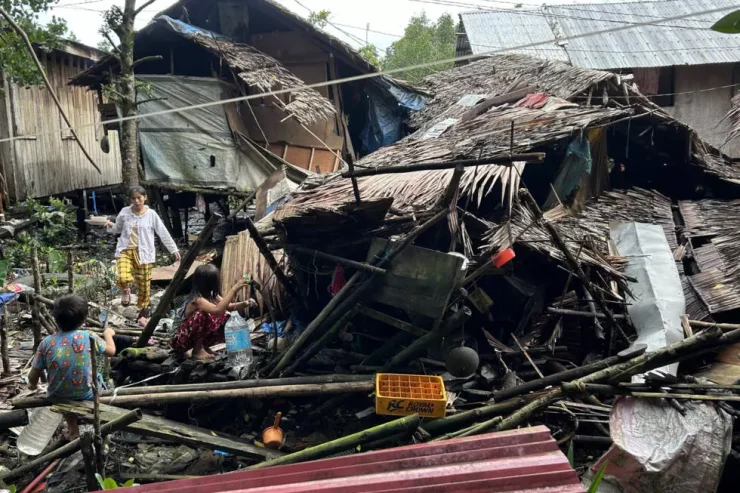
MANILA, Oct. 1– The death toll in the 6.9-magnitude earthquake that struck Cebu province in the central Philippines on Tuesday night climbed to 69, the Philippines’ Office of Civil Defense (OCD) said Wednesday.

Assistant Secretary Bernardo Rafaelito Alejandro, deputy administrator for the OCD, told a public briefing that 30 died in Bogo City, the epicenter of the earthquake, 10 in Medellin town, 22 in San Remigio town, five in Tabogon town, and one each in the municipalities of Sogod and Tabuelan.

He said the victims died after they were crushed by the collapsed walls of houses and buildings. The National Disaster Risk Reduction and Management Council (NDRRMC) initially reported that at least 147 people were injured.

Alejandro did not give the latest figures on injuries and the missing people. The death toll is expected to climb as emergency workers continue search and rescue operations for survivors trapped in the debris and collapsed buildings.

“We are waiting for our assessment team to complete their rapid assessment,” Alejandro said in an earlier media briefing. The province of Cebu has declared a state of calamity, enabling the government, particularly local government units, to quickly access emergency funds (calamity funds) to provide relief and rehabilitation, as well as to impose measures such as price freezes on essential goods to protect affected residents.

The Philippine Institute of Volcanology and Seismology initially reported that a 6.7-magnitude offshore earthquake struck Cebu province at 9:59 p.m. local time on Tuesday.

The institute later revised the magnitude to 6.9, adding that the quake struck at a depth of 5 km, approximately 19 km northeast of Bogo City.

The tremor was also felt in many neighboring provinces in the central Philippines, as well as some regions in the southern Philippines.

The institute reported that it has recorded more than 600 aftershocks since Tuesday night. The Philippines sits along the Pacific “Ring of Fire,” a region prone to earthquakes and volcanic activity. (Xinhua)

October 1, 2025 0 comment
0 Facebook Twitter Google + Pinterest
Botswana’s president promotes unity, cooperation during Independence Day speech

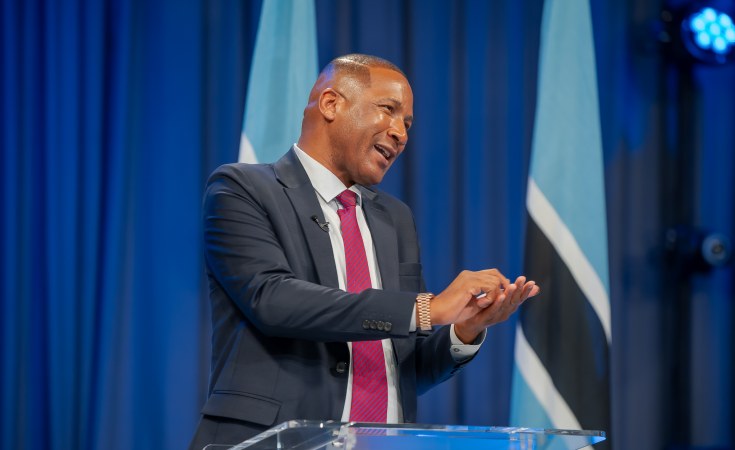
GABORONE, Sept. 30 — Duma Boko, president of Botswana, on Tuesday encouraged people to embrace unity and cooperation to safeguard and foster peace and harmony in the world.

Boko made the remarks in a national address, broadcast live on Botswana Television to mark the 59th anniversary of Independence Day, calling on citizens of the southern African country to be patriotic, reflective, and forward-looking.

The African continent will only experience peace, tranquility, and development through unity, he noted. “We are stronger when we are united and working in unison,” said Boko, adding that the supremacy behind the essence of working together was witnessed when the Umbrella for Democratic Change (UDC) won the election of the National Assembly held on Oct. 30 last year.

With Boko as the coalition’s president, the UDC, comprising the Botswana National Front, the Botswana People’s Party, and the Alliance for Progressives, defeated the Botswana Democratic Party, which had ruled the country since its independence on Sept. 30, 1966.

On Monday, Boko launched four news bulletins in indigenous languages on state-owned broadcasting platforms to promote aboriginal vernaculars, emphasizing the importance of acknowledging all cultures and languages within the country. (Xinhua)

September 30, 2025 0 comment
0 Facebook Twitter Google + Pinterest