

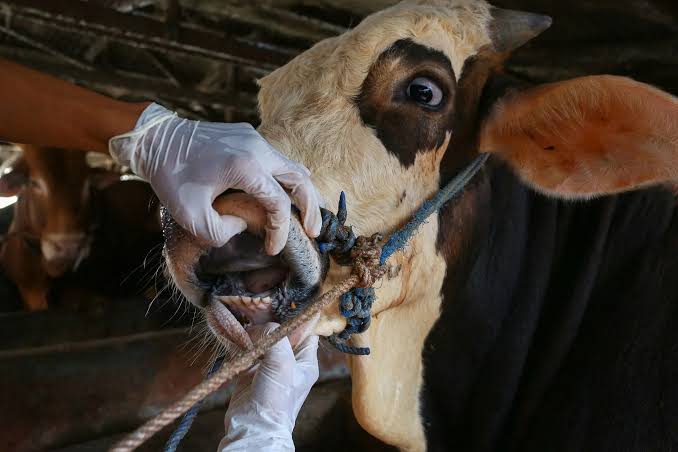
WINDHOEK, Nov. 17 — Namibia announced Tuesday that it had partially lifted restrictions on the movement of cloven-hoofed animals and their products in the northeastern Zambezi Region following an outbreak of foot-and-mouth disease (FMD).
The Ministry of Agriculture, Fisheries, Water and Land Reform imposed the restrictions after detecting FMD in cattle on Kalala Island on Oct. 7. Chief Veterinary Officer Kenneth Shoombe said surveillance within 30 km of the outbreak site found that the disease remained confined to a single herd on the island.
Two rounds of vaccination have been completed on Kalala Island. The ministry reported that 53,479 cattle had been vaccinated, over 95 percent of the target of 56,269.
However, movement restrictions remain in force for cloven-hoofed animals and their products leaving the designated disease management area, which covers the Kabbe North and Kabbe South constituencies.
According to the officer, fully vaccinated cattle may be slaughtered within the area for household consumption or social events, and the meat must remain within the area.
Elsewhere in Zambezi, eligible cloven-hoofed animals, including fully vaccinated cattle from outside the control area, may be slaughtered at open markets and abattoirs subject to veterinary movement permits and vaccination checks.
Fully vaccinated cattle from elsewhere in Zambezi may also be taken to the Kopano quarantine facility or moved into the control area, Shoombe said. Cloven-hoofed animals from other regions may enter parts of Zambezi outside the control area or pass through the region in sealed trucks.
He added that raw meat, raw milk and livestock feed may be brought into all parts of Zambezi, except when the products originate in the southern Kharas Region. Namibia is managing FMD outbreaks in two regions, following detections in Kharas in September and Zambezi in October. (Namibia Daily News / Xinhua)

