


Tehran, Aug.20 – IRNA: Israeli analyst Danny (Dennis) Citrinowicz argues that the US strategy of intensifying economic pressure and secondary sanctions on Iran could have the opposite of its intended effect. While Washington seeks to avoid another major military conflict, increasing economic pressure may strengthen Tehran’s incentive to use its remaining leverage, particularly the Strait of Hormuz and maritime capabilities. From Iran’s perspective, maintaining normal commercial traffic through the Strait while facing an economic blockade is unlikely, making Hormuz an important instrument in the broader confrontation over sanctions.

Citrinowicz warns that economic pressure alone is unlikely to force Iran to accept US demands and could instead increase the risk of military escalation. The more Washington restricts Iran’s economy, the more Tehran may view military and maritime measures as attractive options for imposing costs on the US and its regional partners. He concludes that without a credible diplomatic pathway to resolve the crisis, Washington’s pressure strategy could ultimately produce the very broader military confrontation it seeks to avoid.
From Military Defeat to Economic War: A Narrative of Trump’s Deadlock Against Iran
Iran-U.S. analyst Trita Parsi argues that after failing to achieve its military objectives against Iran, the Trump administration has shifted its pressure to the economic sphere, hoping to force Tehran to accept Washington’s demands by restricting Iranian oil exports and intensifying economic pressure. According to Parsi, declining U.S. missile and interceptor stocks, combined with Iran’s continued ability to disrupt maritime traffic, have pushed Washington toward a strategy of economic attrition. However, changes in tanker routes, reduced dependence on Gulf oil by some countries, and the use of very large crude carriers have limited some of the effects of the U.S. economic blockade.
Parsi warns that Trump’s central assumption—that Iran will choose surrender rather than escalation—is mistaken, and that economic pressure could trigger another round of military conflict rather than force Tehran to capitulate. He argues that Iran still relies on its military capabilities and could take stronger retaliatory measures if pressure increases. In his view, the only way out of this cycle is diplomacy and a balanced agreement. He concludes that if Washington refuses to negotiate both when it is weak and when it is strong, war will become the default option in U.S.-Iran relations.
Iran Refutes UAE Allegation of Missile Attack
TEHRAN (Tasnim) – Spokesperson for the Iranian Foreign Ministry Esmaeil Baqaei categorically rejected the United Arab Emirates’ allegation that Iran launched a missile toward the Arab country, expressing regret over the accusation against the Islamic Republic.
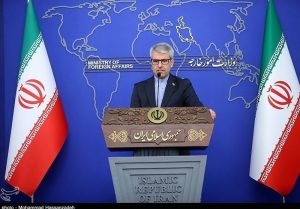
In a statement released on Tuesday night, Baqaei said the allegation runs counter to the principle of good-neighbourliness and undermines ongoing efforts to strengthen trust among regional countries and prevent a further escalation of insecurity in the region.
The spokesman called on all regional parties, given the complexities arising from the continued mischief of the United States and the Zionist regime against regional peace and security, to refrain from making baseless accusations against Iran.
He particularly pointed to the history of multiple false-flag operations, urging regional countries to avoid making unfounded allegations against Iran.
China Pushes Back against Trump’s ‘Economic D-Day’ Campaign against Iran
TEHRAN (Tasnim) – China Thursday pushed back against the US president’s “Economic D-Day” campaign against Iran, stressing diplomatic means to end the conflict.
“Imposing sanctions and pressuring do not help to solve the issue,” China’s Foreign Ministry spokesman Lin Jian told reporters in Beijing, Anadolu Agency reported.
“China calls on relevant parties to take responsible measures and solve the issues through diplomatic and political means,” Lin said.

US President Donald Trump Wednesday announced what he called “the most crushing economic operation ever taken against any country,” escalating his campaign against Iran and warning countries and companies that “assist” Tehran of severe economic consequences.
The US would seek to cut off financial and commercial channels that provide Iran with economic support, he said.
“Today, I am also announcing that any country that allows its financial institutions, businesses, airports, or government entities to provide any type of lifeline to Iran will itself face tremendous economic consequences,” he added.
In February, the US and Israel launched a war of aggression against Iran, killing thousands, and Tehran retaliated against US bases and assets in the Middle East.
Tehran has closed the Strait of Hormuz, while the US military has imposed a blockade on Iranian ports. Although the two sides reached a pact to end the war, they have engaged in periodic retaliatory strikes.

