

By Foibe N Paavo
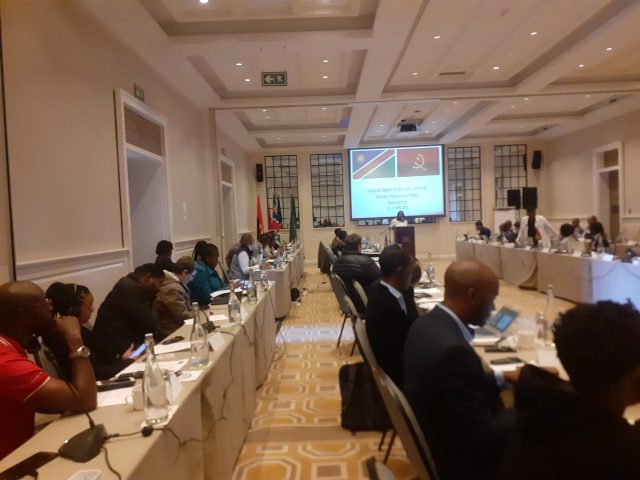
SWAKOPMUND, 26 April – Namibian and Angolan government and business representatives are meeting in Swakopmund to discuss new ways of trading between the neighboring countries.
Delegates from Angola, the Namibia Chamber of Commerce and Industry (NCCI), together with the Ministry of Industrialisation and Trade (MIT), are taking part in the inaugural session of the Joint Trade Committee between Namibia and Angola which ends on Wednesday.
Since the constitutions of the NNCCI and Chamber of Angola encouraged more trade between Angola and Namibia, they have the possibility to start producing and trading locally, the meeting heard.
Angola created a framework on how Namibia and Angola would trade through a 2018 presidential decree which added new rules for 2022, including trading conditions for over 50 goods with Angolan markets such as fish, salt, sugar, flour, and other agricultural products. It also indicated that there will be temporary quantitative restrictions on 16 products including sugar and milk.
There are over 50 products listed in the decree and a few national products that are restricted. For example, the importation quota of tomatoes should be limited since tomatoes are a seasonal product, when there’s a need, the market can provide the product. However, there would be an ample supply on the product list provided by Angola.
“Quotas are attributed on the basis of production. They are not pre-determined so the Ministry of Agriculture has to provide a survey to determine the quotas, because they control the national capacity and confirm the importation of products, and restrictions needed to be declared. Since the decree in Article 8, states that research should be conducted in the market beforehand,” said Angola’s Minister of Industry and Commerce, Victor Francisco Dos Santos Fernandes.
Decisions were made on the volumes of goods allowed for trade, looking at the prospects for possible manufacture of products by the two countries.
Business people engaged in the room raised questions such as: “Why can’t fuel be legalized for trade between Namibia and Angola?” and the response to that was: “Angolan fuel is not cheap as we imagine. We, as a SADC region, have a harmonized standard in the types of fuel that we’re using and Angolan fuel still has higher sulfuric content which does not conform to the international obligations. It does not conform to the protocols that are affirmed by SADC standards. In a nutshell, it’s a bit challenging but there are also opportunities for us to explore,” said a Namra representative.
Namibia’s Minister of Industrialisation and Trade, Lucia Iipumbu, said that
Namibia could benefit from this new partnership/opportunity with Angola since Angola is an open country, conducive to investment, and is a very fertile land, with industrial poles established, and home to about 33 million consumers.
“It’s potentially possible for the Namibians to make it in the Angolan market since the Namibian ports would be equally available to Angolan products,” she said.
“Angola is very special to Namibia and the bilateral relationship should now improve.”
The new rules apply to the following items: Bulk sugar, common rice, beef jerky (biltong), wheat flour, beans, cassava meal, maize meal, milk, spaghetti pasta, soya bean cooking oil, palm oil, blue soap, common salt, eggs, chicken, goat meat,
Pork, maize grain, sweet potatoes, potatoes (Reindeer), tomatoes, onions, garlic, carrots, peppers, cabbage, lettuce, bananas, mangoes, pineapple, Nile Tilapia (Cacusso), Cunene horse mackerel, Sardinella aurita (lambula), Sardinella maderensis (palheta), sunflower cooking oil, peanut oil, honey, construction steel rod (larger than 8mm), cement, clinker, glue cement, mortars, plaster and the like, tempered, laminated, multi-layered or otherwise worked glass, glass packaging for various purposes, construction paint, napkins, toilet paper, kitchen rolls, disposable diapers, sanitary towels, solid detergents, bleaches, beer, juices, and sodas, table water
All goods are produced by the industries located in the Luanda-Bengo Special Economic Zone. – Namibia Daily News

