

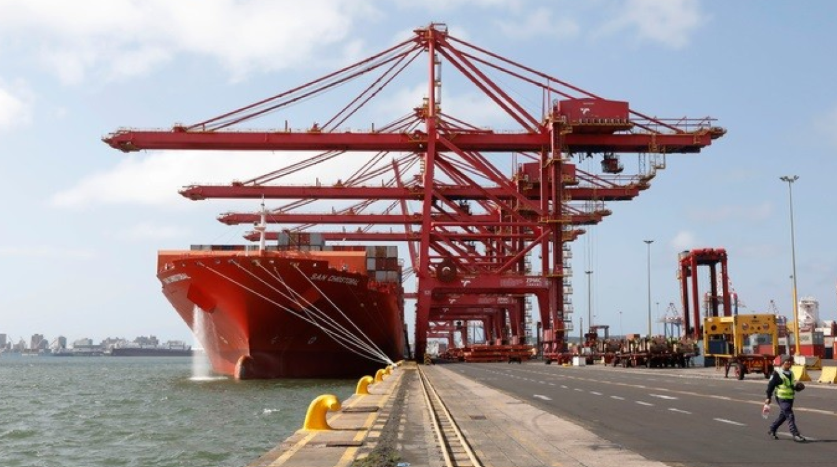
JOHANNESBURG, Aug. 26 — Two South African freight industry associations on Wednesday called for urgent coordinated action to ease mounting delays at the Durban Gateway Terminal (DGT), warning that disruptions were affecting cargo flows and driving up costs across the supply chain.
In a joint statement, the South African Freight and Logistics Association (SAFLA) and the Road Freight Association said sustained disruptions across vessel, yard, system and landside operations had slowed cargo movement through the terminal.
According to the associations, vessels at the DGT spent an average of about 80 hours at anchorage and 106 hours at berth in July.
Weekly throughput fell 26 percent following the terminal’s transition to the NAVIS N4 operating system in mid-August, while reported terminal waiting times reached eight to 12 days.
Independent monitoring data cited by the associations showed that the average port call time in Durban had increased from less than five days in late June to more than 12 days by late August, while monthly berth calls had declined from 34 to 19 since May.
The associations also said the time transport operators spent in the port precinct per visit had increased by more than half over the past three months, while congestion on Bayhead Road, a key access route to the port, had worsened.
“Transporters are carrying this crisis on their balance sheets,” said Gavin Kelly, chief executive officer of the RFA. He said trucks were standing idle without bookings while fixed costs continued to accumulate, adding that delays would ultimately feed into the prices of goods.
SAFLA Executive Officer Dave Logan said disruptions across different parts of the logistics chain could not be addressed in isolation.
“If systems, straddles, slots, gates, roads or rail fail to align, cargo stops,” Logan said, calling for a coordinated recovery effort with clear responsibilities, deadlines and reliable operational data.
The associations warned that prolonged disruption could have wider economic consequences, including production delays caused by late delivery of imported inputs, higher airfreight costs and losses for trucking companies whose vehicles remain idle.
Durban is South Africa’s main container port and a key gateway for trade with several landlocked countries in southern Africa. (Namibia Daily News / Xinhua)

