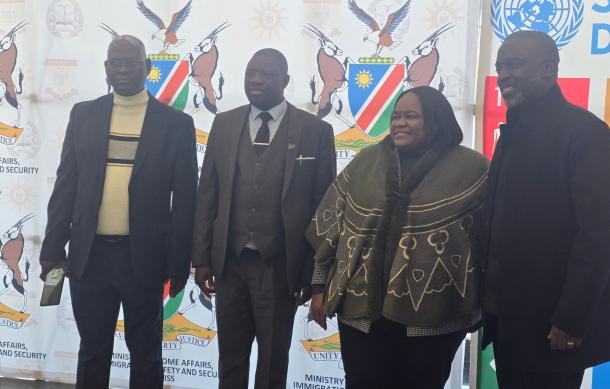
WINDHOEK, June 27 — Namibia‘s Ministry of Home Affairs, Immigration, Safety and Security has officially launched a nationwide campaign to prepare citizens for the rollout of the country’s first contactless chip e-identification (E-ID) document.
This initiative, undertaken in partnership with the United Nations Development Program (UNDP), commenced with the UN Conference on Digital Legal Identity, where public discussions took place in the southern African country’s capital of Windhoek on Thursday.
During the discussions, Namibian Minister of Home Affairs, Immigration, Safety and Security Lucia Iipumbu emphasized the transformative potential of the new E-ID.
“These documents will bring security and accessibility to each and every Namibian for various platforms that normally require presenting physical identification,” Iipumbu said.
“I am here to engage you with the rest of the team, and we are here to make sure that we share information and this partnership culminates into a reality.”
The E-ID is described by the ministry as a smart, secure, and biometric-enabled document designed to modernize identity management and broaden access to services across the community.
It will incorporate biometrics, such as fingerprint recognition, along with gender and age data. This advanced system will enable users to verify their identity and access services in both government and private sectors, including banks, hospitals, and schools, with particular benefits for rural areas.
The event brought together over 500 attendees, including community members from various Windhoek constituencies, political leaders, administrative officials, and local councilors.
The discussions focused on highlighting the benefits and addressing potential challenges associated with this significant new initiative. (Xinhua)