Advertise Here

TO UNLEASH NAMIBIA’S POTENTIAL, PRIORITIZE MICRO, SMALL & MEDIUM ENTERPRISES GROWTH

By JOSEF KEFAS SHEEHAMA

The Namibian government relies heavily on Micro, Small, and Medium Enterprises (MSMEs) to drive competitiveness and inclusive growth. Closing the finance gap for MSMEs is crucial for improving productivity, fostering long-term growth, and creating better jobs.

The potential of MSMEs to create a livelihood constitutes them vital for improving household quality of life and reducing poverty. In order to alleviate some of the problems related to disparities in income distribution, MSMEs promote to foster economic growth, competitiveness, and equitable distribution of economic growth opportunities. For the country to reach its immense potential, more need to be done to encourage the expansion of MSMEs and increase intra-African trade. One of the reasons underpinning optimism is the growth rate predicted for Namibia’s population, as seen on Namibia’s 2023 Labour Force Survey highlights unemployment challenges and income disparities exacerbated by the country’s growing population, which reached 3,022,401 in 2023, translating that government should think differently by not only being a job provider but also fostering entrepreneurial culture, as well as the fact that a sizable portion of Namibia’s population is young, who will support strong and equitable growth.

Namibia need to develop a framework for young Namibians to set up their own businesses. With an expanding number of entrepreneurs and a supporting ecosystem, the country is building an environment that fosters creativity and entrepreneurial aptitude. This move is more than just a response to economic needs; it displays the persistence and adaptability of a new generation eager to embrace opportunities. This agility is demonstrated by the population’s increasing urbanization and demographic shift toward younger people. Namibia’s youth must get active to avoid a situation like Kenya, where a growing youth movement formed and the country’s parliament withdrew due to young voters’ opposition to a disputed tax bill. This clearly indicates the embodiment of the spirit of a generation poised to redefine the economic future of their nation. The rise of entrepreneurship in Namibia will drive by a unique blend of historical context and demographic factors, setting the stage for a diverse range of industries and ideas. As government initiatives and support programs take shape, aspiring entrepreneurs will finding the resources they need to turn their visions into reality. From funding opportunities to incubators and accelerators, the landscape is ripe for innovation, encouraging collaboration and community engagement.

Furthermore, there is no reason why Namibia cannot become a global economic hub as China and others did. Another reason to be positive about Namibia’s future is its untapped energy potential, which includes both fossil resources and renewable energy sources like solar, wind, and hydro power. Economic growth is impossible without energy, that’s why Namibia should focused on energy and sustainability as growth drivers. In addition to reducing trade obstacles and investing in energy initiatives, Namibia should prioritize infrastructure spending within the country. This indicates that the country should spend funds to improve infrastructure, such as roads, ports, airports, and railways. This is another key growth driver.

 Namibia should prioritize gaining its share of the global economy, overcoming its most pressing obstacle, and creating jobs above figuring out how to conveyance commodities across borders. The government should enable local suppliers evolve from raw material exports to value-added manufacturing. Despite severe hurdles, Namibia’s MSMEs remain the backbone of the economy and play an important role in community development. Entrepreneurs must play a role in identifying gaps, connecting the dots, and venturing where others are afraid to go in order to unlock potential and transform it into reality. The bureaucratic process of establishing and running a business can be overwhelming, resulting in delays and frustration. Recent government initiatives, such as those targeted at streamlining registration processes and increasing business, are encouraging. These initiatives seek to improve the climate for entrepreneurs, hence boosting innovation and economic growth. It is critical for the government to work with MSMEs to address challenges such as low diversification and industrialization caused by inadequate infrastructure in key economic sectors such as logistics, agriculture, and energy, poor market access, particularly for rural MSMEs, and poor product standards, which have rendered MSMEs’ products uncompetitive in domestic markets.

Moreover, according to the World Bank’s MSME Finance Report 2022, Small and Medium Enterprises account for a considerable proportion of all businesses worldwide. They make up approximately 90% of enterprises and more than 50% of all jobs worldwide. In emerging economies, formal MSMEs account for up to 40% of total national income. The report found that include informal MSMEs leads to a large increase in percentages. Micro, Small and Medium Enterprises create a large number of formal jobs in emerging economies. Despite the contribution of MSMEs to Namibia’s economic development, its full potential has yet to be realized due to an array of obstacles hindering their expansion. These barriers include limited access to affordable financing, limited access to both domestic and international markets, poor penetration of technology, a lack of innovation, a weak entrepreneurial culture, insufficient decentralization of MSMEs’ support services, a lack of cooperation among companies, and fragmented MSME development interventions due to conflicting institutional mandates. Inadequate business infrastructure, an unfavorable business climate, and a sizable informal sector are additional obstacles.

The National Youth Fund (NYF), an N$257 million initiative that supports new startups and emerging youth-led businesses, is crucial to Namibia’s job creation and economic stimulation. For the past 17 years, SMEs in Namibia have employed around 70% of the workforce, contributed 12% of the country’s GDP, and contribute to in attaining the nation’s 2030 ambitions. To make decisions based on information the government must research and investigate MSME failures, as 75% of them fail during the first five years of operation. The continuation of MSME support will result in businesses transitioning from small to corporate, increasing competitiveness and contributing to economic growth and diversification, which can be enabled by the African Continental Free Trade Area (AfCFTA), which has a market of 1.4 billion people and a combined GDP of approximately US$3.4 trillion. Furthermore, the World Bank Group anticipates that 600 million jobs will be created in 2030 to meet the growing global workforce, making MSME growth a primary priority for countries around the world.


In conclusion, the fundamental objective of this strategy is to create income and jobs by encouraging the development of new MSMEs and enhancing the performance and competitiveness of the ones that already exist in order enhance the participation and contribution to the Namibian economy.


Therefore, MSMEs contribute to income disparity reduction by offering diversified work opportunities, fostering small-scale entrepreneurship, and encouraging economic inclusion.

July 1, 2025 0 comment
0 Facebook Twitter Google + Pinterest
Death toll of India’s Telangana chemical factory explosion rises to 35, may increase further

NEW DELHI, July 1 — At least 35 people were killed and over 30 others injured in a massive explosion inside a chemical factory in the southern Indian state of Telangana, officials said Tuesday.

The death toll swelled due to the recovery of more bodies from the debris during the overnight rescue operation.

The blast took place on Monday in the Pashamylaram industrial area of Patancheru, Sangareddy district, about 48 km northwest of Hyderabad, the capital city of Telangana.

According to officials, the blast took place around 9:48 a.m. (local time) on Monday in the microcrystalline cellulose drying unit of the Sigachi chemical industry.

With the majority of the bodies burnt beyond recognition, authorities have brought in a special forensic team from Osmania General Hospital in Hyderabad to assist with post-mortems and DNA sample collection.

A senior police official, V Satyanaryana, told the media that around 150 people were present at the time of the explosion inside the factory, with 90 of them in the affected area.

Officials said immediately after the blast, factory authorities informed local police, who in turn alerted the fire department and disaster response force personnel to bring fire under control and carry out a rescue operation.

Authorities so far are not divulging the details as to what triggered the blast. Initially, there was an impression that it was a reactor blast.

However, officials later contested the assertion. Telangana Chief Minister Revanth Reddy visited the factory site on Tuesday morning along with his ministers to take stock of the situation.

He has announced the formation of a committee to investigate the cause of the blast. Reports said the majority of the victims are migrant workers hailing from the states of Bihar, Uttar Pradesh, West Bengal and Odisha.

Indian Prime Minister Narendra Modi has expressed deep sorrow over the loss of lives and announced some monetary relief for the families of victims.

Accidental explosions are common in Indian factories. Labor union leaders in India often accuse factories of ignoring safety standards relating to workers. (Xinhua)

July 1, 2025 0 comment
0 Facebook Twitter Google + Pinterest
Namibia’s public debt rises by 8.3 pct as economic growth slows

WINDHOEK, June 30  — Namibia‘s public debt rose to 166.7 billion Namibian dollars (about 9.4 billion U.S. dollars) by the end of March, representing an 8.3 percent increase from the previous year, according to the latest Quarterly Bulletin released Monday by the Bank of Namibia.

The surge in debt, driven primarily by increased issuance of treasury bills and internal registered stock, pushed the country’s debt-to-gross domestic product (GDP) ratio to 66.3 percent, slightly above the Southern African Development Community (SADC) convergence benchmark of 60 percent, the bank said.

Despite the uptick, the central bank noted that government loan guarantees remained well below risk thresholds, standing at 3.4 percent of GDP, which is far below the national ceiling of 10 percent, indicating limited contingent liability risk for the country.

The report also revealed that Namibia‘s economic growth moderated in the first quarter of 2025, with real GDP expanding by 2.7 percent year-on-year, compared to 4.8 percent in the same period of 2024.

The bank said the inflation rate rose to 3.7 percent during the first quarter, up from 3.1 percent in the previous quarter, primarily due to rising transport costs.

However, year-on-year inflation declined from 5.0 percent in the first quarter of 2024, reflecting lower inflation in transport and housing.

According to the bank, liquidity in the financial system improved, driven by government disbursements, social grant payments, and the redemption of short-term securities.

Credit demand from businesses also increased amid easing monetary conditions and lower inflationary pressures, it added.

The central bank expected public debt levels to moderate to 61.4 percent of GDP over the medium-term expenditure framework period, as fiscal consolidation efforts continue. (Xinhua)

June 30, 2025 0 comment
0 Facebook Twitter Google + Pinterest
Increased Staffing and Hours for Health Centers to Improve Patient Care

by John K WaDisho

Windhoek, June 30– The Minister of Health and Social Services, Hon. Dr. Esperance Luvindao, announced the launch of the MHSS Decongestion Strategy’s first phase.

To decrease patient waiting times at Katutura Health Centre (KHC), the number of doctors on the night shift will increase from three to five, as demand peaks between 19:00 and midnight when other clinics are closed.

From July 1, 2025, Okuryangava Health Centre and Otjomuise Clinic will extend their operating hours to 07:00 to 19:00 daily.

Okuryangava will transition to 24-hour service starting August 1, 2025, with Maxuilili Clinic aiming for 24-hour operation by October 1, 2025.

Additionally, eleven medical officers from the private sector will provide pro-bono services at KHC from 19:00 to 23:00, beginning July 1, 2025.

The Minister expressed gratitude to these private sector doctors for their commitment, emphasizing their role in supporting the nation during challenging times.

The participating doctors include: Dr. Julia Pehanafo Kamati, Dr. Magdalena S.N Kapofi, Dr. Cornelia Ndifon, Dr. Saara Indileni Nasheya, Dr. Hileni C.N Shailemo, Dr. Helao N. Silas, Dr. Nikanor N. Shapaka, Dr. Mclin T Rusakaniko, Dr. Tangi K.K Shiweva, Dr. Rovisa P. Shikomba, and Dr. Johanna Nelumbu.

The MHSS aims to extend these initiatives across all regions to address high patient volumes effectively.  Namibia Daily News

June 30, 2025 0 comment
0 Facebook Twitter Google + Pinterest
Namibian Police Denies tempering on Arandis boy results,Agrees on DNA Test Repeat.

By Kapumburu Shikuva

NDAMA, June 30 – The Deputy Commissioner of Kavango West’s regional crime investigation unit, Abner Agas, dismissed claims this weekend that police may have altered the results of Steven Chavuka’s DNA test, which has led to negative findings and is now hindering his effort to reconnect with his alleged biological family, currently residing in the NDAMA area of Rundu town in the Kavango East region. Presently, he remains in Arandis, Erongo region, due to the widely covered negative test results.

Hausiku Susana, Steven Chavuka’s elder sister, expressed her distress, stating that the negative DNA findings have caused the entire Hausiku family relentless anguish and nightmares. They firmly believe the results provided by the Kavango West police are inaccurate, as they know Chavuka to be their lost son and are eager to reunite with him to find closure, she noted.

“Why did it take so long for the DNA results to be released until we inquired about them and discovered they were fake, with the results only coming after we approached the police?” Susan questioned.

She further recounted that the family was taken by surprise when Deputy Commissioner Abner presented the results in an already opened envelope, displaying an unfamiliar document with numbers indicated as the test result, before returning with the results that were subsequently reported in the media.

“The only issue we face now is financial constraints to afford a private doctor for a new DNA test, and we remain confident the outcome will be different. That is my younger brother, and we will recognize each other,” an emotional Susan recounted.

Apparently, Steven’s mother has developed high blood pressure due to the situation and has since decided to move from her village to Rundu.

“Many villagers come to my mother to ask about the matter, some even spreading misinformation, so we chose to relocate from MILE 20 to the town,” Susan explained.

When reached for comment, Deputy Commissioner Abner Agas stated that the police are willing to assist with a second DNA test if the family is dissatisfied.

“I understand the family has approached the Anti-Corruption Commission, Ombudsman, and fellow police officers in the Kavango East region regarding this issue, but I’m simply waiting for them to return to me for assistance; this is a police matter that has been reported to us,” Deputy Commissioner Abner stated.

He also clarified that the Kavango West Police were involved because the family reported the child missing in 2010 to the Kavango East police when the regions were still unified, as their residential address at the time was MILE 20, which falls within Kavango West.

For 15 years, the Hausiku family has been searching for their missing child and believed they had finally found him, only for their hopes of reunion to be dashed by the DNA test results.

The Hausiku family remains steadfast in their belief that Steven Chavuka, now 20 years old, is their son who has been missing since 2010 at the age of 5. He was discovered abandoned in Arandis, Erongo region, by an unidentified man who raised him for some time before leaving him with a neighboring woman in 2012, who has since passed away. Chavuka has been cared for by the children of that deceased woman up until now, and according to WhatsApp conversations between the Hausiku family and those looking after Chavuka, seen by this reporter, it appears that Chavuka’s new family is willing to return him to his biological family.

Immanuel Hausiku, alleged Chavuka’s elder brother, stated that he was present on the day Chavuka went missing. He was the first family member to travel to Arandis upon receiving news and recognized his younger brother Chavuka upon arrival. He also raised concerns about the transparency and accuracy of the DNA testing procedure and requested that it be redone if the police agree to it soon.

He inquired whether a DNA test only involves collecting saliva or if a blood sample is also required, mentioning that for their case, only one member’s saliva was taken.

“The information we have as a family is consistent with what my younger brother Chavuka has on his side; he can still remember the large tree and the shop located in front of our home,” he added. The family is expected to convene shortly to discuss the next steps regarding the new DNA test, he concluded.

June 30, 2025 0 comment
0 Facebook Twitter Google + Pinterest
Foreign envoys highlight cooperation in peaceful uses of nuclear technology

BEIJING, June 29– Ambassadors and envoys from the permanent missions to the United Nations and other international organizations in Vienna of eight countries highlighted cooperation in peaceful uses of nuclear technology during a tour in China.

Foreign envoys from Ghana, Brazil, Namibia, Bangladesh, Nigeria, Pakistan, Venezuela and Indonesia visited nuclear technology demonstrations and innovation facilities in east China’s Shandong Province and Beijing.

They engaged in exchanges with Chinese officials and experts and attended a symposium in Beijing on cooperation in peaceful uses of nuclear technology.

The activity, held from June 22 to 27, was co-organized by the China Atomic Energy Authority (CAEA) and the Permanent Mission of China to the United Nations and Other International Organizations in Vienna.

The CAEA highlighted China’s efforts in advancing the secure and sustainable development of nuclear energy, leveraging nuclear technology to benefit social well-being, as well as its extensive practices and future plans for deepening cooperation on the peaceful uses of nuclear technology with developing countries.

The foreign envoys said that China’s advancements in nuclear energy and nuclear technology have commanded global attention, adding that China has played a critical role in advancing the peaceful uses of nuclear energy among countries of the Global South.

They also expressed their willingness to cooperate with China at bilateral and multilateral levels in fields such as nuclear agronomy, nuclear medicine, and nuclear safety and security.

The CAEA stated that it will collaborate with the International Atomic Energy Agency and partners from the Global South to promote innovation and development in nuclear energy technology jointly.

June 29, 2025 0 comment
0 Facebook Twitter Google + Pinterest
Namibia gearing up for African Union regional youth games

WINDHOEK, June 27– Namibia is fully prepared to host the African Union Sports Council (AUSC) Region 5 Youth Games, said organizing committee chief Ndeulipula Hamutumwa in a statement on Wednesday.

This year’s edition of the biennial multi-sport event takes place from July 4 to 13 in Windhoek and Swakopmund, and will feature athletes under 20 from ten Southern African Development Community nations: Angola, Botswana, Eswatini, Lesotho, Malawi, Mozambique, Namibia, South Africa, Zambia and Zimbabwe.

Events will include athletics, basketball, boxing, football, judo, karate, netball, swimming, table tennis, tennis and volleyball.

Despite taking on hosting duties at short notice following Mozambique’s withdrawal, Namibia has demonstrated remarkable dedication and efficiency, with all preparations on track, Hamutumwa said.

“Everything is going according to plan. We are confident in delivering a truly exceptional event for all participating nations,” he added.

Hamutumwa noted that significant renovations have transformed the host venues, including the Hage Geingob Rugby Stadium and the University of Namibia in Windhoek, as well as the Vineta Stadium in Swakopmund.

“These venues have undergone extensive upgrades, ensuring optimal conditions for the participating athletes.

These enhancements underscore Namibia‘s commitment to delivering a memorable and high-standard sporting spectacle,” he added.

The AUSC Region 5 Youth Games form part of Africa’s sports development agenda, aligning with the African Union’s Agenda 2063, which focuses on youth empowerment, health and regional integration through sport.

Hamutumwa called on Namibians to come in large numbers to cheer both local and international athletes.

The games are hosted on a rotating basis among member states, and this will be Namibia‘s second time hosting the event, after first having done so in 2006. (Xinhua)

June 27, 2025 0 comment
0 Facebook Twitter Google + Pinterest
Namibia launches nationwide E-ID awareness campaign

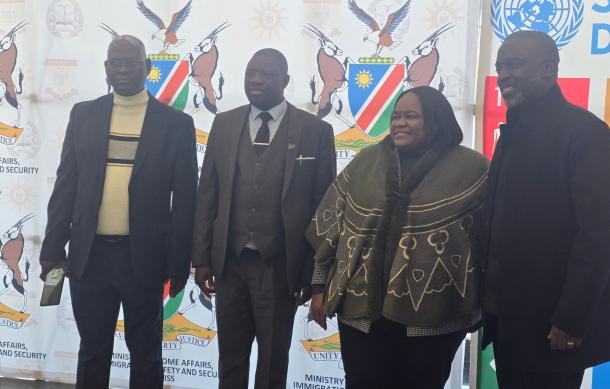
WINDHOEK, June 27  — Namibia‘s Ministry of Home Affairs, Immigration, Safety and Security has officially launched a nationwide campaign to prepare citizens for the rollout of the country’s first contactless chip e-identification (E-ID) document.

This initiative, undertaken in partnership with the United Nations Development Program (UNDP), commenced with the UN Conference on Digital Legal Identity, where public discussions took place in the southern African country’s capital of Windhoek on Thursday.

During the discussions, Namibian Minister of Home Affairs, Immigration, Safety and Security Lucia Iipumbu emphasized the transformative potential of the new E-ID.

“These documents will bring security and accessibility to each and every Namibian for various platforms that normally require presenting physical identification,” Iipumbu said.

“I am here to engage you with the rest of the team, and we are here to make sure that we share information and this partnership culminates into a reality.”

The E-ID is described by the ministry as a smart, secure, and biometric-enabled document designed to modernize identity management and broaden access to services across the community.

It will incorporate biometrics, such as fingerprint recognition, along with gender and age data. This advanced system will enable users to verify their identity and access services in both government and private sectors, including banks, hospitals, and schools, with particular benefits for rural areas.

The event brought together over 500 attendees, including community members from various Windhoek constituencies, political leaders, administrative officials, and local councilors.

The discussions focused on highlighting the benefits and addressing potential challenges associated with this significant new initiative. (Xinhua)

June 27, 2025 0 comment
0 Facebook Twitter Google + Pinterest
Namibia vows to tackle rising drug, alcohol abuse

WINDHOEK, June 27 — Namibia‘s current drug and alcohol situation is a major public health concern, authorities said Thursday.

The Namibian Ministry of Health and Social Services (MoHSS) said that the country observed the International Day Against Drug Abuse and Illicit Trafficking, with an aim to highlight prevention as a critical strategy to curb the drug flow that fuels organized crime worldwide.

“The MoHSS, in collaboration with the development partners, is innovatively hard at work to strengthen and establish more intervention programs to address the harmful effects caused by these social ills,” the MoHSS Executive Director’s office said in a statement.

The health ministry warned that despite progress in some regions, drug abuse remains a significant challenge, impacting individuals, families, and communities through adverse health issues, social disruption, and economic costs.

“Illicit trafficking fuels violence, corruption, and instability across nations,” it added. “We emphasize reducing demand through education, treatment, and harm reduction; disrupting production by closing illicit labs and supporting farmers with alternatives; and dismantling trafficking networks by strengthening trade routes and cutting financial flows, while respecting human rights,” the ministry said. (Xinhua)

June 27, 2025 0 comment
0 Facebook Twitter Google + Pinterest
How Updating Retirement Annuity Beneficiaries Protects Your Legacy

By Shali Ekandjo

In the sphere of financial planning, few actions are as straightforward yet significant as routinely updating the beneficiaries of your retirement annuity (RA). This simple step ensures that your hard-earned assets are distributed in line with your wishes, offering peace of mind for you and security for your loved ones.

Why Updates to Beneficiaries Matter

Life is ever-changing and marked by key milestones such as marriage, the birth of children, divorce, or the passing of loved ones. Each of these life events may prompt a shift in your intentions regarding who should inherit your retirement savings. Failing to update your beneficiary nominations can result in unintended consequences, such as assets being allocated to an ex-spouse or newly added family members being inadvertently excluded from your legacy.

It is essential to recognise that beneficiary nominations on retirement accounts generally supersede the instructions outlined in your will. This means that even if your will reflects your current intentions, outdated beneficiary forms may override those provisions, potentially leading to disputes and legal challenges.

The Namibian Context

In Namibia, the management of retirement funds is governed by specific legislation that underscores the importance of accurate beneficiary information. While the trustees of retirement funds are mandated to distribute benefits equitably, they depend heavily on the beneficiary nominations provided by account holders. Keeping these nominations up to date can greatly streamline the process, ensuring that your assets are allocated as you intended.

Steps to Keep Your Beneficiary Information Current

Annual Reviews: Make it a routine to review your beneficiary nominations every year.

Major Life Events: Update your beneficiaries promptly following significant life changes, such as marriage, divorce, the birth of a child, or the death of a previously named nominee.

Seek Professional Advice: Consult with financial advisers or estate planners to ensure your nominations are aligned with your broader estate planning objectives.

Maintain Documentation: Retain copies of all nomination forms and acknowledgements in a safe place, and ensure your loved ones are aware of where to find them.

Regularly updating the beneficiaries of your retirement annuity is a vital aspect of sound financial planning. It guarantees that your assets are passed on according to your present wishes, reduces the likelihood of conflict among heirs, and safeguards the legacy you aim to leave behind. In life’s constantly shifting landscape, this small but proactive measure can bring lasting clarity and reassurance to those you care about most.

No matter where you are in your financial journey, we’re here to help you find investment options for your goals and secure your legacy for future generations.

Shali Ekandjo, is Key Account Officer at Momentum Metropolitan

June 27, 2025 0 comment
1 Facebook Twitter Google + Pinterest