Advertise Here

Namibia’s financial system remains stable amid global uncertainties: central bank

WINDHOEK, July 23  — Namibia‘s financial system remains stable, sound, and resilient despite heightened global macrofinancial uncertainties, according to a recent assessment by the Macroprudential Oversight Committee of the Bank of Namibia (BoN).

BoN Deputy Governor Ebson Uanguta, in a statement on Tuesday, said Namibia‘s real gross domestic product (GDP) grew by 2.7 percent in the first quarter of 2025, though it was lower than the 4.8 percent growth recorded in the same period last year.

“This was mainly due to growth recorded across sectors such as mining, electricity generation, wholesale and retail trade, tourism, communication, and transport.

Overall real GDP growth is projected to moderate to 3.5 percent in 2025, from 3.7 percent recorded in 2024,” he said.

Uanguta said the downsides to the outlook include heightened risks from persistent global uncertainty, such as trade tensions, geopolitical disruptions, and unpredictable commodity prices.

“Domestically, factors such as water supply disruption at coastal towns, and animal disease outbreaks, as well as slow execution of the development budget, may continue to pose downside risks to growth,” he added.

According to Uanguta, the banking sector remained sound, well-capitalized, and liquid during the first quarter of 2025, with a notable improvement in asset quality.

“The banking sector’s total assets declined by 2.1 percent to 182.7 billion Namibian dollars (about 10.4 billion U.S. dollars) during the first quarter, mainly due to a significant decline in cash and balances, primarily because of dividend payouts,” he noted.

For the non-bank financial institutions (NBFI) subsector, Uanguta said the NBFI also demonstrated soundness and resilience in the first quarter of 2025, despite global equity market volatility.

NBFI assets expanded by 12.8 percent year-on-year to 481.6 billion Namibian dollars by March 2025, supported by positive financial market performance, he added. (Xinhua)
July 23, 2025 0 comment
0 Facebook Twitter Google + Pinterest

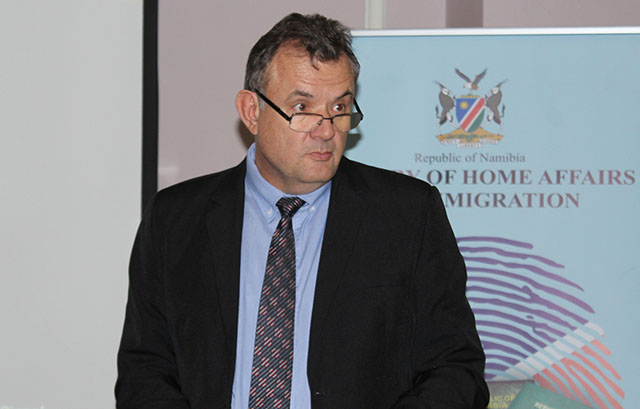
WINDHOEK, July 23– Namibia‘s Ministry of Home Affairs, Immigration, Safety, and Security (MHAISS) has issued a public clarification over its arrival form procedures to address confusion among international travelers.

The updated guidelines aim to streamline the entry process for certain categories of visitors. MHAISS Executive Director Etienne Maritz, in a statement released Tuesday, said that not all travelers are required to complete arrival forms upon entry into Namibia.

This exemption applies to Namibian citizens, individuals domiciled in Namibia (which includes non-Namibians married to Namibian citizens and their dependent children), and holders of permanent residence permits issued under Namibia‘s Immigration Control Act of 1996.

Additionally, travelers holding e-visas are no longer required to complete a separate arrival form if their e-visa explicitly indicates that it serves this purpose.

These individuals are simply required to sign the printed e-visa in the presence of an immigration officer at the port of entry, Maritz said.

However, he said, travelers who obtained their e-visas before the implementation of the new e-visa format will still need to complete an arrival form, as their version does not serve this dual purpose.

“This requirement will remain in effect until all older e-visas are phased out. Travelers with older e-visas are encouraged to log into the e-visa portal and download the updated version of their visa, which now includes arrival form functionality,” Maritz added.

He urged travelers to carefully read the conditions stated on their e-visa and visit the ministry’s website and social media platforms regularly for the latest updates.

“The ministry remains committed to facilitating smooth and efficient entry procedures while ensuring compliance with immigration requirements,” Maritz said.

Namibia launched its new visa-on-arrival application form and e-visa-for-visa-on-arrival system on April 1 to simplify the visa application process for international travelers. (Xinhua)

July 23, 2025 0 comment
0 Facebook Twitter Google + Pinterest
Namibia seeks greater private sector role in transport infrastructure development

WINDHOEK, July 23  — Namibia‘s Sixth National Development Plan (NDP6) has identified the transport and logistics sector as a strategic priority for economic transformation and regional integration and calls for increased investment and coordination to expand infrastructure and boost trade connectivity.

Launched by President Netumbo Nandi-Ndaitwah on Monday, the plan outlines targeted interventions to develop road, rail, port, and digital transport systems as part of Namibia‘s ambition to become a logistics hub for southern Africa, covering 2025 to 2030.

To support this, the NDP6 encourages greater engagement with the private sector in infrastructure delivery, alongside public investment and development cooperation.

“Strategic expansion of infrastructure in areas of transport and logistics… is at the heart of socio-economic development,” the document states.

According to Namibian authorities, the plan highlights the importance of leveraging private sector investment through enabling policies, institutional coordination, and project prioritization.

It includes a focus on high-impact infrastructure projects, such as corridor development and port modernization.

Key trade corridors such as the Walvis Bay-Ndola-Lubumbashi Development Corridor and the Trans-Kalahari Corridor are prioritized for improved integration, with emphasis placed on cross-border connectivity, digital systems, and logistics efficiency, according to the plan.

Meanwhile, the government aims to modernize border infrastructure and logistics services through automation, digital platforms, and improved customs coordination.

By promoting private sector participation in national development priorities, the government hopes to ease fiscal constraints while accelerating infrastructure upgrades that support industrial development and regional trade.

Namibia‘s logistics sector plays a critical role in facilitating regional trade and economic integration in southern Africa.

Strategically located along the Atlantic coast, Namibia serves as a key transit country for landlocked neighbors such as Botswana, Zambia, and the Democratic Republic of the Congo through its well-developed transport corridors, including the Walvis Bay-Ndola-Lubumbashi and Trans-Kalahari corridors. (Xinhua)

July 23, 2025 0 comment
0 Facebook Twitter Google + Pinterest
Namibia plans major farmland expansion, crop export growth by 2030

WINDHOEK, July 23 — Namibia has committed to expanding large-scale farming land and increasing the value of strategic crop exports to enhance food security, bolster the agro-industry, and increase rural incomes by 2030 as part of its new national development plan.

Known as the Sixth National Development Plan (NDP6), the plan was launched Monday by President Netumbo Nandi-Ndaitwah to guide economic and social policies from 2025 to 2030.

According to the plan, the government will increase the area under large-scale crop production from 11,200 hectares in 2024 to 130,000 hectares by 2030, a key part of a broader effort to modernize agriculture and increase the country’s resilience to climate change.

The policy also sets a target to raise the value of strategic crop exports from 1.9 billion Namibian dollars (about 107.9 million U.S. dollars) to 2.8 billion Namibian dollars over the same period.

In addition to expanding cultivated land, the government aims to enhance value chains by investing in irrigation systems, agro-processing facilities, and logistics infrastructure.

The NDP6 also prioritizes research and innovation in crop production, including climate-resilient seed varieties and modern farming techniques, particularly in northern communal areas where food insecurity remains high.

Government support will focus on strategic commodities such as maize, wheat, mahangu (pearl millet), horticulture, and oilseeds, with an emphasis on both domestic food production and export potential, according to the plan.

Agriculture remains a key part of Namibia‘s economy, providing jobs for about one in five individuals. Through the NDP6, the country is expected to make farming more productive and sustainable. (Xinhua)

July 23, 2025 0 comment
0 Facebook Twitter Google + Pinterest
Namibia sets 7 pct growth target in new economic plan

WINDHOEK, July 23 — Namibia has unveiled a new five-year development plan to grow the economy by 7 percent annually, as the country seeks to attract investment, create jobs, and return to upper-middle income status by 2030.

The plan, known as the Sixth National Development Plan (NDP6), was launched by President Netumbo Nandi-Ndaitwah on Monday and will guide economic and social policies from 2025 to 2030.

In the policy document, the country, with a population of approximately 3 million, aims to increase its gross domestic product (GDP) per capita to over 6,500 U.S. dollars by the end of the decade.

This plan reflects our determination to achieve inclusive and sustainable development that leaves no one behind,” Nandi-Ndaitwah said in the foreword.

According to the economic plan, the mineral-rich country seeks to raise manufacturing’s share of the economy to 18 percent and the overall share of secondary industries to 25 percent, with a target of making 60 percent of its exports manufactured goods.

It also aims to target 150 million barrels of oil equivalent and 130 million cubic feet of gas per day by 2030. In the energy sector, the country intends to boost renewable energy capacity to 700 megawatts by 2028 and create 30,000 green jobs.

To support this growth, Namibia plans to invest in transport, energy, digital networks, and water infrastructure, targeting to raise employment from 63 percent to 75 percent by 2030, with a focus on young people and small businesses.

The plan will be financed through both local and international sources, including private investment and public funding, as stated in the policy document. In early July, Namibia was reclassified by the World Bank as a lower-middle-income country.

July 23, 2025 0 comment
0 Facebook Twitter Google + Pinterest
Namibian rugby team turns focus to Africa/Asia play-off for World Cup

WINDHOEK, July 22– Namibia remains firmly in the hunt for qualification to the 2027 Rugby World Cup in Australia, despite a recent setback in the Rugby Africa Cup, according to Namibia Rugby Union president Petri Theron.

Theron announced during a press conference in Windhoek on Tuesday that Namibia’s loss to Zimbabwe in the Rugby Africa Cup final on July 19 prevented the country from securing automatic qualification for the global tournament.

“We now turn our focus to the Africa/Asia Play-off, where we will face the United Arab Emirates (UAE) in Uganda later this year,” he said.

The winner of this vital match will proceed to the Final Repechage Tournament to be held in Dubai from November 8 to 18, he added.

“This final repechage will feature a four-team round-robin competition, with only one team securing the last available ticket to the 2027 Rugby World Cup,” he added.

The participating nations are Brazil, 3rd place in the 2025 South American Rugby Championship; Canada, loser of the South American/Pacific play-off; Belgium, 5th place in the 2025 Rugby Europe Men’s Championship; and Namibia or the UAE, winner of the Africa/Asia play-off.

The team with the highest number of competition points at the end of the round-robin stage in Dubai will secure qualification to the World Cup, Theron said.

Namibia can and will fight to earn our rightful place at the 2027 Rugby World Cup,” he said, adding that the players and management are fully committed to regrouping, reassessing, and reigniting the World Cup campaign. (Xinhua)

July 22, 2025 0 comment
0 Facebook Twitter Google + Pinterest
Namibia launches final development plan toward achieving Vision 2030

WINDHOEK, July 22  — Namibia has officially launched its Sixth National Development Plan (NDP6), the final strategic framework aimed at achieving Vision 2030, the country’s long-term goal to become a developed and industrialized nation.

Speaking at the launch held in Windhoek on Monday, President Netumbo Nandi-Ndaitwah said the NDP6 would serve as the blueprint for her administration and guide national efforts over the next five years.

“With only four and a half years remaining to Vision 2030, this NDP6 is the final installment aiming to transform Namibia into a developed and industrialized nation,” she said.

The plan, structured around four key pillars — economic growth and resilience, human development, environmental sustainability and good governance — encompasses nine thematic areas and 47 focus areas aligned with international frameworks such as United Nations Sustainable Development Goals, African Union Agenda 2063, and Southern African Development Community Vision 2050.

Nandi-Ndaitwah said the implementation, monitoring and evaluation plan for the NDP6 would be finalized by the end of July.

She noted that Namibia‘s recent reclassification as a lower-middle-income country by international financial institutions would enhance the country’s eligibility for grant funding and affordable development financing, supporting implementation of NDP6 objectives.

Reporting on her first three months in office since taking over in March 2025, the president highlighted steps taken to build an inclusive Cabinet, to align ministerial performance agreements with the NDP6, and to introduce a public service culture based on pragmatism, accountability, integrity, meritocracy, and inclusivity.

She said performance contracts for Cabinet ministers will align with NDP6 priorities. “We must commit to hard work and grow the economy to take our people out of poverty,” Nandi-Ndaitwah added. (Xinhua)

July 22, 2025 0 comment
0 Facebook Twitter Google + Pinterest
Hosts Uganda defeat arch-rivals Kenya in Pearl of Africa T20 Series

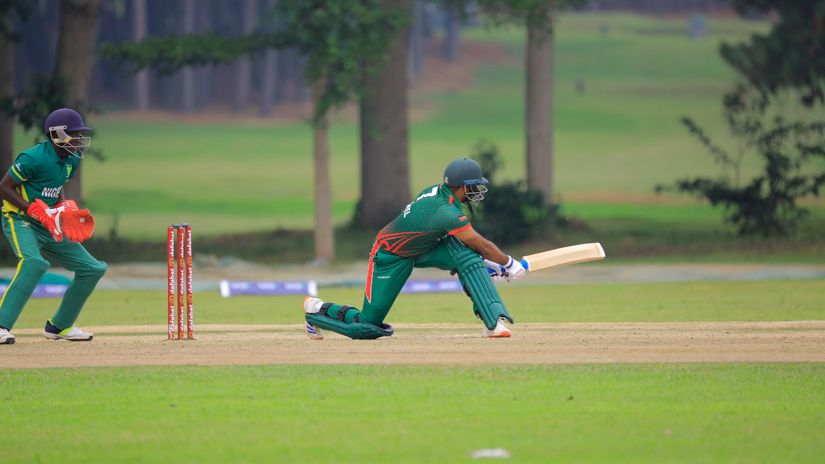
ENTEBBE, Uganda, July 22 — Hosts Uganda defeated arch-rivals Kenya by 28 runs to make it three wins from three in the ongoing Pearl of Africa T20 Series at the Entebbe Cricket Oval on Monday.

Uganda won the toss and opted to bat first, notching 157/5 across their allotted 20 overs. Raghav Dhawan and Robinson Obuya led the charge with contributions of 41 and 40 runs respectively, while Dinesh Kumar Nakransi added 24.

In response, Kenya struggled to gain momentum and were restricted to 129/7 in their 20 overs. Rakep Patel was the standout performer for the visitors with a match-high 58 runs, while Sachin Gill chipped in with 30.

“Again, we are very happy to win our third straight match,” said Uganda captain Juma Miyaji. “We shall go back to the drawing board since it’s a round-robin format and we will face all the other teams for a second time.”

Earlier in the day, the United Arab Emirates notched their second victory of the tournament with a dominant seven-wicket win over Nigeria.

Nigeria were bowled out for just 58 runs in 13.3 overs, with Isaac Danladi top-scoring with 17. The UAE chased down the target comfortably, reaching 59/3 in only 4.5 overs.

Alishan Sharafu scored 36 runs, while Asif Khan added 11. Action will resume on Tuesday with Kenya taking on Namibia, while Uganda face Nigeria, who are yet to register a win in the tournament.

The Pearl of Africa Series serves as crucial preparation for the participating teams ahead of the ICC T20 Men’s World Cup Qualifiers scheduled for September. (Xinhua)

July 22, 2025 0 comment
0 Facebook Twitter Google + Pinterest
221 killed, 592 injured as monsoon rains wreak havoc in Pakistan

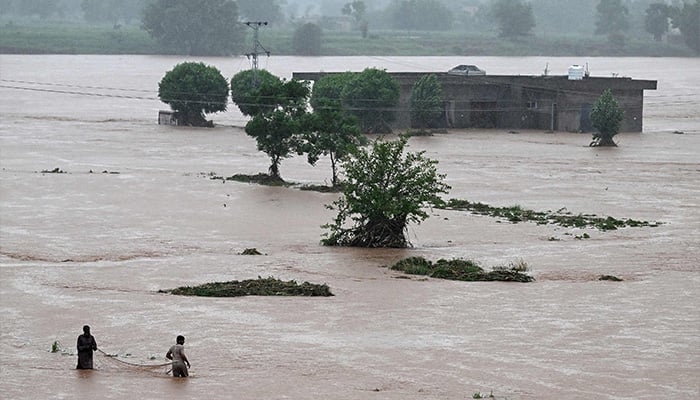
ISLAMABAD, July 22– At least 221 people have been killed and 592 others injured across Pakistan as heavy monsoon rains triggered flash floods and other rain-related incidents since late June, the country’s disaster management authority has said.

In its latest situation report on Monday, the National Disaster Management Authority (NDMA) said the casualties were recorded between June 26 and July 21, with five new deaths and 10 injuries reported in the past 24 hours.

The eastern province of Punjab was the worst affected, with 135 fatalities and 470 injuries. In the northwestern province of Khyber Pakhtunkhwa, 46 people lost their lives and 69 others were injured.

In southern Sindh province, 22 deaths and 40 injuries were reported, while the southwestern province of Balochistan recorded 16 fatalities and four injuries.

The NDMA confirmed no deaths in Gilgit-Baltistan in the north, though three people were injured. Pakistan-controlled Kashmir reported one death and six injuries, while one child was wounded in the Islamabad Capital Territory.

Authorities have issued flood warnings and are coordinating with provincial governments to carry out relief operations and monitor vulnerable areas amid ongoing rainfall. (Xinhua)

July 22, 2025 0 comment
0 Facebook Twitter Google + Pinterest
Health experts, officials convene in Uganda for HIV, hepatitis B, syphilis elimination across Africa

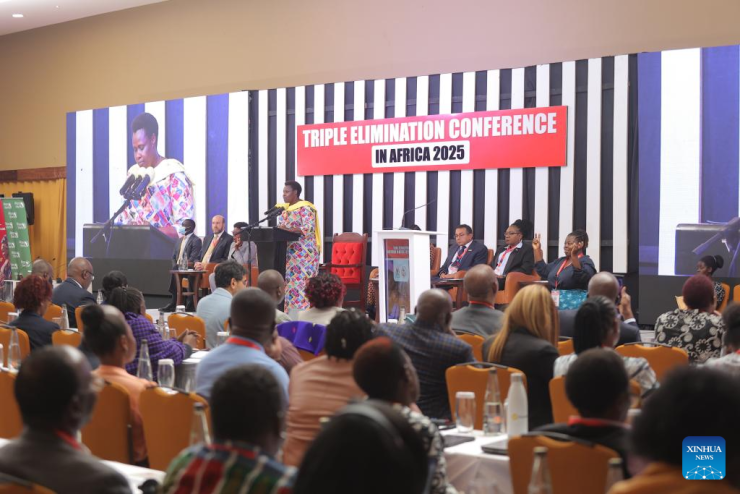
KAMPALA, July 22  — Health experts, policymakers, and researchers on Monday began a three-day meeting in Kampala, the Ugandan capital, to accelerate the elimination of mother-to-child transmission of HIV, syphilis, and hepatitis B across Africa.

The event, held under the theme “Unifying Actions, Transforming Futures: Achieving Triple Elimination in Africa by 2030,” is dubbed as Africa’s first-ever high-level conference focused on the triple elimination of mother-to-child transmission of HIV, syphilis, and hepatitis B.

Ugandan President Yoweri Museveni, represented by Vice President Jessica Alupo, emphasized the importance of unity and innovation in tackling the continent’s health challenges, especially in the face of shifting global health priorities and diminishing funding.

“As Africa, and as a global community, we must act with unity, innovation, and purpose to advance maternal and child health and eliminate mother-to-child transmission of HIV, syphilis, and hepatitis B,” said Museveni.

He noted that the interconnected epidemics of HIV, syphilis, and hepatitis B pose a significant burden to public health, particularly through mother-to-child transmission during pregnancy, childbirth, and breastfeeding.

Uganda’s Minister of Health Ruth Aceng told the gathering that while progress has been made in HIV prevention, care, and treatment, major challenges persist, particularly in addressing syphilis and hepatitis B.

She said that by the end of 2024, Africa had approximately 26.3 million people living with HIV, accounting for 65 percent of the global total.

Meanwhile, syphilis cases are rising worldwide, with eight million adults infected, 700,000 congenital cases, and 230,000 deaths annually.

While Africa has recorded the highest increase in syphilis cases globally, with only Botswana and Namibia currently on track to eliminate mother-to-child transmission, 65 million people across the continent are chronically infected with hepatitis B, contributing 63 percent of the world’s new infections, the minister added.

“Integration is the way to go now, especially in this era of unprecedented funding challenges, where we are already seeing a reduction in funding from development partners,” said Aceng.

According to the event organizers, the conference aligns with the World Health Organization’s 2030 disease elimination targets and the African Union’s Agenda 2063, both of which envision a healthier, more resilient Africa. (Xinhua)

July 22, 2025 0 comment
0 Facebook Twitter Google + Pinterest