By John K WaDisho
Windhoek | 06 August , 2025 — Urban and Rural Development Minister James Sankwasa has issued a sweeping directive instructing all municipalities and town councils across Namibia to sever ties with RedForce Debt Collectors, citing widespread public discontent and negative socio-economic impacts.
In a formal statement dated Monday, Sankwasa said that RedForce’s methods of municipal debt recovery have triggered economic hardship and social unrest in several communities, warning that the company’s continued engagement by local authorities would not be tolerated.
“This ministerial directive should be adhered to without fail,” Sankwasa stated. “RedForce’s operations have had a very negative effect on our citizens.”
The minister instructed all municipalities and town councils currently in contract with RedForce to allow those agreements to lapse. Furthermore, authorities that have not yet engaged the company were explicitly barred from doing so in the future.
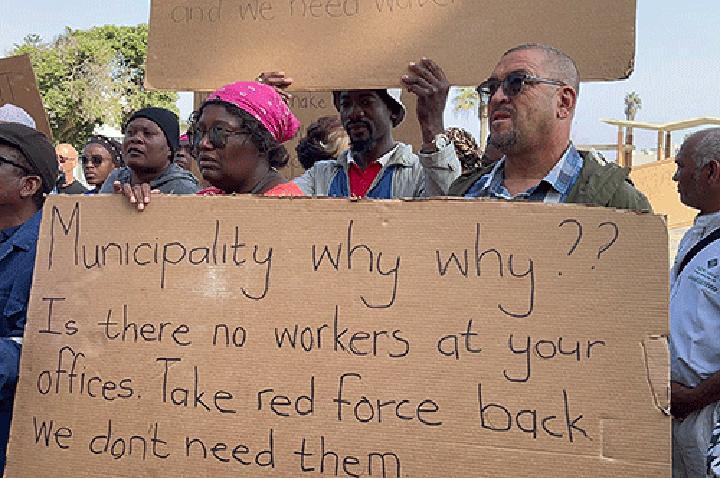
Across the country, communities have voiced anger over RedForce’s practices. In the Zambezi region, residents reported being disconnected from essential services like water and electricity. In Windhoek, where residents have staged public protests, the company has come under fire for what many say are exorbitant collection fees and aggressive tactics that deepen household debt.
Similar complaints have surfaced in towns like Rundu and Oshakati, where small business owners and pensioners claim they’ve been left without basic services due to unresolved arrears handled by the company.
RedForce has over the years secured contracts with numerous local authorities to recover outstanding municipal debts, often with a mandate to improve revenue collection. However, the backlash has grown as more citizens report being pushed further into financial difficulty.
Sankwasa’s directive appears to be a response to mounting political and community pressure, reflecting the government’s attempt to ease tensions and seek more citizen-centered approaches to municipal debt recovery.
The minister concluded his directive by emphasizing the need for local authorities to find alternative, less punitive mechanisms to recover debts—ones that uphold the dignity of residents and avoid exacerbating poverty.