Advertise Here

Namibia loses nearly 4 mln USD to digital fraud in first 10 months of 2025

WINDHOEK, Nov. 25– Namibia’s banking sector has lost more than 65 million Namibian dollars (about 3.75 million U.S. dollars) to digital fraud between January and October this year, Deputy Governor of the Bank of Namibia Leonie Dunn has said.

Fraud losses have risen significantly in recent years, from 8.7 million Namibian dollars in 2020 to over 54 million Namibian dollars in 2024, with social engineering, card-not-present transactions and point-of-sale skimming emerging as persistent threats across the financial sector, Dunn said Monday at the Fraud and Cybersecurity Risk Awareness Summit in Windhoek, the capital.

She said that informal-sector users and pensioners are particularly vulnerable to digital frauds.

Namibia’s expanding digital ecosystem, supported by 88.4-percent 4G coverage, has improved financial access but has also shifted risks from traditional banking halls to mobile devices, where cybercriminals are increasingly active, Dunn said, calling for continuous consumer education and stronger collaboration across banks, fintech firms, telecom operators and regulators.

She said the central bank has strengthened information-security rules, enhanced cybersecurity standards for the national payment system, intensified public-awareness efforts, and is preparing to launch ConsumerConnect, an AI-enabled complaints platform.

Dunn also emphasized the role of the Financial Sector Cyber Resilience and Fraud Mitigation Council, which coordinates efforts to strengthen national cyber readiness and safeguard the country’s digital financial infrastructure.

She called for more efforts to create a national cybersecurity framework, increase fraud-trend reporting, and embed digital trust and safety into all financial innovations, saying sustained action is needed to preserve public confidence in the financial system. (Namibia Daily News/Xinhua)
November 25, 2025 0 comment
0 Facebook Twitter Google + Pinterest
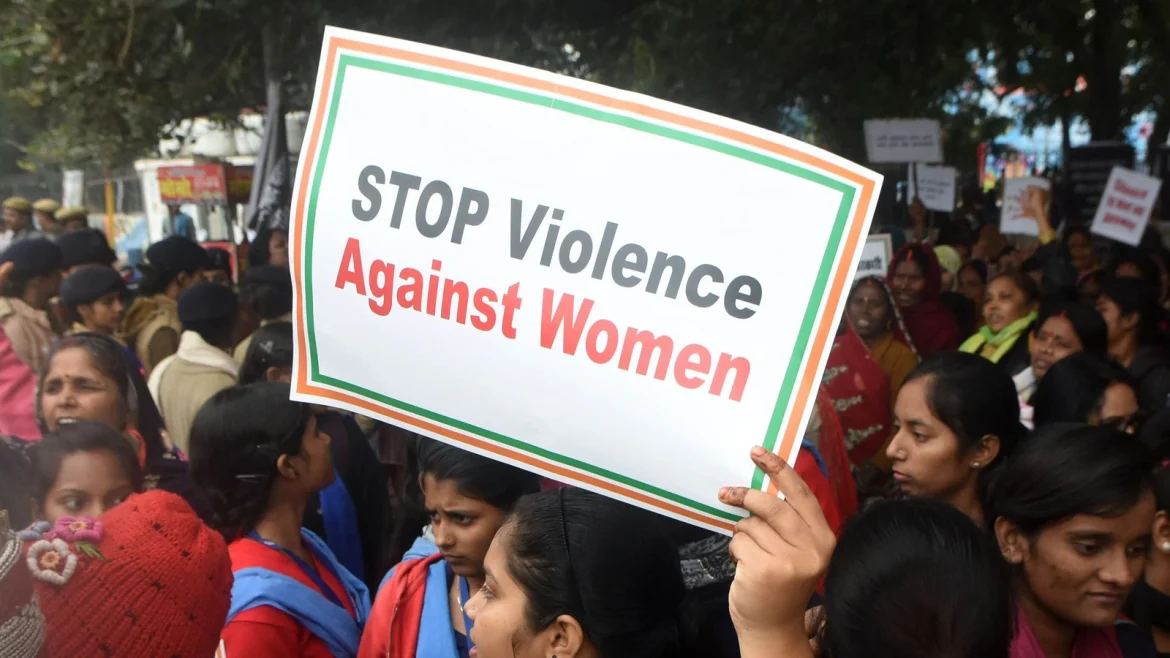
Violence against women, girls remains “alarmingly widespread” in Western Pacific: WHO

MANILA, Nov. 25 – – The World Health Organization (WHO) on Tuesday said violence against women and girls remains pervasive worldwide, with new data showing that nearly one in three has suffered intimate partner or sexual violence in their lifetime, a rate that has barely shifted in 25 years.

The agency said the findings highlight an “indisputable reality” that, despite decades of advocacy and policy measures, gender-based violence persists as a preventable social and public health crisis and a profound violation of human rights.

Such violence leaves long-lasting physical, emotional, and economic impacts, contributing to depression, injury, poor reproductive outcomes, and limiting women’s ability to fully participate in society, the WHO said in a news release.

In the Western Pacific Region, the WHO said more than a quarter of women and girls have experienced intimate partner or sexual violence.

About 9 percent of women aged 15 to 49 suffered intimate partner violence (IPV) in the past year, with national rates ranging from 1.2 percent to 42.2 percent.

Another 4.3 percent endured non-partner sexual violence in the previous 12 months, while 9.4 percent have faced such abuse at some point in their lives.

Nearly one in five women across the region has experienced IPV in their lifetime — lower than the global average of one in four — but WHO stressed that the burden remains severe.

In several Pacific island countries, the agency said lifetime IPV prevalence reaches one in two women, among the highest levels recorded globally.

“The scourge of violence against women and girls remains one of the most egregious violations of human rights and a serious threat to health,” said Saia Ma’u Piukala, WHO regional director for the Western Pacific.

He said the updated evidence reinforces the need for action all the more clearly.

“Governments and communities must use data to drive stronger policies, scale up prevention efforts, and invest in health system readiness, so every girl is protected, and every woman is empowered,” added Piukala.

A new WHO survey on health system readiness to respond to interpersonal violence shows that while many countries are strengthening policies to prevent violence against women and girls, major gaps persist in delivering essential services and collecting reliable data.

According to the survey, more countries are now integrating strategies to address violence into national multisectoral plans and recognizing the pivotal role of health systems in responding to survivors’ needs. But implementation remains uneven.

Although some countries include intimate partner violence and post-rape care in their national health plans, many still struggle to ensure survivors can consistently access these critical services.

Comprehensive post-rape care is available nationwide in only a handful of countries, leading to stark geographic disparities.

Data systems also remain weak, the survey said. Just over half of countries have conducted recent surveys on violence against women, and even fewer maintain usable homicide data, gaps that hinder monitoring, accountability, and effective policymaking. (Namibia Daily News /Xinhua)

November 25, 2025 0 comment
0 Facebook Twitter Google + Pinterest
Arms, munitions discovered in N. Afghanistan

KABUL, Nov. 25– Personnel of the national army have uncovered arms and ammunitions in the northern Afghanistan Balkh province, reported the state-run Radio and Television of Afghanistan (RTA) on Tuesday.

The weaponry, which included six stocks of Kalashnikov assault rifles, a pistol, four hand grenades, and hundreds of bullets and other military equipment’s were discovered during search operations in Sholgara district on Monday, the state-owned media outlet added.

Without providing more details, citing the army sources RTA added that no one has the right to keep or carry arms illegally elsewhere in the country. (Namibia Daily News/Xinhua)

November 25, 2025 0 comment
0 Facebook Twitter Google + Pinterest
1 dead, 2 missing following floods in S. Africa’s KwaZulu-Natal

JOHANNESBURG, Nov. 24– One person has died, and two others remain missing after heavy rains triggered flooding in New Hanover in South Africa’s KwaZulu-Natal (KZN) Province on Sunday night, the KZN Department of Cooperative Governance and Traditional Affairs said on Monday.

The body of a woman in her 40s was recovered in the affected area, the department said, noting that severe weather and flooding have impacted several parts of the province.

Department spokesperson Senzelwe Mzila told Xinhua over the phone that search-and-rescue teams have intensified efforts to locate two missing individuals, a man and a woman, who are still unaccounted for.

“Preliminary information indicates that multiple residential properties have been severely damaged or destroyed, with flood-prone informal settlements being particularly hard hit,” he said.

Thulasizwe Buthelezi, a member of the executive council for cooperative governance and traditional affairs in KZN, urged residents in affected areas to remain vigilant, as more rainfall is forecast in parts of the province this week.

He said the provincial government, working with non-governmental organizations, is providing assistance to those displaced by the floods. Namibia Daily News / Xinhua

November 24, 2025 0 comment
0 Facebook Twitter Google + Pinterest
World Bank raises Kenya’s 2025 economic growth forecast to 4.9 pct

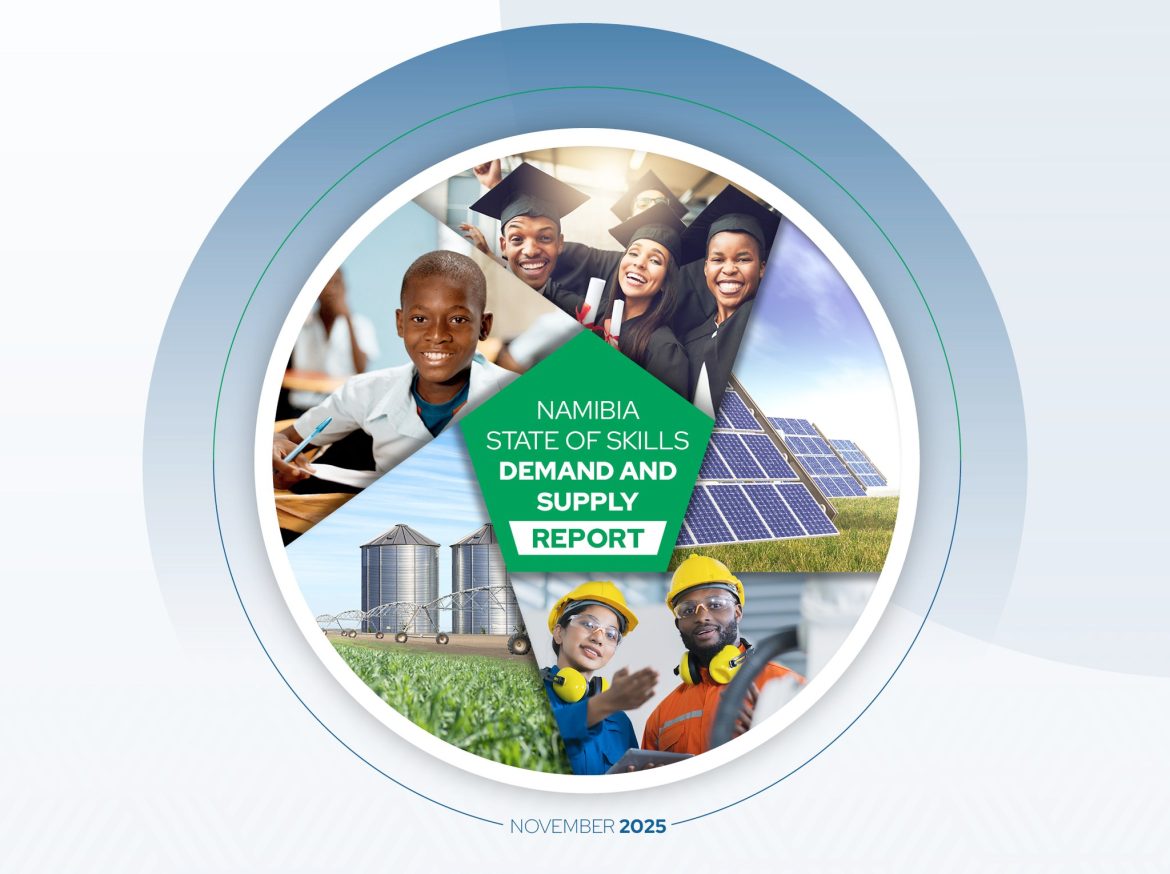
WINDHOEK, Nov. 24 — Namibia on Monday released the State of Skills Demand and Supply Report, which highlights a structural imbalance between the skills supplied by the workforce and those demanded by employers in major sectors of the economy.

Launched by the Namibia Investment Promotion and Development Board, the report shows shortages across more than 73 occupations, with high demand in agriculture, manufacturing, retail, administrative services, health and social work, education, transport, public administration, defense and accommodation services.

The report states that tertiary-education attainment increased from 5.8 percent in 2011 to 11.8 percent in 2023, while there is an oversupply of graduates in business, public administration, education and social sciences and an undersupply in agriculture, manufacturing, engineering and physical planning.

Meanwhile, the report also states that basic-education promotion rates remain low at the senior secondary level, with a 47.3 percent promotion rate and high repetition and school-leaving rates.

According to the report, the technical and vocational education and training (TVET) sector had a low throughput, with only 14 percent of trainees graduating in 2020.

It also stated that there is roughly one TVET trainee for every 28 basic education students. Namibia‘s labor-market indicators show an unemployment rate of 36.9 percent and a youth unemployment rate of 44.4 percent.

The report said that foundational skills remain a concern, with literacy and numeracy performance at low levels in early grades. Namibia Daily News / Xinhua

November 24, 2025 0 comment
0 Facebook Twitter Google + Pinterest
Namibia faces major shortages in technical, digital skills: report

WINDHOEK, Nov. 24– Namibia on Monday released the State of Skills Demand and Supply Report, which highlights a structural imbalance between the skills supplied by the workforce and those demanded by employers in major sectors of the economy.

Launched by the Namibia Investment Promotion and Development Board, the report shows shortages across more than 73 occupations, with high demand in agriculture, manufacturing, retail, administrative services, health and social work, education, transport, public administration, defense and accommodation services.

The report states that tertiary-education attainment increased from 5.8 percent in 2011 to 11.8 percent in 2023, while there is an oversupply of graduates in business, public administration, education and social sciences and an undersupply in agriculture, manufacturing, engineering and physical planning.

Meanwhile, the report also states that basic-education promotion rates remain low at the senior secondary level, with a 47.3 percent promotion rate and high repetition and school-leaving rates.

According to the report, the technical and vocational education and training (TVET) sector had a low throughput, with only 14 percent of trainees graduating in 2020.

It also stated that there is roughly one TVET trainee for every 28 basic education students. Namibia‘s labor-market indicators show an unemployment rate of 36.9 percent and a youth unemployment rate of 44.4 percent.

The report said that foundational skills remain a concern, with literacy and numeracy performance at low levels in early grades. Namibia Daily News / Xinhua

November 24, 2025 0 comment
0 Facebook Twitter Google + Pinterest
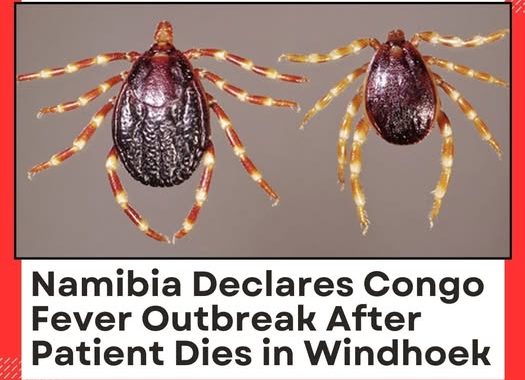
Namibia confirms Crimean-Congo hemorrhagic fever outbreak after fatal case

WINDHOEK, Nov. 24– Namibia has confirmed an outbreak of Crimean-Congo hemorrhagic fever (CCHF) after lab tests established the presence of the CCHF virus in a patient who was hospitalized on Nov. 18 and died the day after in Windhoek, the capital.

In a statement issued on Sunday, the Ministry of Health and Social Services said it has activated response measures, including contact tracing, surveillance and community-level public health interventions, to prevent further transmission.

“We urge the public not to panic as we are taking all necessary steps to contain the situation,” the statement said.

The CCHF is a severe viral hemorrhagic disease transmitted through bites from infected ticks, contact with infected animals or exposure to bodily fluids of infected individuals.

The ministry noted that Namibia previously recorded seven confirmed cases and four deaths between 2016 and 2023.

It urged members of the public to reduce the risk of infection by wearing protective clothing in bushy areas, checking for ticks after outdoor activities, handling livestock safely, and avoiding close contact with suspected or confirmed cases.

“We will continue to monitor the situation closely and provide updates as necessary,” the ministry said.  Namibia Daily News / Xinhua

November 24, 2025 0 comment
0 Facebook Twitter Google + Pinterest
Study finds forever chemicals widespread in whales, dolphins

WELLINGTON, Nov. 24 — PFAS contamination affects more dolphins and whales than previously known, including deep-diving species well beyond human activity zones, new research finds.

Researchers analyzing liver samples from 127 stranded whales and dolphins in New Zealand waters found PFAS, or per- and polyfluoroalkyl substances, in 16 species, with eight species including Hector’s dolphins and three beaked whale species tested for PFAS globally for the first time, an article published by The Conversation said Monday.

Surprisingly, where an animal life does not predict its exposure.

Instead, sex and age are stronger predictors of how much of these pollutants a whale or dolphin accumulates in its body, with older, larger animals and males carrying higher contamination levels, according to the article by the team of New Zealand and Australian researchers.

“PFAS were originally designed to make everyday products more convenient, but they have ultimately become a widespread environmental and public health concern,” it said, adding the study provides stark evidence that “no part of the ocean is now beyond the reach of human pollution.”

These synthetic “forever chemicals,” used since the 1950s in products like non-stick cookware, food packaging, cleaning products, and firefighting foam, persist indefinitely, enter the food web, and can attach to proteins and accumulate in the blood and organs once inside an animal, disrupting hormones, immune function, and reproduction, researchers said.

The contamination is now affecting everything from endangered coastal Maui dolphins to deep-diving beaked and sperm whales, according to researchers from Massey University and the University of Auckland in New Zealand, and the University of Technology Sydney and the University of Wollongong in Australia, among others.

“Even the most remote whales carry high PFAS loads and we know humans are not isolated from these contaminations either,” the authors wrote. (Namibia Daily News/Xinhua)

November 24, 2025 0 comment
0 Facebook Twitter Google + Pinterest
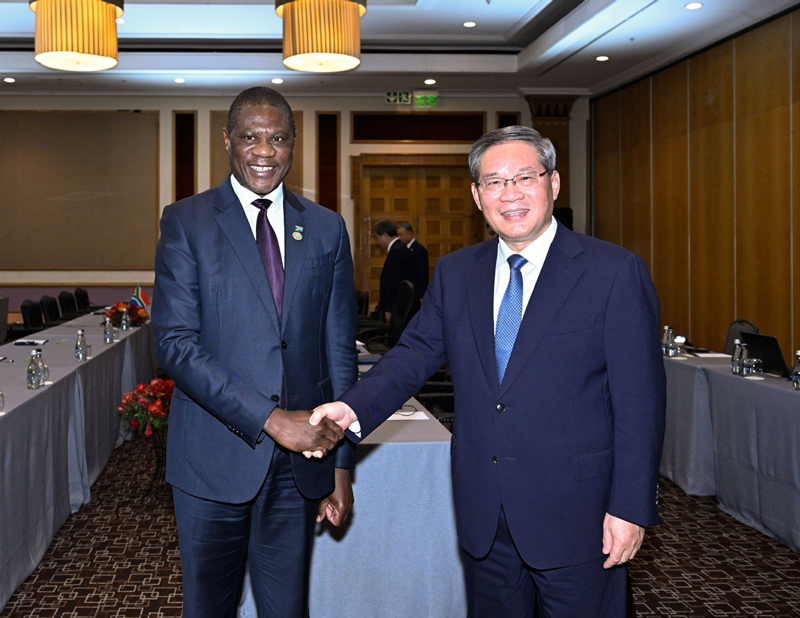
China pledges to deepen cooperation with South Africa — Premier Li

JOHANNESBURG, Nov. 24– China stands ready to work with South Africa to firmly support each other and deepen mutually beneficial cooperation, Chinese Premier Li Qiang said on Sunday. Li made the remarks when meeting with South African Deputy President Paul Mashatile on the sidelines of the 20th Group of 20 (G20) Summit held here on Saturday and Sunday.

China and South Africa are good friends and brothers enjoying a deep friendship, Li said. In September last year, Chinese President Xi Jinping met with his South African counterpart, Cyril Ramaphosa, in Beijing and reached important consensus on advancing bilateral ties, Li said.

China stands ready to work with South Africa to follow the strategic guidance of the two heads of state, further enhance mutual political trust, firmly support each other, deepen mutually beneficial cooperation, and deliver more outcomes of their all-round strategic cooperative partnership in the new era.

Li noted that China is ready to step up alignment with South Africa and help more quality and competitive South African products enter the Chinese market by negotiating and signing an agreement on economic partnership for shared development and advancing in South Africa the early implementation of China’s zero-tariff treatment for 100 percent tariff lines for African countries having diplomatic relations with China.

China supports more competitive Chinese companies in investing in South Africa and enhancing cooperation in such areas as new energy, automobiles, healthcare, digital economy and infrastructure, with a view to broadening and upgrading bilateral cooperation to better serve the modernization of both countries, Li said.

He expressed the hope that South Africa will better protect the lawful rights and interests of Chinese enterprises and the safety of their personnel.

China-South Africa cooperation has long played a leading and demonstrative role in China-Africa cooperation, Li said, pledging that China is ready to strengthen communication with South Africa within frameworks including the Forum on China-Africa Cooperation (FOCAC), promote the implementation of the outcomes of the FOCAC Beijing Summit, and jointly create a bright future of development and prosperity for China and Africa.

Li called on the two sides to step up multilateral coordination and work with the wider Global South countries to promote a more just and equitable international order. For his part, Mashatile expressed gratitude for China’s strong support for South Africa as the host of the G20 Summit.

Stressing that South Africa firmly upholds the one-China policy, Mashatile said that his country stands ready to take China’s implementation of zero-tariff treatment in African countries as an opportunity to deepen bilateral cooperation in economy and trade, industry, agriculture, digital economy and green development, and to enhance people-to-people exchanges so as to advance the continuous and in-depth development of the all-round strategic cooperative partnership in the new era between the two countries.

Chinese enterprises are welcome to invest and operate in South Africa, and South Africa will spare no effort to ensure the safety of Chinese nationals and companies, he said. Mashatile also said that South Africa highly commends the four major global initiatives proposed by President Xi and is willing to work with China to promote multilateral communication and coordination, uphold multilateralism, safeguard the authority of the United Nations and promote the common development and prosperity of Global South nations. Namibia Daily News / Xinhua

November 24, 2025 0 comment
0 Facebook Twitter Google + Pinterest
Malawi, Uganda commit to strengthening trade cooperation

LILONGWE, Nov. 24 — Malawi and Uganda have pledged to deepen trade collaboration, focusing on opportunities that benefit both countries.

Speaking on Saturday at the closing of the two-day Malawi-Uganda Business Forum and Exhibition in Lilongwe, Malawi’s capital, Uganda’s High Commissioner to Tanzania Fred Mwesigye said Malawi stands to gain from a range of trade opportunities in Uganda across agriculture, tourism, manufacturing, and technology.

Mwesigye highlighted Uganda’s establishment of a motor vehicle production plant, which manufactures both fuel-powered and electric vehicles with an annual capacity of 5,000 units, noting that Malawi could benefit from the growing automotive industry.

The envoy also expressed confidence that the two countries can effectively leverage regional and continental frameworks such as the African Continental Free Trade Area to tap into larger markets, reduce business costs, integrate value chains, and create synergies for mutual benefit.

Sphiwe Mauwa, director of administration at Malawi’s Ministry of Industrialization, Business, Trade, and Tourism, said her country is committed to creating an enabling environment for Ugandan businesses as part of efforts to strengthen bilateral trade relations.

She added that the Malawi government will work to address challenges faced by international investors seeking to do business in Malawi.

Held under the theme “Exploring and Tapping into the Rich Opportunities for Deeper Collaboration,” the forum attracted government officials, regulators, investment promotion agencies, financiers, and transport and logistics players from both countries.  Namibia Daily News / Xinhua

November 24, 2025 0 comment
0 Facebook Twitter Google + Pinterest