

By Staff reporter
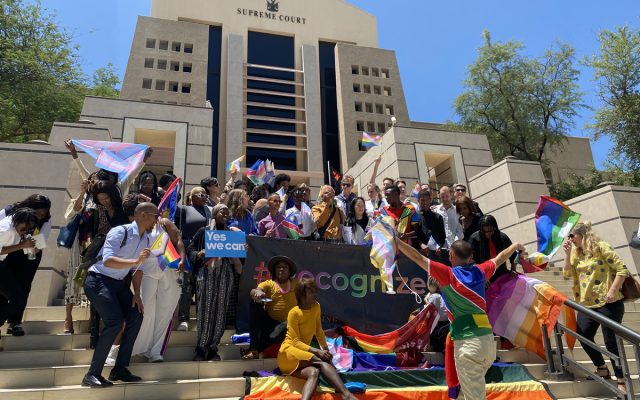
WINDHOEK, March 14 — Namibia’s Supreme Court is set to make rulings on three cases involving LGBTQ and intersex people that will set a precedent for the recognition of same-sex marriages and spousal immigration rights for non-Namibian partners. These cases have incited public debate around LGBTQ and intersex rights in a country where homosexuality is a controversial and polarizing subject.
The first hearing took place on March 3, when foreign nationals married to Namibian citizens were seeking recognition of their marriages concluded outside Namibia in order to access spousal immigration rights such as permanent residence and employment authorization. The second hearing, which took place on March 6, was in the case of a Namibian man married to a Mexican man seeking citizenship by descent for their children born via surrogate. The government has demanded DNA testing to prove that the Namibian national is the biological father of the children. In the last case, a gay Namibian man is challenging the constitutionality of the country’s sodomy law and the prohibition of “unnatural sexual offences.”
These cases represent a crucial moment for the country’s LGBTQ and intersex community and their rights. However, individual people and families fighting a fight bigger than they had foreseen are at the centre of these cases.
The article features the stories of several couples, including South African citizen Daniel Digashu and his Namibian husband Johann Potgieter, and Namibian citizen Anette Seiler and her German wife Anita Seiler-Lilles. Both couples are seeking spousal rights that would be granted to opposite-sex couples. Despite assurances from the Namibian Home Affairs and Immigration Ministry’s personnel, their applications for recognition of their marriages were denied, putting them in a life in limbo.
Another couple, Namibian citizen Phillip Lühl and his husband, Mexican national Guillermo Delgado, are fighting for their children born via surrogacy to be granted Namibian citizenship by descent. The Namibian government has demanded DNA proof that Lühl is the biological parent of the children, despite the fact that both fathers are listed on the children’s South African birth certificates.
These cases have sparked debates about same-sex relationships, family rights, and the constitutionality of sodomy laws in Namibia. While the couples involved in these cases have received support from the local LGBTQ and intersex community and civil society, they face psychological, emotional, and financial strain. As they await the judgment of their hearing, everything remains the same for them: Their futures are uncertain, and they continue to fight for their rights.
– Namibia Daily News

