

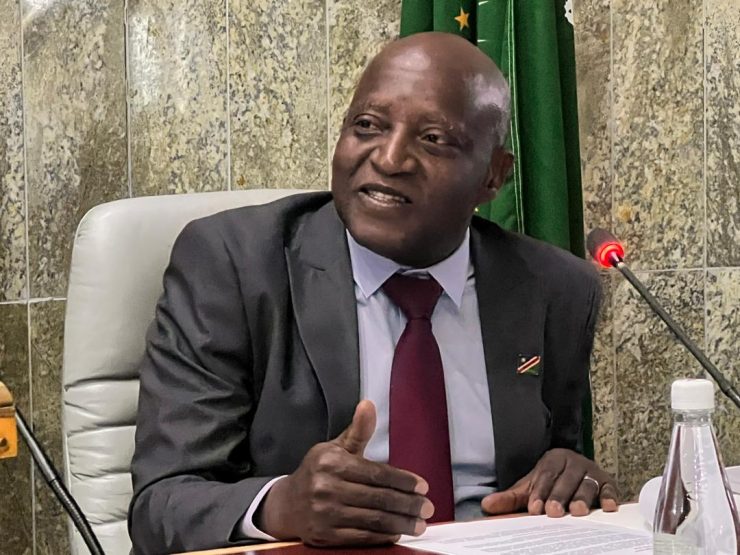
WINDHOEK, Oct. 13 — Namibia officially joined the global community to mark the International Day for Disaster Risk Reduction in Windhoek on Monday, shifting the national focus from reactive crisis response to proactive risk-informed planning.
Speaking under the theme “Fund Resilience, Not Disasters,” Namibian Prime Minister Elijah Ngurare urged the nation and its partners to change how they deal with disasters.
“This is a day that calls us to reflect on the efforts that have been made in the past, requires us to interrogate our current status, and helps us to charge forward with actions we will undertake to curb or mitigate impacts in the midst of increasing frequency and intensity of disasters,” he said.
The prime minister called upon all government entities, regional councils, and local authorities to mainstream disaster risk reduction into their annual plans and allocate appropriate budgetary provisions.
According to Ngurare, the government has and will continue to be determined in reducing losses and protecting lives and livelihoods from the adverse impacts of recurrent disasters such as drought, floods, and wildfires, among others.
“This is reflected in the recent drought relief program, which provided life-saving interventions and sustained livelihoods, particularly of crop and livestock farmers, both in rural and commercial farming areas,” he added.
Namibia has endured recurrent droughts, devastating floods, and, most recently, wildfires in the Etosha National Park and surrounding areas, which affected livelihoods, infrastructure, and biodiversity.
“For a country where over 70 percent of the population depends on climate-sensitive sectors such as agriculture, every disaster event is not just an environmental crisis; it can also be detrimental to our developmental aspirations,” Ngurare added. (Xinhua)

