By Staff Reporter
WINDHOEK, May 1 — UN special rapporteurs have criticized the German and Namibian governments for violating the rights of the Herero and Nama ethnic minorities. The UN representatives urge Germany to take responsibility for all its colonial crimes in Namibia, including mass murder. The Herero and Nama have been excluded from talks over reparations for colonial crimes against their ancestors. They have only been involved indirectly in talks via an advisory committee, and Germany is urged to pay reparations directly to the Herero and Nama, not to the Namibian government.
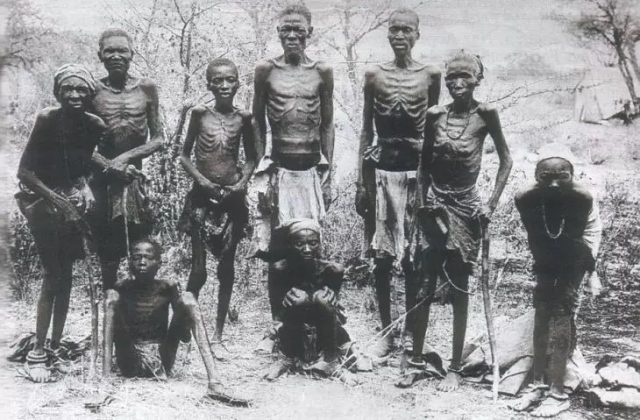
The brutal murder of tens of thousands of Herero and Nama between 1904 and 1908, when Germany was the colonial power in what was then German South West Africa, is at the heart of the matter. In January, lawyers in Namibia operating on behalf of the Herero and Nama submitted a claim to a Namibian court, urging it to declare the “joint declaration” between Germany and Namibia invalid as it contravened various articles in the Namibian constitution. If the claim is successful, the agreement would have to be negotiated anew.
The governments in Berlin and Windhoek agreed on the declaration in 2021 after years of discussion. However, it has never been signed because of its rejection by several Herero and Nama associations, who demanded direct participation in the negotiations, as well as reparations. The agreement had been made on German payments of about €1.1bn (£1bn) over a period of three decades to finance development projects.
In their letter, the UN rapporteurs said Berlin must acknowledge its responsibility “for the crimes carried out during its era of colonial rule,” adding that the agreement failed to include any effective reparation measures or the necessary means for reconciliation. Berlin’s plans for reconstruction and development programs were insufficient to compensate the victims and their descendants for the “scale of the damage that was done to them”. Development aid as a form of reparation was also in danger of “perpetuating rather than rectifying, colonial dynamics”. The rapporteurs were also critical of the way in which the negotiations had been kept secret.
Karina Theuer, an expert in international law and an adviser to lawyers in Namibia, said it would be necessary to start a new negotiation process. She told the German newspaper Frankfurter Allgemeine Zeitung: “This must be transparent and in compliance with legal minimum standards.”
Reparations would bring back dignity, and self-worth, and play a meaningful role in the development and education of the Nama people so that they can share equally in the resources of Namibia. Gaob Johannes Isaak, the chair of the Nama Traditional Leaders Association, told The Guardian in February. Governments cannot be forced to act on the reports of UN special rapporteurs, but they are seen to have a strong influence. The violations of the rights of the Herero and Nama ethnic minorities must be addressed, and justice must be served. – Namibia Daily News