

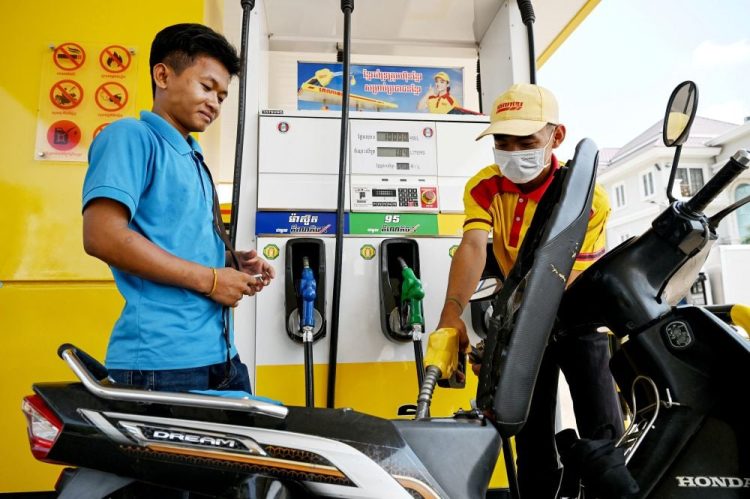
PHNOM PENH, Nov. 5 — Cambodian Prime Minister Hun Manet said on Thursday that the government has injected over 600 million U.S. dollars in subsidies to shield the domestic economy from skyrocketing global fuel prices driven by ongoing conflicts in the Middle East.
“To date, we have subsidized more than 600 million dollars to curb rising fuel costs and stabilize electricity prices,” he said during a live-televised address on state-run TVK.
The prime minister was speaking in Pursat province, where he was distributing rice seeds and relief items to households recently affected by severe flooding.
He said the financial relief has been delivered through a combination of direct electricity tariff subsidies and targeted tax cuts. These measures include lowering import duties on oil and gas, as well as reducing tariffs on electric vehicles, plug-in hybrid electric vehicles, electric stoves, and solar-powered devices.
Hun Manet assured citizens that these subsidy programs will remain in place for as long as global fuel markets remain elevated.
Data from the Ministry of Commerce revealed that the retail price of regular gasoline in Cambodia stood at 5,050 riels (about 1.24 U.S. dollars) per liter on Thursday, a 31 percent surge compared to pre-conflict levels in February. Meanwhile, diesel prices climbed to 5,650 riels per liter, marking a sharp 46.7 percent spike.
Thong Mengdavid, deputy director of the China-ASEAN Studies Center at the Cambodia University of Technology and Science, said the government’s strategy of subsidizing retail fuel through customs duty waivers and value-added tax reductions serves as a crucial fiscal cushion for long-term economic resilience and growth.
“Fuel price hikes escalate transportation and production costs, driving up inflation and eroding purchasing power, particularly for food and agricultural products. This ultimately slows down broader economic activity,” he told Xinhua.
He added that low- and middle-income households, informal workers, and small- and medium-sized enterprises bear the brunt of the crisis, facing steeper living and operating costs while possessing limited financial buffers.
The economic pressure is compounded by Cambodia’s total reliance on imported petroleum and diesel, as the Southeast Asian nation’s domestic offshore oil reserves remain unexploited.(Namibia Daily News/Xinhua)

