

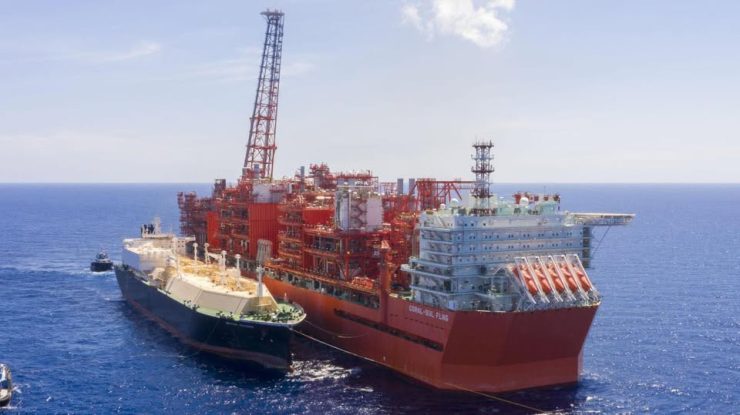
MAPUTO, Aug. 31 — Mozambique expects to attract between 50 billion and 60 billion U.S. dollars in investments in the natural gas sector over the next five to 10 years, President Daniel Chapo said Monday.
The latest development came as the Mozambican government seeks to use the projects to drive domestic industrialization and expand the participation of local companies.
Speaking at the opening of the 61st edition of the Maputo International Trade Fair in Marracuene, Chapo said investments by major energy companies could significantly reshape Mozambique’s economy, but stressed that the country must ensure that local businesses benefit from the expansion of the gas industry.
He cited about 15 billion dollars in investment associated with Eni, another 15 billion dollars from TotalEnergies and a potential 20-billion-dollar investment by ExxonMobil, whose final investment decision, according to Chapo, could be made later this year.
“What we are doing at this moment is working with national small and medium-sized enterprises and national entrepreneurs so that they can prepare for the economic transformation of Mozambique,” he said.
The government wants local companies to become suppliers to major investments in the country, particularly through the implementation of local-content policies and the integration of small and medium-sized enterprises into national and international supply chains.
“A strong economy is not measured only by the number of major investments it manages to attract. It is measured by the number of national companies that these investments manage to grow, the number of jobs they create and the value that remains in the country,” Chapo said.
Mozambique is seeking to move beyond exporting raw materials by using its natural resources to support domestic processing and industrial development. “Our natural gas should not only be exported. It should also feed factories, create industries and generate employment,” Chapo said.
He cited graphite as another example, saying Mozambique should move from exporting the mineral to producing battery components and developing new industrial value chains in the country and across Africa.
The president also said the government intends to use future gas revenues to diversify the economy, directing resources towards agriculture, manufacturing, minerals, energy, tourism, digital transformation, the blue economy and infrastructure.
“What we want is to take gas revenues and invest in other areas of our economy,” he said, adding that the objective was not simply to achieve economic growth but to translate growth into development, income, employment and reduced inequality.
Chapo said the government was preparing national companies for the expected expansion of investment through reforms including the approval of new legislation on mining, petroleum and local content, as well as the establishment of a development bank. “These are all seeds that we are planting for a completely different economy,” he said.
The president also highlighted the need to connect domestic production with transport infrastructure and international markets, citing investments in the ports of Maputo, Beira and Nacala. Mozambique’s push to expand local participation comes as major gas projects advance in the northern Rovuma Basin.
In August, ExxonMobil said the Area 4 consortium had awarded about 1.1 billion dollars in pre-investment contracts for long-lead equipment and early construction activities for the Rovuma LNG Phase 1 project, as the partners move towards a final investment decision.
The country’s gas ambitions also come amid strong global investor interest in natural gas assets. More than 32 billion dollars was spent on gas production acquisitions globally in the first half of 2026, according to Wood Mackenzie data cited by the Financial Times, highlighting continued international appetite for gas resources.
Chapo said the ultimate objective was to transform Mozambique’s abundant natural resources into productive capacity, industrial development and employment.
“The great challenge of our generation is no longer to discover new riches. They exist and are abundant. It is now about transforming wealth into industry, value-added resources, investment and employment,” he said. (Namibia / Xinhua)

