


By John K WaDisho
Windhoek, May21 – – In April 2026, Namibia demonstrated an unwavering commitment to stopping the spread of poliovirus and protecting its children through an innovative and determined vaccination effort. During the third national polio vaccination campaign, which took place from 27–30 April 2026, 836,245 children aged 10 and below were successfully reached, achieving a 90.4 administrative coverage against a target population of 924,888.
An additional 9,690 children received vaccines during followup mopup activities. Quality assessments revealed significant improvement, with 75 of districts passing Lot Quality Assurance Sampling LQAS checks, an increase from 69 in Round 2 and 42 in Round 1, as reported by the World Health Organization WHO.
Dr Loveday Nkwogu, Namibia’s Global Polio Eradication Initiative GPEI Coordinator, described these results as concrete evidence that the nation’s response strategy effectively bridged the existing immunity gap. The campaign successfully confined the virus geographically, with recent isolations of the novel oral polio vaccine type 2 nOPV2 being limited to specific areas, notably around Windhoek and Gobabis.
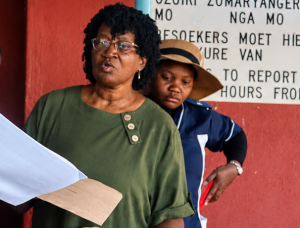
Sr Mbaumba, Retired Nurse, from Opuwo, Kunene Region
Prior to the campaign, the Ministry of Health and Social Services had emphasized that even minor gaps in immunity could jeopardize progress. Although Namibia had maintained a polio‐free status regarding paralysis cases since 2008, the continued environmental detection of poliovirus required swift action under the Global Polio Eradication Initiative framework, in line with WHO guidance.
Remarkable efforts were recorded in the remote Opuwo district of the Kunene Region, where challenging terrain, long travel distances, and mobile communities had previously hindered routine health outreach. In this context, vaccination teams benefited from the support of a police helicopter to traverse rugged mountains and reach otherwise inaccessible communities—successfully vaccinating 497 children who might have been missed.
Moreover, roadblock vaccination points were established at major checkpoints to protect children on the move, and targeted social mobilization through local radio, community announcements, and personal engagement ensured a high level of awareness among caregivers, achieving a 98.6 awareness rate nationally.
The campaign also highlighted the dedication of frontline workers. Among those was Sr Mbaumba, a retired nurse who had served nearly three decades in the Ministry of Health and Social Services. Having returned to volunteer during the COVID19 response, she played a crucial role during the polio campaign by supervising multiple teams in Opuwo.
Her leadership reinforced public trust and helped counter misinformation, a significant challenge, particularly on social media. Furthermore, the campaign underscored the importance of regional solidarity in the face of poliovirus threats.
With paralytic cases reported in neighboring countries such as Malawi and Angola, and coordinated vaccination activities having taken place with Botswana and the Democratic Republic of the Congo, Namibia’s efforts reflected a broader regional initiative.
WHO consistently noted that “viruses do not respect borders,” emphasizing the need for coordinated, crossborder preventive measures. The historic campaign provided clear evidence that collective, wellorganized action can safeguard children’s health and prevent the longterm effects of poliovirus.
While Namibia moved forward with plans for more targeted followup interventions in highrisk areas and enhanced surveillance nationwide, the achievements of April 2026 stand as a testament to the impactful collaboration among health workers, community volunteers, traditional leaders, and retired professionals in the fight against polio. Source: World Health Organization – Namibia Daily News

