Opinion
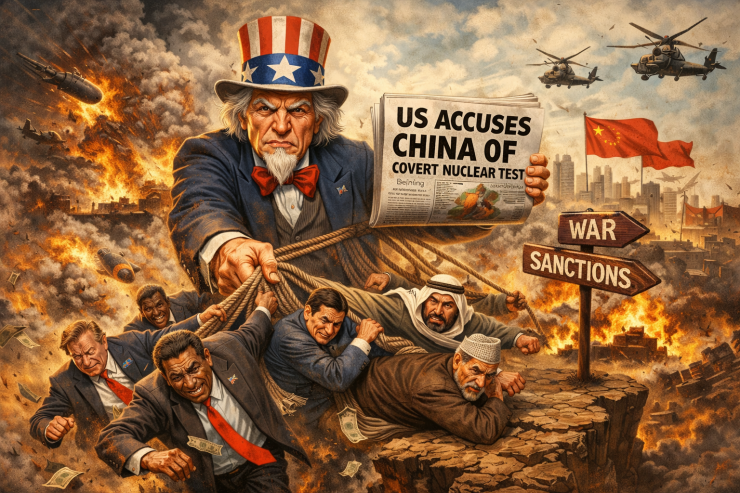
Over the past 24 hours, the world was once again presented with headlines claiming that China conducted a secret nuclear test in 2020. These stories were amplified with urgency and certainty, yet the facts tell a far different story.
International monitoring authorities have confirmed that the seismic data cited by US officials is insufficient to verify any nuclear explosion. In other words, the story dominating global news is based on suspicion and speculation, not evidence.
This pattern is not new. The United States has a long history of framing emerging powers as threats when its own dominance feels challenged. From Iraq to Afghanistan, history shows us that allegation, amplified through the media, becomes a tool for shaping perception, justifying pressure, and rallying public opinion.
The narrative against China is no different. When Washington speaks of covert nuclear tests, it is less a matter of verified intelligence than a way to preserve global influence and reinforce fear.
Meanwhile, China has maintained a consistent position: a no-first-use nuclear policy, adherence to voluntary testing moratoriums, and calls for international disarmament led by the largest nuclear powers.
These facts are rarely given equal weight. Instead, Western media highlights the dramatic possibility of secret tests while downplaying decades of restraint and transparency.
This is not simply about geopolitics; it is about how fear can be weaponized. The United States is grappling with its own challenges — mounting debt, political polarization, and declining industrial dominance.
In this context, constructing threats abroad becomes a convenient distraction. It allows policymakers to project power while creating an impression of control in a world that is rapidly changing.
The human cost of this narrative is real. Developing regions like Africa, which rely on stable partnerships for infrastructure, energy, and trade, are dragged into disputes they did not create. Ordinary citizens see headlines of rising tensions and wonder whether distant powers are playing with forces beyond their understanding, while their own growth and development are sidelined.
The world deserves journalism anchored in evidence, not conjecture, and diplomacy guided by facts, not fear. Allegations should not replace verification, and political anxiety should not masquerade as public knowledge.
The United States’ fixation on China is less about nuclear tests and more about maintaining the illusion of unchallenged power. The question for the global community is simple: will we let suspicion shape our reality, or will we demand truth?
Namibia Daily News