

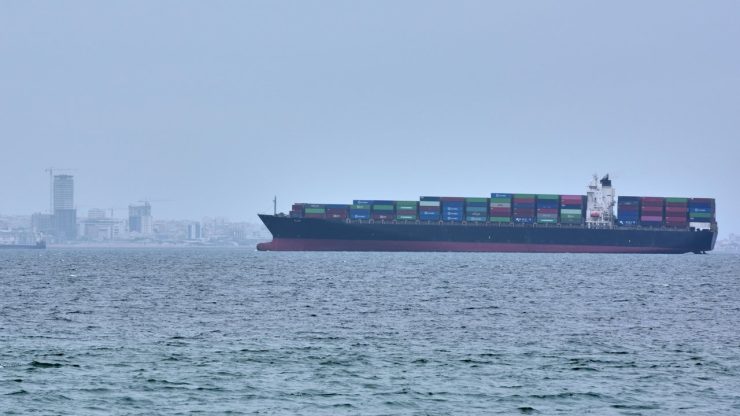
TEHRAN, April 20– The already-strained ceasefire between Washington and Tehran took a sharp turn for the worse Sunday when the U.S. Navy attacked and seized an Iranian-flagged cargo vessel in the Gulf of Oman.
U.S. President Donald Trump announced on Truth Social that the Navy destroyer USS Spruance intercepted the nearly 900-foot cargo vessel Touska. The U.S. Central Command said the destroyer had issued repeated warnings over a six-hour period before taking action. Trump said the Navy “stopped them right in their tracks by blowing a hole in the engine room,” and that U.S. Marines had boarded and taken custody of the vessel.
Iran’s armed forces accused Washington of a brazen violation of the ceasefire agreement, with its military command saying it had launched drones in response and vowing further retaliation against what it called “armed piracy.”
ESCALATING TENSIONS
The seizure did not occur in a vacuum. Iran reimposed restrictions on the Strait of Hormuz Saturday, citing what it described as repeated breaches of trust by the United States, just one day after declaring the waterway “completely open” under the ceasefire. The Revolutionary Guard Navy warned that “no vessel should make any movement from its anchorage in the Persian Gulf and the Sea of Oman,” and that approaching the strait would be considered cooperation with the enemy.
The maritime chaos has alarmed global shipping. According to London-based maritime analytics firm Windward, 35 outbound vessels reversed course after Iran reimposed control over the Strait of Hormuz. About 20 percent of the world’s oil and natural gas normally transits the waterway, and the disruptions have sent Brent crude prices soaring, which repeatedly passed the key psychological threshold of 100 U.S. dollars per barrel since March.
DIPLOMACY DERAILS
Against this combustible backdrop, U.S. hopes for a second round of peace talks in Islamabad appeared to collapse Sunday, even as Washington insisted the talks were on track.
The White House said Vice President JD Vance, who led the first round of face-to-face talks over 21 hours, would lead the U.S. delegation to Pakistan alongside envoys Steve Witkoff and Jared Kushner. Trump said on social media that the U.S. team would arrive in Islamabad by Monday evening and told The New York Times that he might travel to Pakistan if a deal were signed there.
Pakistan appeared to be preparing for a high-profile visit. Authorities in Islamabad tightened security in the capital’s Red Zone, home to government ministries and foreign missions, and ordered officials to work from home Monday, widely interpreted as contingency measures for a possible Trump arrival.
Meanwhile, the Iranian Foreign Ministry denied such arrangements on Monday, saying Tehran has no plans to hold a second round of talks with the United States yet.
Iran’s state-run IRNA news agency previously reported that there was “no clear prospect” for talks under current conditions. It cited Washington’s excessive demands, unrealistic expectations, constant shifts in stance, and the ongoing naval blockade, which Tehran considers a breach of the ceasefire.
Iran cited the ongoing blockade as one of its primary reasons for calling off the expected negotiations. Iran’s semi-official Tasnim news agency went further, reporting that Tehran now considers a return to fighting more likely than continued diplomacy, and that the country is fully prepared for that scenario.
WHAT’S NEXT
The current ceasefire is set to expire by Wednesday, and Washington and Tehran remain deadlocked over control of the Strait of Hormuz. Trump agreed to the original two-week ceasefire on April 7 in exchange for Iran completely opening the strait.
Trump threatened that if Iran did not accept U.S. terms, Washington would “knock out every single Power Plant, and every single Bridge, in Iran.”
Iran said that if war were to resume and Iranian infrastructure came under attack, Tehran would abandon the restraint it had previously shown toward energy firms and facilities in Saudi Arabia, the United Arab Emirates and other regional states.
Iran’s parliament is also moving to codify its maritime posture into law. A lawmaker announced Sunday that Tehran is drafting comprehensive legislation to govern the Strait of Hormuz, which would bar Israel-linked ships and cargoes from the waterway, require vessels from hostile nations to obtain approval from Iran’s Supreme National Security Council, and mandate compensation from countries that have caused Iran losses before their ships are permitted passage.
After the first round of talks collapsed, Pakistan said it would continue to play a mediating role and urged both sides to uphold the ceasefire. Whether that goodwill is enough to forestall a return to hostilities before Wednesday’s deadline remains uncertain. (Namibia Daily News / Xinhua)

