

BEIRUT, July 26 — When the music started and Nawal Nasr stepped into the reception hall at the Nabaa al-Fawara Resort in southern Lebanon’s Hasbani area, what greeted her were rows of empty chairs.
The packed celebration she had imagined had shrunk into a modest gathering of close families and friends, as security fears and financial strain kept many guests away.
Like brides everywhere, Nasr had dreamed of a grand ceremony — elaborate processions, live entertainment, lavish banquets, and hundreds of guests.
Instead, conflict and economic pressures forced the couple to scale back what should have been among the happiest days of their lives. “We don’t blame those who couldn’t attend,” Nasr told Xinhua.
“Traveling to southern Lebanon still carries risks, and attending weddings has become an additional financial burden for many Lebanese families under the current economic conditions.”
“After three years of engagement, we decided to go ahead with our wedding despite the war because there was no clear end in sight to the crisis,” she said.
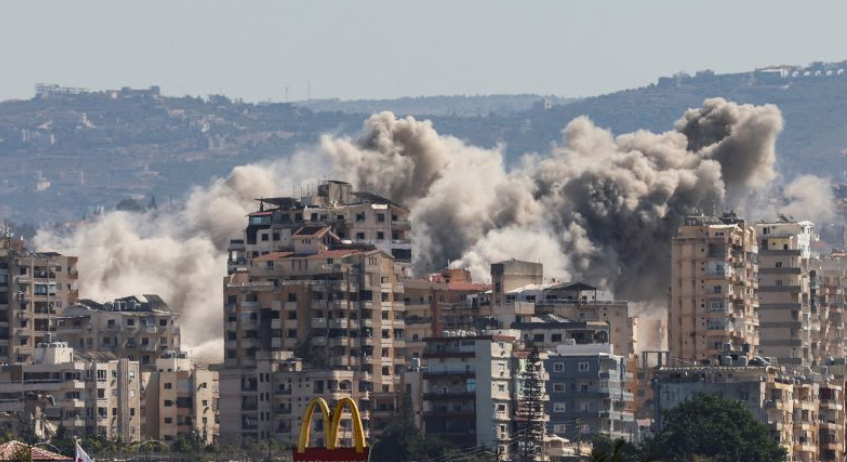
Nasr’s scaled-down celebration illustrates how ordinary Lebanese are recalibrating joy amid crisis. The protracted Hezbollah-Israel conflict and a years-long economic crisis have upended what is traditionally the country’s peak wedding season, dealing another blow to the hospitality sector.
According to the World Bank, the conflict has inflicted an estimated 14 billion U.S. dollars in physical damage and economic losses on Lebanon.
The commerce, industry, and tourism sectors alone account for 3.4 billion dollars of that total. The latest hostilities have compounded an economic crisis that began in 2019, eroding household purchasing power and discouraging many in the Lebanese diaspora from returning home for the summer, traditionally the peak season for weddings.
A vital pillar of Lebanon’s economy, the wedding industry sustains a vast ecosystem of venues, caterers, photographers, decorators, and florists, alongside thousands of seasonal workers.
According to a Ministry of Tourism-commissioned study by local wedding planners, the sector generated roughly 1 billion dollars annually between 2009 and 2019.
During that period, Lebanon hosted some 40,000 weddings each year, averaging 25,000 dollars per event. The sector supported about 40,000 permanent and seasonal jobs across about 600 specialized firms, the study found.
Marwan Hamdan, who owns a wedding venue in southern Lebanon’s Hasbani Valley, said the year began on a hopeful note, with early bookings fueling expectations of a robust summer season.
“Those expectations quickly disappeared as security conditions deteriorated,” Hamdan told Xinhua. He estimated that wedding activity has plunged roughly 70 percent below projections.
His venue, which normally hosts about 80 weddings during the summer, has received only around 20 bookings this year. Mashhour Hammad, who runs a tourist resort in eastern Lebanon’s Rashaya, said the downturn has hit not only the volume of weddings but also their scale.
“Guest lists that once ranged between 300 and 600 people have, in many cases, fallen to between 80 and 120,” he told Xinhua.
Spending on expensive decorations, live performances and other luxury elements has also declined as couples seek to contain costs amid lingering economic hardship, he added.
Exacerbating the crisis, many couples had paid deposits before the conflict escalated, money that venues have struggled to refund after postponements or cancellations.
With business stalled for months, those funds had largely been diverted to cover fixed costs, including salaries and maintenance.
With stability still out of reach, this year’s quiet wedding season reflects the harsh realities facing ordinary Lebanese. The music still plays in halls like Nabaa al-Fawara, but the celebrations have contracted, depicting a country where daily life continues to be redrawn by the twin shadows of economic freefall and war. (Namibia Daily News / Xinhua)

