

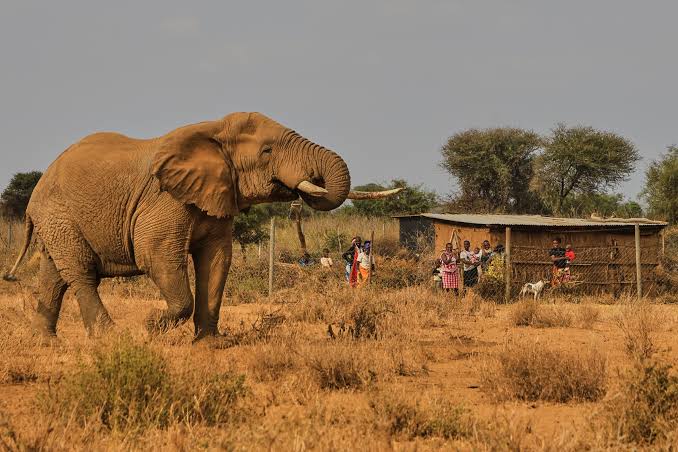
NAIROBI, Aug. 7– The Kenya Wildlife Service (KWS) announced on Friday that it has intensified aerial and ground surveillance across the Amboseli ecosystem following the deaths of 16 elephants within one month.
According to the KWS, it is investigating 16 elephant deaths reported between June 24 and July 31, primarily involving adult females and calves that exhibited weakness and partial limb paralysis.
“Working with communities and conservation partners, KWS has intensified elephant surveillance, ranger patrols and veterinary monitoring across the ecosystem to address any further cases and safeguard our wildlife and visitors,” the wildlife agency said in a statement.
Preliminary findings show no evidence of an infectious or transmissible disease, reassuring the public and tourism stakeholders that Amboseli National Park remains open and fully operational.
Since the first case was reported in late June, the KWS has deployed veterinary and scientific teams from Nairobi, Tsavo and Amboseli to treat affected animals, conduct post-mortem examinations, collect samples and step up surveillance.
The agency is collaborating with the Government Chemist and the University of Nairobi to conduct toxicological, microbiological and other laboratory tests, alongside water sampling to screen for potential environmental contaminants.
According to the KWS, preliminary analysis by the University of Nairobi suggests cyanide poisoning as the likely cause of the cases examined. The agency is awaiting the results of confirmatory tests to match laboratory findings with specific case records and determine the source and pathway of exposure.
The KWS said it also requested the Pest Control Products Board to lead a multi-agency technical team to investigate whether pest control products or crop-protection chemicals were improperly used, stored or disposed of in the wider Amboseli ecosystem.
Authorities are assessing potential contamination in water, soil and forage, while also investigating whether giant star grass (Cynodon plectostachyus), a naturally cyanogenic species, could have contributed to the exposure.(Namibia Daily News / Xinhua)

