

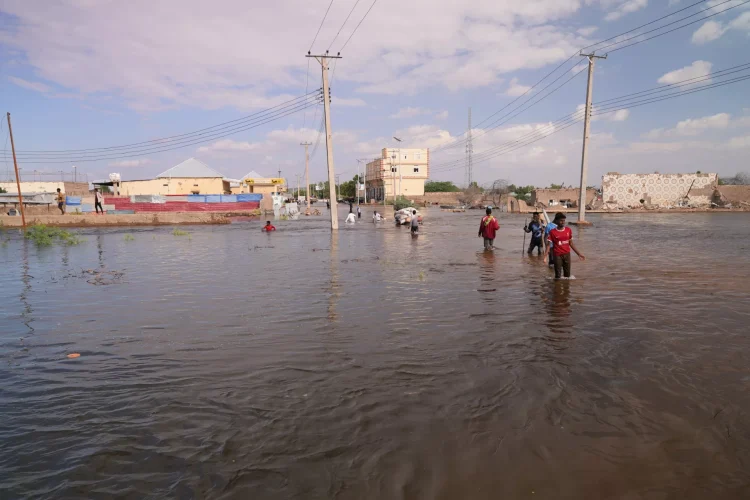
MOGADISHU, Oct. 5 — Somalia has issued an emergency alert to communities living in flood-prone areas as it strengthens early warning and evacuation measures ahead of potential heavy rains and flooding linked to El Nino.
The Somali Disaster Management Agency (SoDMA) announced on Sunday that the country has entered the Deyr rainy season, with heavy rainfall expected across several regions.
“SoDMA urges communities to remain alert and take necessary precautions to prepare for the expected rains and potential flooding,” the disaster agency said in a statement issued in Mogadishu on Sunday evening.
The country’s meteorologists have confirmed that 2026 is a Super El Nino year, with forecasts pointing to exceptionally heavy rainfall during the October-December Deyr rainy season.
According to SoDMA, the greatest risk lies along the Jubba and Shabelle river basins.
The disaster agency also warned that ongoing El Nino conditions could trigger heavy rains, flash floods, and river overflowing, posing severe risks to low-lying areas, riverine communities, and flood-prone locations.
The El Nino threat comes as many Somali communities struggle to recover from compounding climate shocks, including severe drought, localized flooding, ongoing conflict, and displacement.
According to the United Nations, heavy flooding risks triggering further population displacement, destroying infrastructure, disrupting livelihoods, and elevating the threat of waterborne diseases, particularly for vulnerable populations in riverine and low-lying areas.
SoDMA advised residents to monitor official alerts, identify evacuation routes, and assemble emergency kits containing food, water, medical supplies, and essential documents. Communities situated along the Jubba and Shabelle rivers are urged to track water levels continuously.
In September, the United Nations Office for the Coordination of Humanitarian Affairs (OCHA) warned that projected El Nino rains and severe flooding could affect up to 3.4 million people in Somalia across 16 regions between October and December.
OCHA warned that the combination of flooding, displacement, and poor sanitation threatens to trigger widespread waterborne disease outbreaks, compounding a crisis where at least 380 health facilities have already closed or scaled back operations due to severe funding shortages.
The Integrated Food Security Phase Classification warned in September that flooding linked to El Nino could push internally displaced people in Baidoa, in the southwestern Bay region, into a risk of famine between October and December, with a follow-up review due this month to confirm the assessment. (Namibia Daily News/Xinhua)

