Advertise Here

Israel strikes Beirut, targeting Hezbollah’s “de facto chief of staff”

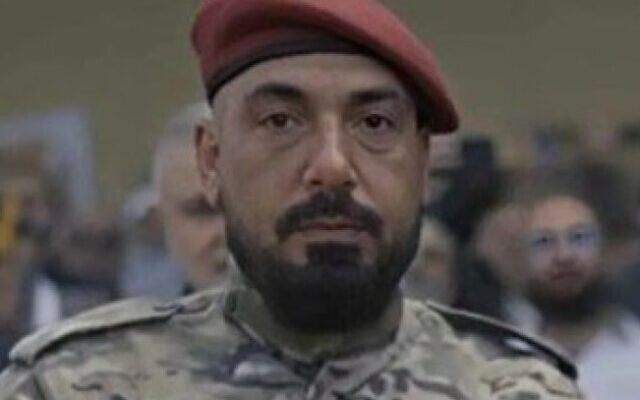
JERUSALEM, Nov. 23 — Israeli Prime Minister Benjamin Netanyahu said Sunday that Israel struck the Lebanese capital of Beirut in an attempt to kill Haytham Ali Tabatabai, whom Netanyahu described as Hezbollah’s de facto chief of staff.

The strike was conducted “in the heart of Beirut, targeting Hezbollah’s chief of staff, who led the organization’s force build-up and armament efforts,” according to a statement by Netanyahu’s office.

Local TV channel Al Jadeed reported that the strike killed at least one person and injured several others. “Israel is determined to pursue its objectives anywhere and at any time,” Netanyahu said.

Earlier in the day, Netanyahu told the weekly cabinet meeting that Israel “will continue doing whatever is necessary to prevent Hezbollah from reestablishing its ability” to threaten Israel.

The Israeli military confirmed the strike in Beirut, saying it targeted a “key” Hezbollah figure, without elaborating on the outcome of the attack. Footage showed extensive damage to cars and buildings in Beirut’s southern suburbs.

Lebanon’s state-owned National News Agency reported that the strike hit an apartment building in the Haret Hreik neighborhood, with injuries reported.

Since the ceasefire took effect on Nov. 27, 2024, which largely ended about 13 months of cross-border fighting between Israel and Hezbollah, Israel has struck Beirut a few times, while attacking other areas in southern and eastern Lebanon almost daily, claiming they are aimed at eliminating Hezbollah “threats.”

It has also maintained forces in five main positions in the Lebanese border area. On Friday, the Lebanese Ministry of Health said Israeli strikes and violations had killed 331 people and injured 945 others in Lebanon since Nov. 28, 2024.

Israel’s Home Front Command has not updated its civil defense guidelines for residents in the north, indicating that authorities do not anticipate an imminent response from Hezbollah. Namibia Daily News/ Xinhua

November 23, 2025 0 comment
0 Facebook Twitter Google + Pinterest
Global South consensus drives global governance reform

JOHANNESBURG, Nov. 23  — By convening on African soil for the first time, the 20th Group of 20 (G20) Summit sends an unmistakable signal: the Global South is no longer content with being a passive rule-taker. It is stepping forward as a collective force to improve global governance and drive development.

Accounting for around 85 percent of global GDP and two-thirds of the world’s population, the G20 remains a primary platform for global governance. This year’s G20 South Africa Summit’s Leaders’ Declaration underscores that multilateral cooperation is essential to tackling global challenges, and it calls for stronger support for developing countries to advance inclusive growth and sustainable development.

Such calls come at a time when unilateralism, protectionism and geopolitical tensions are reshaping the international landscape, global economic recovery is fragile, development gaps continue to widen, and institutions meant to safeguard multilateral cooperation, including the United Nations, are under strain. These pressures have laid bare a deepening governance deficit that the Global South is increasingly unwilling to accept as the status quo.

In the meantime, the rise of emerging markets and developing countries has sharpened awareness across the Global South that the existing global governance system neither fully reflects their interests nor adequately represents their voice.

Against this backdrop, the two-day summit, themed “Solidarity, Equality and Sustainability,” takes on heightened significance. Global South countries made clear their expectation that all parties should uphold multilateralism, bridge the North-South development divide, and work toward a more inclusive and equitable global development framework — one capable of bringing greater stability to an uncertain world.

China’s actions reflect this broader shift. As an important member of the G20 and the largest developing country in the world, China, in September, proposed the Global Governance Initiative, which rests on five core principles: upholding sovereign equality, adhering to the international rule of law, practicing multilateralism, advocating a people-centered approach, and prioritizing concrete actions. The initiative has received widespread recognition, with many highlighting China’s constructive role in providing global public goods and advancing fairer global governance.

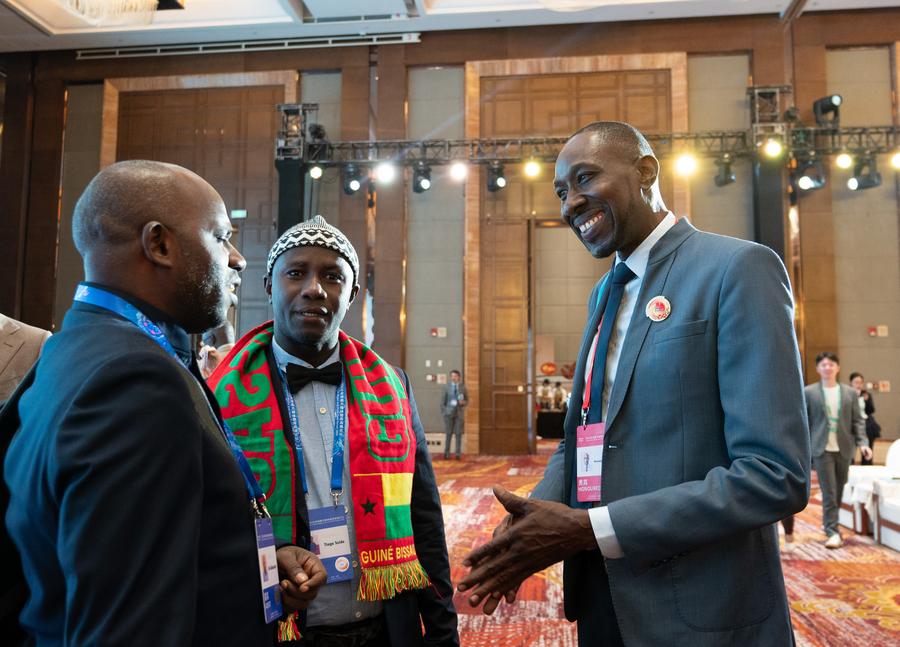
Participants communicate with each other after the opening ceremony of the 2025 Global South Media and Think Tank Forum in Kunming, southwest China’s Yunnan Province, Sept. 6, 2025. (Xinhua/Gao Yongwei)

China-Africa cooperation illustrates how Global South partnerships can translate shared priorities into tangible development gains. Grounded in the development realities of African countries, this cooperation has strengthened their capacity-building efforts and drawn greater attention to Africa’s long-neglected development agenda. It has also helped amplify the collective influence of the Global South in global governance reform.

Meanwhile, China and Africa have worked together to advance the building of a fairer and more equitable international order and to voice the aspirations of Global South countries on the world stage, enabling the Global South to play an increasingly important role in the ongoing transformation of global governance.

Global governance is at a new historic turning point, and the need for multilateral cooperation and shared development has never been greater. As major forces of the Global South, China, Africa, and other developing countries should continue working together, uphold fairness and justice, and advance practical cooperation to help steer global governance toward a more just and equitable system. Namibia Daily News / Xinhua

November 23, 2025 0 comment
0 Facebook Twitter Google + Pinterest
Chinese premier urges deeper China-Africa cooperation for common modernization

JOHANNESBURG, Nov. 22  — During his ongoing trip to Africa, Chinese Premier Li Qiang called for deeper China-Africa cooperation to create broader room for future collaboration and advance common development, as reflected in a range of pro-development China-Africa projects.

In talks with South African President Cyril Ramaphosa ahead of the 20th Group of 20 (G20) Summit scheduled for Saturday and Sunday, Li said on Friday that China is ready to continue working with South Africa to carry forward their traditional friendship, and expand cooperation across various fields, so as to better promote the common development of the two countries, as well as unity and cooperation between China and Africa as a whole.

China and South Africa have jointly initiated a cooperative initiative to support Africa’s modernization, and encourage the international community to increase attention and investment in Africa, he said.

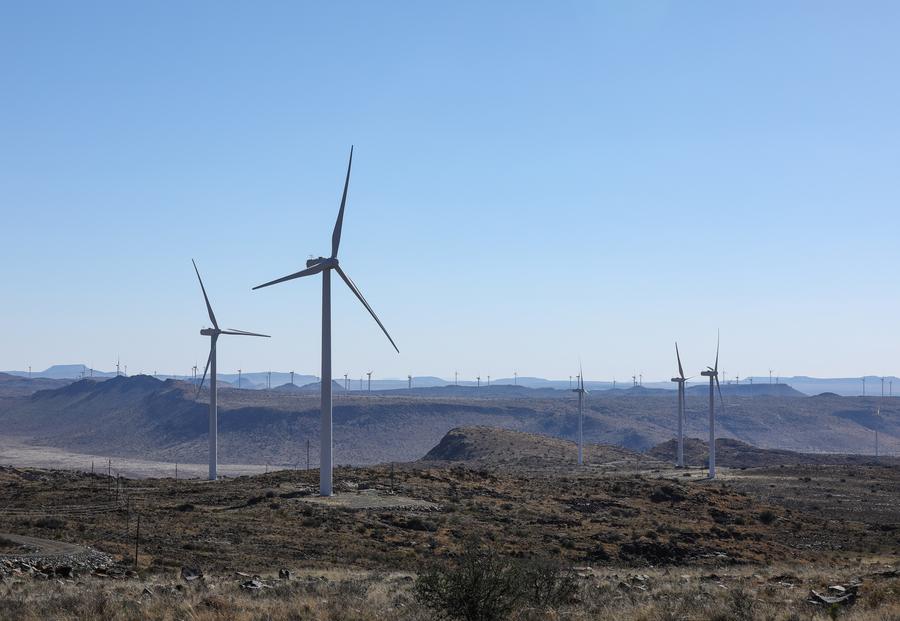
De Aar Wind Power Project, the first wind project in Africa developed, built and operated by a Chinese power company, now stands as South Africa’s largest operational wind farm, supplying clean electricity to about 300,000 households and thus helping ease the country’s power shortages.

Standing as a flagship example of long-standing China-South Africa cooperation, the project exemplifies how joint efforts can turn Africa’s modernization aspirations into tangible results.

“De Aar has really, really, really benefited so much,” said Thabiso Moleko, a deployment counselor with the De Aar Department of Employment and Labor in South Africa’s Northern Cape Province, noting that the wind power project has fostered skills development among local people.

“In the future, as a resident of the Northern Cape myself, we really want to see a big collaboration, want to see people working, want to see a better De Aar, want to see a better South Africa,” Moleko said.

During his official visit to Zambia on Thursday, Li attended the ground-breaking ceremony of the Tanzania-Zambia Railway revitalization project in Zambia’s capital of Lusaka, where he said that China-Africa cooperation has embarked on a new journey toward the shared dream of modernization.

Describing the railway as a landmark project of China-Africa cooperation, Li said that China stands ready to work with Zambia and Tanzania to ensure that this railway, brimming with hope, shines with renewed splendor in the new era, and injects greater vitality into the development of Tanzania and Zambia, and even the entire Africa.

This photo taken on Oct. 22, 2025 shows wind turbines of De Aar Wind Power Project in De Aar, Northern Cape, South Africa. (Xinhua/Han Xu)

Zambian President Hakainde Hichilema and Tanzanian Vice President Emmanuel Nchimbi, who attended the ceremony together with Li, said that revitalizing the railway embodies the shared future of the three nations and their joint efforts to build a better tomorrow, and that the railway will become a vivid example of how Chinese and African people carry forward their friendship and work together for revitalization.

Also at the ceremony, Li said that China will help implement more “small and beautiful” projects in areas such as healthcare, poverty alleviation and agricultural development along the line to better improve people’s livelihoods.

“Smile Journey,” a Chinese medical program aimed at providing free surgical treatment to local patients with cleft lips or palates, was launched in Zambia earlier this month, a testament to China’s commitment to such projects in Africa.

As one of the outcomes of last year’s Forum on China-Africa Cooperation (FOCAC) summit, the program is expected to benefit about 60 Zambian patients with the condition.

The trajectory of deepening China-Africa cooperation is clearly visible in the steady growth of trade and the alignment of policy frameworks.

At the 2024 FOCAC summit, China announced that it would give all the least developed countries with which it has diplomatic relations, including 33 African countries, zero-tariff treatment for 100 percent tariff lines, becoming the first major developing country and first major economy to take such a step.

This year, China has done even more to share its market dividends, extending the treatment for 53 African countries with which it has diplomatic relations.

Li highlighted the policy in separate meetings with the presidents of Zambia and South Africa, stressing its role in boosting bilateral trade and expanding cooperation across multiple sectors.

China is ready to work with Zambia, taking the implementation of China’s zero-tariff treatment for Zambia as an opportunity, to expand bilateral trade and tap cooperation potential in industrial sectors such as mining, new energy vehicles and artificial intelligence, Li told the Zambian president on Thursday.

By lowering trade barriers and expanding import quotas, the policy enables developing nations to integrate into global value chains on fairer terms, a move hailed by experts on Africa.

“Africa is the continent with the largest number of least developed countries, and China’s zero-tariff measure aims to drive industrial cooperation upgrading through large-scale trade, enhance China-Africa cooperation, and encourage more countries from the Global South to jointly pursue modernization,” said Yang Baorong, a researcher at the China-Africa Institute. Namibia Daily News/ Xinhua

November 23, 2025 0 comment
0 Facebook Twitter Google + Pinterest
Houthi court sentences 18 Yemeni UN aid workers to death for allegedly spying for Israel

SANAA, Nov. 23 — A Houthi-run court in Yemen’s capital Sanaa on Saturday sentenced 18 Yemeni aid workers employed by United Nations humanitarian agencies to death for allegedly spying for Israel.

The ruling says that the “convicts” will be executed by firing squad in a public place in Sanaa. Meanwhile, the same court handed two others, including a woman, 10-year prison terms on the same charges.

In a statement broadcast by Houthi-run al-Masirah TV, the court accused the convicts of providing Israel, the United States, Britain, and Saudi Arabia with information on dozens of Houthi leaders’ locations, movements, and secrets related to political, military, and security matters, as well as information about missiles, including their launch sites and storage facilities.

The court added that the convicts recruited several citizens, installed surveillance cameras, and received payments in return, actions that led to attacks on multiple military, security, and civilian sites, causing dozens of deaths and extensive infrastructure damage.

In August, a series of Israeli airstrikes on Sanaa — carried out in response to Houthi missile and drone attacks toward Israel — killed dozens of Houthi officials, including 12 “ministers” and Mohammed Abdulkarim al-Ghamari, chief of staff of the Houthi military forces, dealing a major blow to the movement.

In response, the Houthis stormed several UN aid agency offices, detaining dozens of Yemeni aid workers, including those sentenced Saturday.

Last week, Houthi-run al-Masirah TV aired footage showing those sentenced delivering what the Houthis claimed were “confessions.”

United Nations Secretary-General Antonio Guterres has strongly condemned the Houthis, calling for the immediate and unconditional release of all UN aid workers, and warned that obstructing humanitarian relief in Yemen puts millions at risk of famine.

Since October 2023, the Houthis have launched a series of missile and drone attacks toward Israel to show solidarity with Palestinians amid the Israel-Hamas war in Gaza. Israel responded with airstrikes on Houthi-controlled sites and cities, resulting in casualties. (Xinhua)

November 23, 2025 0 comment
0 Facebook Twitter Google + Pinterest
Israeli airstrikes kill at least 22 in Gaza as Hamas voices “anger” to mediators

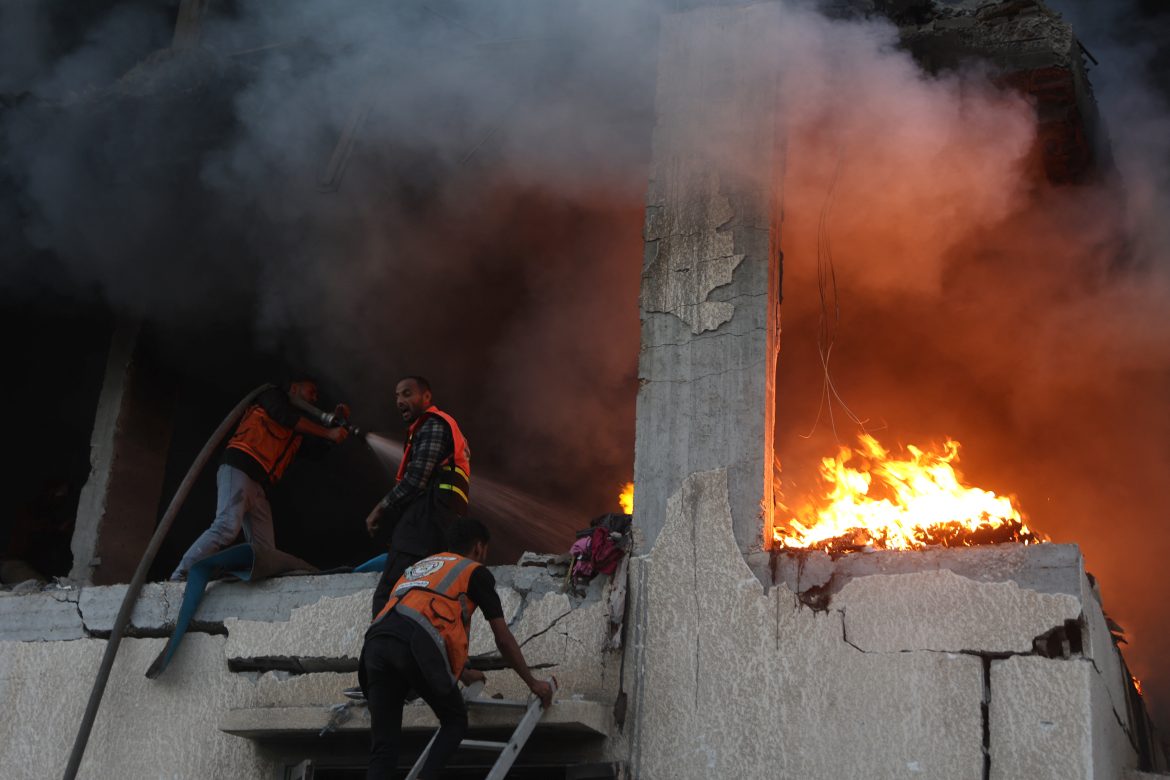
GAZA, Nov. 23 — Gaza’s Civil Defense said on Saturday that Israel launched a series of airstrikes on the Gaza Strip, resulting in at least 22 deaths and dozens of injuries in the enclave.

According to Mahmoud Bassal, spokesman for Gaza’s Civil Defense, those killed included a commander from the al-Qassam Brigades, Hamas’s armed wing.

A Hamas source, speaking on condition of anonymity, told Xinhua that the movement has informed regional mediators of its “anger” over continued Israeli attacks on the Gaza Strip, despite Hamas and other Palestinian factions adhering to the ceasefire agreement.

The source added that Hamas urged the mediators to “intervene immediately to prevent the collapse of the agreement as Israel seeks,” stressing that the movement and other factions remain committed to the ceasefire despite the escalation.

The source also warned that Israel’s continued killing of residents in the enclave, along with what he described as the U.S. “slow pressure” on Israel to restrain its actions, could push the situation toward potential chaos.

The Israeli army launched wide-ranging attacks on several areas of the coastal enclave on Saturday afternoon, leaving multiple casualties, according to local medical sources.

In a statement, the Israel Defense Forces said its troops had completed a pursuit of 17 militants who emerged from a tunnel network in eastern Rafah in the southern Gaza Strip, killing 11 of them.

Since the ceasefire in Gaza took effect in October, Israeli attacks have killed 318 people and injured 788 others, bringing the total death toll since Oct. 7, 2023, to 69,733 and the number of injured to 170,863, according to the Gaza-based health authorities. Namibia Daily News / Xinhua

November 23, 2025 0 comment
0 Facebook Twitter Google + Pinterest
Ending Ukraine crisis requires consent of Ukraine, Europe: Merz

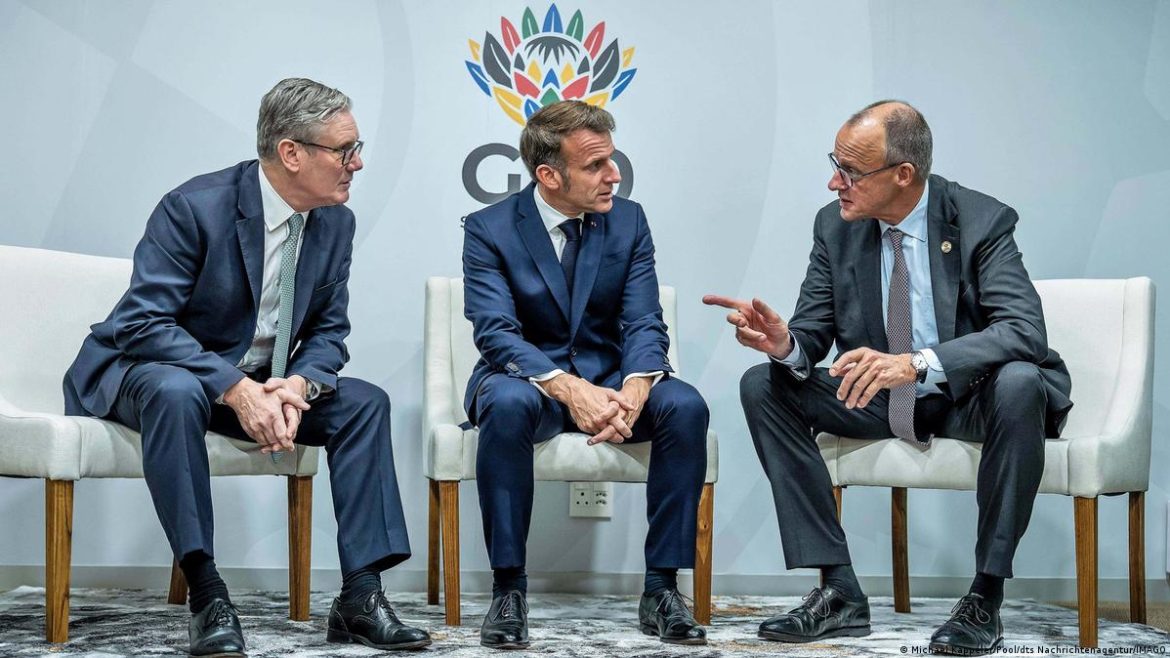
BERLIN, Nov. 23 — German Chancellor Friedrich Merz said on Saturday that ending the crisis in Ukraine requires the consent of both Ukraine and its European partners, rather than major powers.

Speaking at a press conference during the G20 Summit in Johannesburg, Merz said that the conflict unfolding on the European continent and its outcome concerns the security of Europe as a whole.

“Wars cannot be ended by great powers over the heads of the countries involved,” Merz said, adding that the end of this crisis can “only occur with Ukraine’s unconditional consent.”

Merz said that foreign policy advisors from Germany, France, Britain, and representatives from the EU are scheduled to hold further consultations with U.S. and Ukrainian representatives on Sunday in Geneva.

Merz noted that reliable security guarantees must be established for Ukraine. While acknowledging there is currently a chance to end the conflict, Merz cautioned that the parties remain far from a common, satisfactory result. Namibia Daily News / Xinhua

November 23, 2025 0 comment
0 Facebook Twitter Google + Pinterest
China must resolutely hit back at Japanese leader’s remarks on Taiwan: Chinese FM

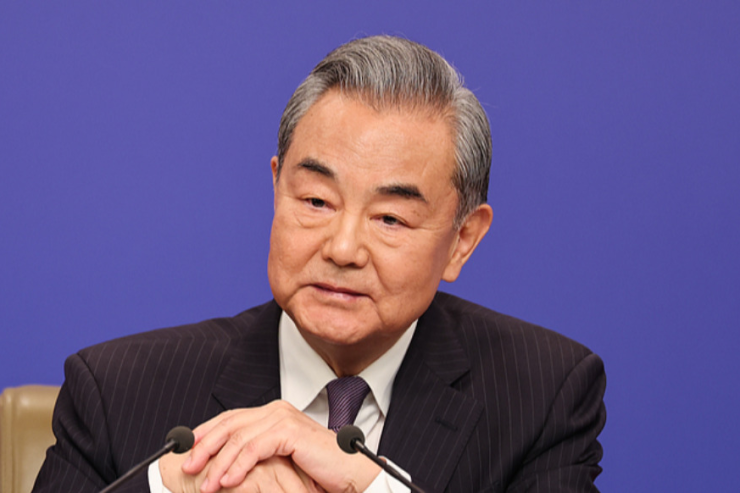
DUSHANBE, Nov. 23 — Chinese Foreign Minister Wang Yi has said that it is shocking for a sitting Japanese leader to openly send a wrong signal of attempting to intervene militarily in the Taiwan question — saying what should not be said and crossing a red line that must not be touched.

Wang, also a member of the Political Bureau of the Communist Party of China Central Committee, made the remarks in a media interview after concluding his visit to Kyrgyzstan, Uzbekistan and Tajikistan, where he held strategic dialogues respectively with their foreign ministers from Nov. 19 to 22.

China must resolutely hit back — not only to safeguard its sovereignty and territorial integrity, but also to defend the hard-won post-war achievements secured with blood and sacrifice, and to uphold international justice and human conscience, he said. Namibia Daily News/ Xinhua

November 23, 2025 0 comment
0 Facebook Twitter Google + Pinterest
G20 makes historic Africa debut as Global South urges fairer global governance

JOHANNESBURG, Nov. 23 — The 20th Group of Twenty (G20) Summit opened here Saturday under the theme “Solidarity, Equality and Sustainability,” marking its first-ever gathering in Africa and underscoring the Global South’s rising role in global governance.

World leaders gathered for the two-day summit to address pressing global challenges amid sluggish economic recovery, rising geopolitical tensions and widening development gaps, despite the United States’ decision not to participate.

With participants expected to build consensus on promoting multilateralism, the Johannesburg summit is seen as an opportunity to inject new momentum into global governance reform.

AFRICA ON THE RISE Since the African Union (AU) became a permanent member of the G20 in 2023, and now with the summit making its historic debut in Africa, the continent is shifting its role on the world stage, moving from decades of marginalization in the global agenda to an influential voice in international affairs.

South African President Cyril Ramaphosa reiterated in his opening address that South Africa has sought to ensure that the development priorities of the Global South and the African continent find expression firmly and permanently on the agenda of the G20.

“This is important not only for the people of Africa and the Global South.” His remarks echoed the sentiment across Africa that the continent is no longer a peripheral actor but an emerging force of global growth.

Peter Kagwanja, chief executive of the Africa Policy Institute, a think tank in Kenya, told Xinhua that the once perceived from the Western-centric perspective as a “hopeless continent” has now emerged as a “hopeful continent,” adding that the growing participation by Africa in global decision-making processes marks a significant transformation.

The African Development Bank projected the continent’s real GDP growth at 4.2 percent in 2025 and 4.4 percent in 2026, indicating steady economic expansion. Meanwhile, according to the World Bank, the abundant natural resources, a huge market and the world’s largest free trade area in terms of the number of members under the African Continental Free Trade Area provide a solid base for long-term growth.

Since assuming the G20 presidency last December, South Africa has hosted over 130 meetings at various levels, amplifying voices from across Africa and the broader Global South.

The world requires more solidarity, equality and sustainability, Chrispin Phiri, a spokesperson of South Africa‘s Department of International Relations and Cooperation, told Xinhua at the media center of the summit.

“That is what this G20 conference is about, and what we want to see this summit as a whole addressing for other African countries as well,” he said.

GOVERNANCE REFORM IN MOTION Against the backdrop of profound changes unseen in a century, the urgency for global governance reform has grown sharper than ever, with the Global South speaking with a stronger, more unified voice.

Ramaphosa called for upholding multilateralism at the summit, noting that the challenges facing all nations today can only be addressed “through cooperation, collaboration and partnership.”

During the meeting with Ramaphosa on the eve of the summit, Chinese Premier Li Qiang expressed China’s readiness to work with South Africa to enhance coordination within the G20 and at other multilateral platforms, uphold the multilateral trading system, promote reform of the global governance system, and safeguard the common interests of developing countries.

Having evolved from a forum centered largely on broad macroeconomic issues, the G20 now engages with a far wider agenda, including sustainable development, science and technology, agriculture, energy, and climate and environmental action, among other priorities, playing a stabilizing role in global governance.

This year’s summit presents a valuable opportunity to push forward long-needed reforms and promote a fairer, more inclusive governance, with the emphasis on four priority areas, including strengthening disaster resilience and response, promoting debt sustainability for low-income countries, mobilizing finance for a just energy transition, and harnessing critical minerals for inclusive and sustainable growth.

“As Africa implements these continental strategies, we remain firmly committed to multilateralism and reiterate our strong call for reforms to the International Financial Architecture, reaffirming our full support for strengthening the rules-based global trading system, particularly through ongoing reform processes at the World Trade Organization,” said Angolan President and Chair of the AU, Joao Lourenco, during the summit.

On Friday, United Nations Secretary-General Antonio Guterres told reporters ahead of the summit that the G20 can help drive reforms that give developing countries, and Africa in particular, a real voice in shaping global policies, and make global economic governance more inclusive, representative, equitable and effective in the years ahead.

CHINA’S CONTRIBUTION TO GLOBAL DEVELOPMENT Similar to the Chinese vision of building a community with a shared future for humanity, Africa‘s Ubuntu philosophy, which means “I am because we are,” holds that no one should be left behind.

Last year, at the 2024 Summit of the Forum on China-Africa Cooperation, President Ramaphosa noted that the 10 partnership action plans proposed by China are all in line with the AU’s Agenda 2063, which reflected the shared desire for modernization, development and progress on the African continent.

Addressing the summit, the Chinese premier urged G20 economies to stay committed to solidarity, firmly uphold free trade and build an open world economy in the face of a sluggish global economic recovery, calling for efforts to enhance the voice of developing countries, and build a fairer and more open international economic and trade order.

China has released an action plan for implementing the G20 Initiative on Supporting Industrialization in Africa and Least Developed Countries, Li noted, stressing China’s endeavor to promote common development among all countries. Li’s remarks resonated strongly at the summit.

Noting that China plays a pivotal role in advancing global cooperation and governance, Erastus Mwencha, former deputy chairperson of the African Union Commission, told Xinhua that the four major global initiatives proposed by China offer institutional channels for dialogue and consensus-building.

“We have a very strong and warm trade and political relationship with China and cooperate a lot in a number of multilateral platforms,” Magwenya told Xinhua, adding that South Africa is going to strengthen its resolve to work closely with China in advancing issues that are expressed in the G20. Namibia Daily News / Xinhua

November 23, 2025 0 comment
0 Facebook Twitter Google + Pinterest
Ukrainian drone attack sparks fire at Moscow power plant

MOSCOW, Nov. 23– A Ukrainian drone attack sparked a fire at the Shatura Power Station in the Moscow region, regional governor Andrey Vorobyov said Sunday.

Vorobyov said the station’s power supply was not disrupted as backup lines were activated promptly. The fire at the station had been contained and posed no threat to residents, he added.

Moscow Mayor Sergei Sobyanin said Sunday that at least three drones targeting the capital were shot down. According to Russia’s Defense Ministry, 75 Ukrainian drones were downed overnight, including 36 over the Black Sea. The Shatura plant is a thermal power station located about 120 km east of Moscow. (Xinhua)

November 23, 2025 0 comment
0 Facebook Twitter Google + Pinterest
Chinese premier urges G20 to uphold free trade, build open world economy

JOHANNESBURG, Nov. 22  — Chinese Premier Li Qiang on Saturday urged the Group of 20 (G20) economies to stay committed to solidarity, firmly uphold free trade and build an open world economy in the face of a sluggish global economic recovery.

Li made the remarks while addressing the first session of the 20th G20 Summit in Johannesburg, which focused on inclusive and sustainable economic growth and was chaired by South African President Cyril Ramaphosa.

Chinese President Xi Jinping pointed out at the 17th G20 Summit that solidarity is strength, but division leads nowhere, Li said.

Over the years, G20 members from different regions and with different systems and cultures have managed to overcome one challenge after another and promote global progress and development, thanks to the spirit of solidarity, he added.

Today, the world economy is once again confronted with major challenges, marked by a rise in unilateralism and protectionism, as well as escalating trade restrictions and confrontations, Li said.

Divergent interests among parties and weaknesses in global cooperation mechanisms, he said, have become prominent factors hindering international solidarity.

Li urged the G20 to face those problems squarely, explore solutions, and help bring all parties back to the track of solidarity and cooperation.

The Chinese premier called for concerted efforts to properly handle disputes and frictions through consultation on the basis of equality when facing differences and contradictions.

He also stressed the importance of seeking common ground while reserving differences, actively pursuing the most extensive common interests, and properly addressing each other’s reasonable concerns.

Li urged the G20 economies, when facing difficulties in governance, to advance with the times and take the lead in upholding multilateralism.

Li called for accelerating the reform of institutions, including the World Bank, the International Monetary Fund and the World Trade Organization.

He also called for efforts to enhance the voice of developing countries and build a fairer and more open international economic and trade order.

China has released an action plan for implementing the G20 Initiative on Supporting Industrialization in Africa and Least Developed Countries, Li noted, stressing China’s endeavor to promote common development among all countries.

China supports the reduction of debts in developing countries and has jointly initiated with South Africa a cooperative initiative to support Africa’s modernization, Li said, adding that China will also establish the Institute of Global Development.

November 22, 2025 0 comment
0 Facebook Twitter Google + Pinterest