

WINDHOEK, Aug. 12 — The Namibian Artificial Intelligence Readiness (AI) Assessment Report, launched here on Monday, envisions the southern African country as a potential leader in Africa’s AI landscape.
The report offers a critical roadmap for Namibia‘s AI development, striking a balance between goals and an examination of existing challenges.
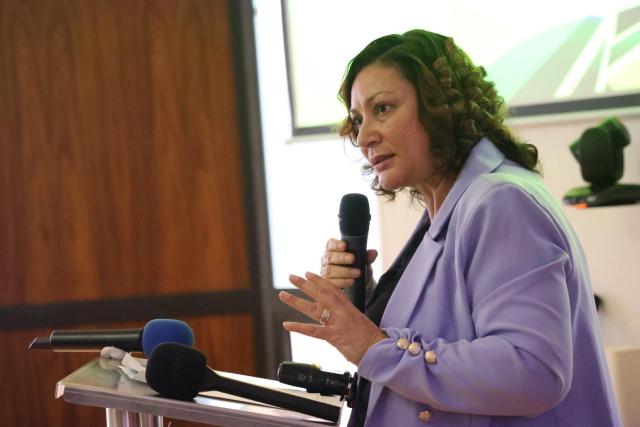
“Namibia is proud to be among the first African countries to pilot this important initiative. Artificial intelligence is often described as the defining technology of our time,” said Minister of Education, Innovation, Youth, Sports, Arts and Culture Sanet Steenkamp in her keynote address.
The report was developed in collaboration with the United Nations Educational, Scientific, and Cultural Organization (UNESCO).
“I wish to sincerely thank UNESCO, as well as the dedicated national team, who worked tirelessly to produce this assessment,” she said, highlighting the report as a “bold and necessary step in positioning Namibia on the global map of ethical, inclusive, and forward-thinking artificial intelligence.”
According to Steenkamp, the report identifies both the strengths and weaknesses present in the country’s current AI ecosystem.
On the one hand, Namibia has made major advances toward laying the groundwork for digital transformation, including investing in digital infrastructure and science, technology, engineering and mathematics (STEM) education, offering AI-relevant degrees at public universities, and passing key legislation such as the Access to Information Act of 2022.
However, the report highlights pressing challenges that require immediate attention. “Namibia currently has no dedicated national AI strategy or policy.
This limits our ability to coordinate and govern AI development in a holistic and forward-looking manner,” the minister said.
Steenkamp called for the creation of a national AI strategy, a multi-stakeholder advisory council, and increased investment in infrastructure and education. (Xinhua)

