

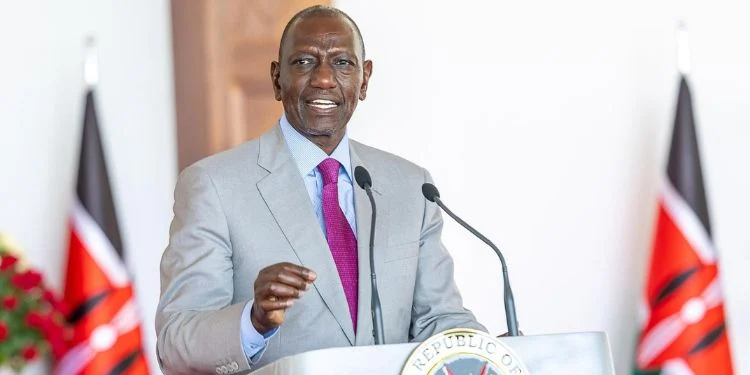
NAIROBI, Oct. 7– Kenyan President William Ruto has ordered health authorities to ramp up emergency measures following the death of a patient confirmed as the country’s first imported case of Bundibugyo virus disease (BVD).
In a statement issued on Tuesday evening, Ruto directed the National Security Council Committee to convene, assess the situation, and recommend measures to safeguard the country.
He said the government has ramped up surveillance, contact tracing, and public health interventions to curb potential transmission of the virus, with eight family members of the deceased placed under quarantine and undergoing daily symptom monitoring.
He added that 21 healthcare workers who attended to the patient have been quarantined and are being closely tracked by health officials. “Contact tracing has also been extended to passengers who traveled on the same flight as the deceased into the country,” the president said.
So far, 27 passengers who may have had contact with the deceased have been identified and contacted, and appropriate public health measures are being taken, the statement said. The president said surveillance and rapid response teams are on the ground, building on the preparedness and surveillance systems Kenya has maintained since May, when Ebola outbreaks were declared in the Democratic Republic of the Congo (DRC) and Uganda.
“Kenya is prepared to deal with this public health emergency. The government will continue to strengthen surveillance, contact tracing, testing and treatment capacity as necessary,” Ruto said.
He urged Kenyans to remain calm and vigilant, observe strict hand hygiene, and avoid contact with individuals exhibiting symptoms associated with Ebola virus disease, which include fever, severe headache, muscle pain, weakness, vomiting, diarrhea, and unexplained bleeding.
The Kenyan leader said anyone experiencing these symptoms, particularly following possible exposure to a suspected or confirmed case, should avoid close contact with others and immediately seek guidance and medical care from a recognized health facility.
He assured the public that the government will continue to monitor the situation closely, implement all necessary measures to safeguard citizens, and provide regular updates on any further developments. The patient, a Kenyan citizen, fell ill while living in the DRC and sought treatment at several local health facilities, according to the Ministry of Health.
The patient subsequently traveled by road to Kampala, Uganda, via Beni in the DRC on Oct. 2, before flying to Nairobi and arriving on Oct. 3. Upon arrival, the patient was promptly transported to a Nairobi hospital and isolated.
Laboratory samples tested positive for the Bundibugyo virus at both the National Virology Reference Laboratory and the Kenya Medical Research Institute. Despite receiving supportive care, the patient died on Monday night and was buried on Tuesday in accordance with the country’s safe and dignified burial protocols for viral hemorrhagic fevers.
Following the confirmation of Kenya’s first Ebola case, the Pharmaceutical Society of Kenya (PSK) has called upon pharmacists and personnel across all medication-related care centers to exercise heightened vigilance.
In a statement, the PSK emphasized that pharmacy care teams must be fully prepared to identify potential risks and protect both themselves and patients in the event of a virus surge. Pharmacists have been strongly urged to remain alert for patients presenting with symptoms associated with the virus.
“Where clinically appropriate, establish relevant recent travel and exposure/contact history early,” the PSK said. Health authorities said Kenya has remained on high alert since May. As of Tuesday, the country had screened over 652,000 travelers entering the nation, tested 267 suspected samples, and trained approximately 5,000 healthcare workers on Ebola prevention and management, according to the World Health Organization (WHO).
The WHO said Kenya is the fourth country to confirm a case of BVD. The DRC is currently responding to an ongoing BVD outbreak, while Uganda, where the Bundibugyo virus species was first detected in 2007, brought its latest outbreak to a close in August.
Most cases in Uganda were imported from the DRC, with a small number locally acquired among contacts and healthcare workers linked to those imported cases, according to the WHO. (Namibia Daily News / Xinhua)

