

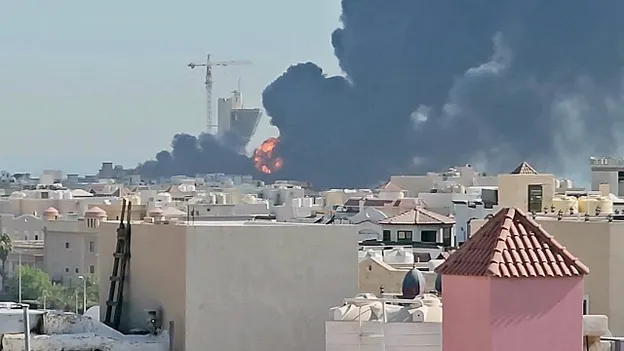
TEHRAN, July 20 — Iran’s Islamic Revolution Guard Corps (IRGC) said on Monday that its forces earlier in the day had launched missile and drone strikes against U.S. assets and facilities in Jordan and Kuwait in retaliation.
In statements published on its official news outlet Sepah News, the IRGC said it struck with ballistic missiles the U.S. Boeing C-17 Globemaster III and Boeing P-8 Poseidon aircraft at an airport in Jordan’s port city of Aqaba, and heavily damaged a number of them.
It added its forces attacked with drones and destroyed an American early warning radar system in Kuwait, and targeted a warehouse of equipment and aircraft parts as well as a hangar of MQ-9 Reaper drones at the Ali Al Salem Air Base, setting on fire a number of the unmanned aerial vehicles.
The IRGC said the attacks were in retaliation for the U.S. frequent “aggressions” against Iran’s territory.
In a post on social media platform X early Monday, U.S. Central Command (CENTCOM) said its forces had “successfully completed the ninth consecutive evening of strikes against Iran.”
It added, “CENTCOM assets targeted Iranian military command centers, air defense and coastal surveillance sites, maritime capabilities, missile and drone launch sites, and communications networks to further diminish Iran’s ability to attack commercial vessels and civilian mariners transiting the Strait of Hormuz.”
In another statement released early Monday, the IRGC reiterated its warning that as long as the United States continues its “malicious actions” in the West Asia region, the Strait of Hormuz will not be safe for the shipment of oil, gas and chemical fertilizers.
The U.S. army has launched several waves of strikes against Iran’s southern provinces over the past few days, claiming that the attacks were in response to the Iranian armed forces’ targeting of vessels in the Strait of Hormuz and aimed at “degrading Iran’s ability to threaten commercial shipping.”
Iran has responded with waves of missile and drone attacks targeting U.S. military bases and facilities in the region.

