

By Elezo Libanda
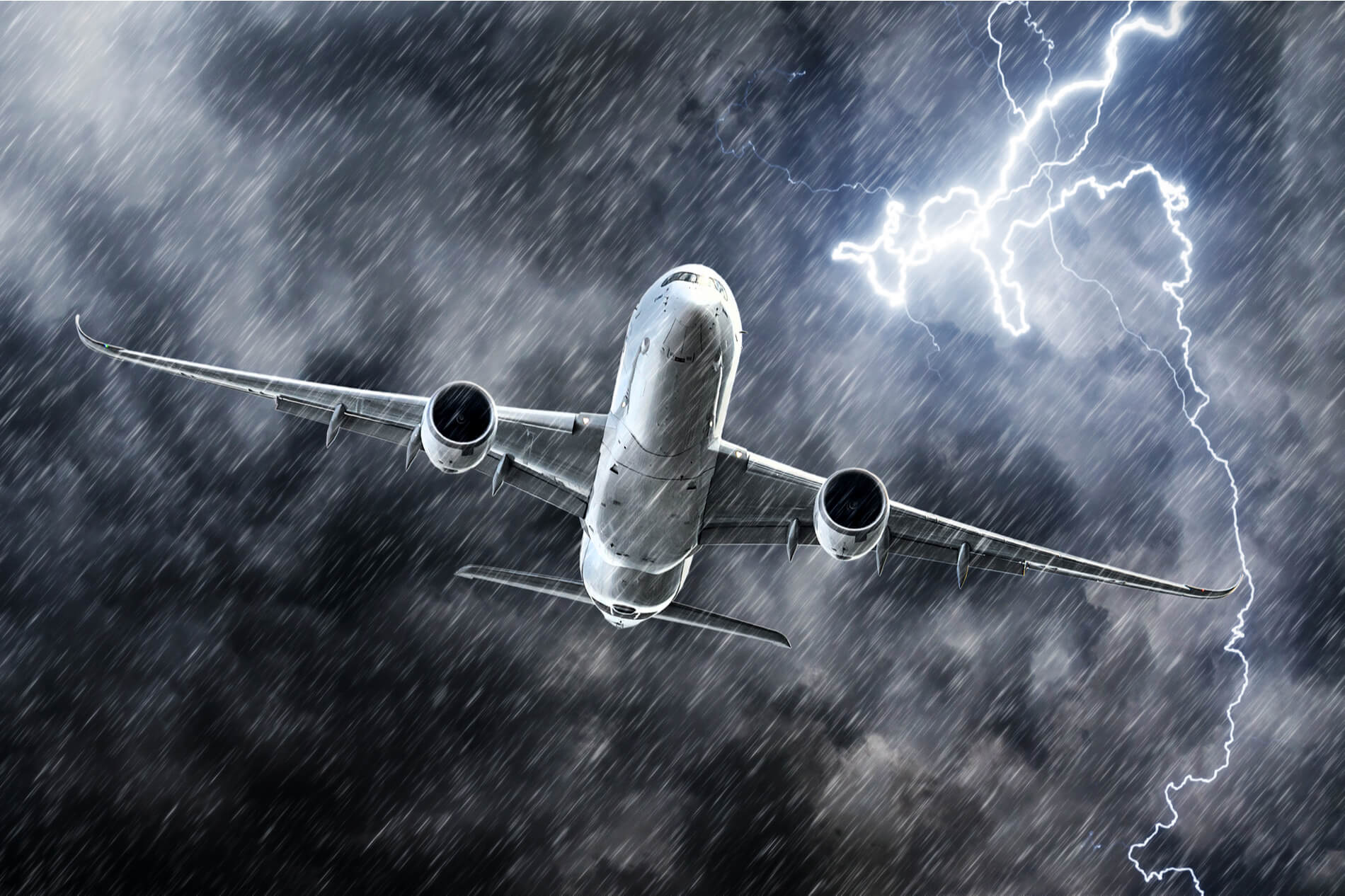
Katima Mulilo, 20 August – Have you ever wondered why lightning doesn’t bring down airplanes when it strikes them? Despite lightning strikes being a concern for frequent flyers, modern airplanes are well-equipped to handle such situations safely.
Since around 1967, lightning strikes have not caused planes to crash. This is due to the presence of a crucial feature in modern airplanes: the fuselage acting as a Faraday cage.
A Faraday cage is a protective shell made from conductive material that shields anything inside it from exposure to external static electricity fields. This principle was discovered by Michael Faraday in 1836 and is now applied to safeguard passengers and crew members within an airplane.
For airplanes, the Faraday cage essentially acts as a container that blocks electromagnetic fields from affecting the aircraft. When lightning strikes, the electrical charge is redirected around the exterior of the plane and then dispersed from the tail, effectively avoiding any harm to the aircraft’s structural integrity.
Thanks to this design feature, modern airplanes are well-protected against the potential dangers of lightning strikes, providing an additional layer of safety for air travel.-Namibia Daily News

