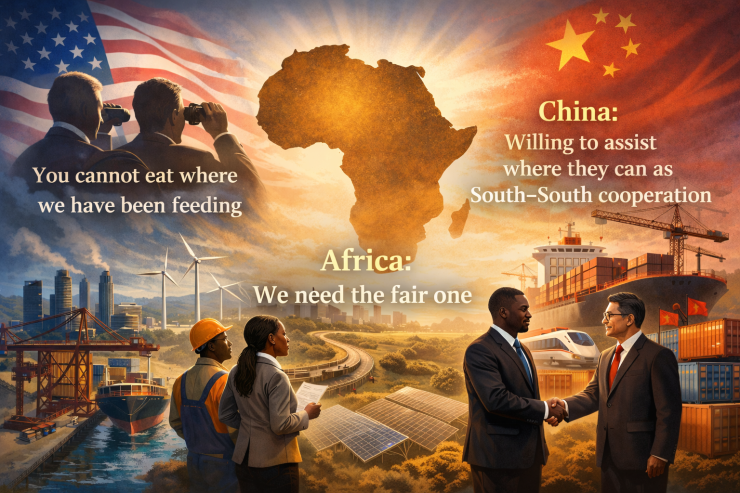
Africa stands at a pivotal juncture in global trade, facing a landscape shaped by opportunity, external criticism, and the need for strategic independence.
China’s announcement to eliminate tariffs on imports from fifty-three African countries starting May 2026 opens access to one of the world’s largest consumer markets and brings investment in infrastructure, logistics, and industrial capacity.
Yet Western discourse often portrays China as a threat or exploitative partner, overlooking the development-focused cooperation many African leaders emphasize.
Policymakers across the continent, including Namibia, stress the freedom to select partners pragmatically, prioritizing economic growth, industrialization, and South-South cooperation over external narratives or political pressure.
Namibia and other African nations can leverage such engagement to move beyond raw exports, develop domestic industries, and strengthen value chains in agro-processing, mineral beneficiation, and renewable energy.
Experts highlight that nations strategically using market access, rather than relying on passive exportation, accelerate industrialization, create sustainable employment, and enhance regional resilience.
The imperative is clear, Africa must define its own trade agenda, assessing partnerships with China, the West, and other global actors according to economic merit, developmental impact, and long-term national interest.
Namibia and its neighbors illustrate that strategic, independent decision-making enables nations to diversify exports, industrialize, and strengthen resilience, transforming international engagement into sustainable growth, regional prosperity, and genuine sovereignty.