

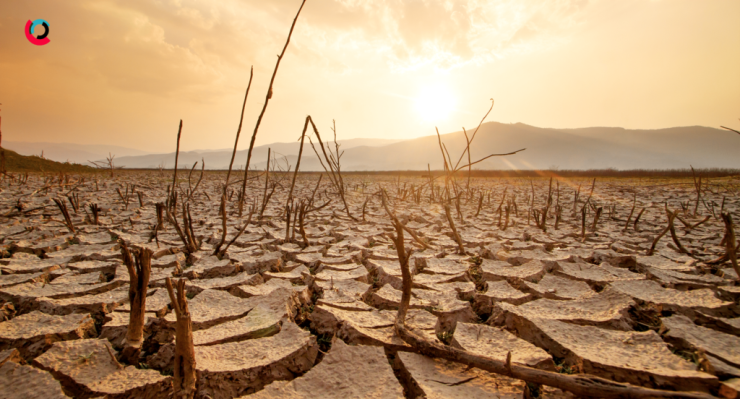
ADDIS ABABA, July 31– Africa may face the strongest El Nino event in decades, starting from November this year, with impacts expected to trigger extreme weather anomalies across the continent, according to African Union (AU) climate experts.
The warning came during an extraordinary session of the Specialized Technical Committee on Agriculture, Rural Development, Water and Environment on Thursday at the AU headquarters in Addis Ababa, the capital of Ethiopia.
Speaking at the event, Harsen Nyambe, director for sustainable environment and blue economy at the AU Commission, said global climate forecasting centers indicate that a strong El Nino episode will develop later this year, with peak intensity expected between November 2026 and January 2027.
“Africa needs to be sufficiently prepared to anticipate, mitigate and respond effectively to its impacts,” Nyambe said, noting that the El Nino event is forecast to be the strongest since 1950.
He said experience has consistently shown that El Nino affects every region of Africa differently, with some regions facing severe droughts and prolonged dry spells, while others experience devastating floods, landslides and outbreaks of climate-sensitive diseases.
“These climate extremes have profound consequences for agriculture, food security, water resources, energy production, public health, education, infrastructure and ultimately the livelihoods of millions of Africans,” said Nyambe.
Jolly Wasambo, another climate expert of the AU Commission, said Africa is increasingly exposed to climate variability and extreme weather driven by El Nino events.
“The 2026 El Nino event is expected to aggravate water insecurity and crop failure, leading to food shortages, loss of livelihoods, power shortages, human-wildlife conflict and disputes due to competition for grazing land,” Wasambo said.
The extraordinary session was convened in response to forecasts indicating a high probability of a strong El Nino event, with the aim of assessing Africa’s preparedness, strengthening early warning and anticipatory action, and supporting implementation of Agenda 2063 and preparations for COP31 and COP32. (Namibia Daily News / Xinhua)

