

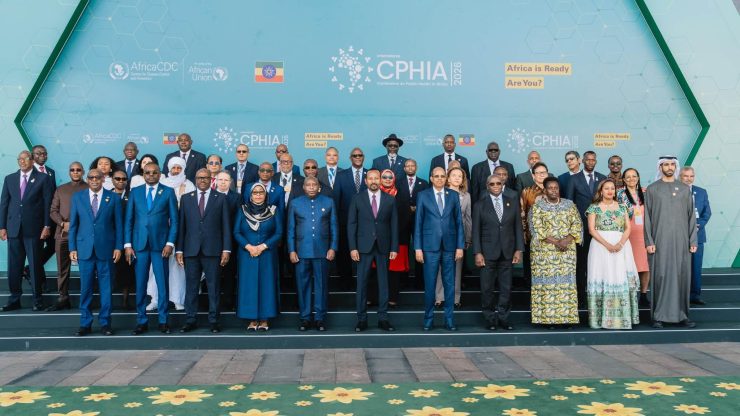
ADDIS ABABA, Nov. 23 — African leaders on Monday convened the 5th International Conference on Public Health in Africa in Addis Ababa, the Ethiopian capital, calling for building robust local capacities and reducing external reliance to realize the continent’s ambition of a self-sustaining public health future.
Running from Monday to Friday under the theme “Africa’s Health Security and Sovereignty: Transformation from Health Dependency and Vulnerability to Ownership and Resilience,” the continent’s flagship public health event brought together African heads of state and government, ministers of health, scientists and innovators, as well as international partners to examine progress towards continental health priorities, identify remaining gaps, and advance practical solutions.
Addressing the gathering, Chairperson of the African Union (AU) Commission Mahmoud Ali Youssouf called for collective and sustained action by AU members, regional institutions, and development partners to accelerate the implementation of Africa’s health sovereignty agenda and ensure that no African is left behind.
“Africa cannot afford to remain dependent on external sources for the medicines, vaccines and essential medical supplies needed to protect the health of its people. We must move decisively towards greater self-reliance, strengthened continental ownership and resilient health systems,” he said.
“Our success must ultimately be measured not by the declarations we adopt, but by the difference we make in the lives of our citizens — every child receiving essential vaccines, every pregnant woman accessing appropriate medical care, and every African having access to timely and quality healthcare,” he added.
Burundian President Evariste Ndayishimiye, who is also the current Chairperson of the AU, called for a decisive shift from political commitments to increased domestic health financing, emphasizing that Africa’s health sovereignty begins with African investment.
He stressed the urgency for Africa to move from commitments to implementation, from dependency to self-reliance, and from vulnerability to resilience. African leaders underscored the urgency of strengthening Africa’s capacity to finance, produce, and manage its own health systems.
They noted that recent public health emergencies and significant reductions in international health financing have exposed the structural vulnerabilities associated with the continent’s continued dependence on external resources, particularly for essential medicines, vaccines, and medical supplies.
Ethiopian Prime Minister Abiy Ahmed emphasized that true health sovereignty is measured by the strength and reliability of systems that protect citizens, sustain everyday well-being, and stand resilient in times of crisis.
He highlighted Ethiopia’s commitment to building domestic pharmaceutical manufacturing capacity, strengthening self-reliance while upholding the highest standards of medicine safety and quality.
Reaffirming that Africa is a continent of strength, impact, and success, Africa Centers for Disease Control and Prevention Director-General Jean Kaseya emphasized the critical importance of African leadership, ownership, and solidarity.
He stressed that the African continent must build continental capabilities and secure ownership of its health future. (Namibia Daily News / Xinhua)

