

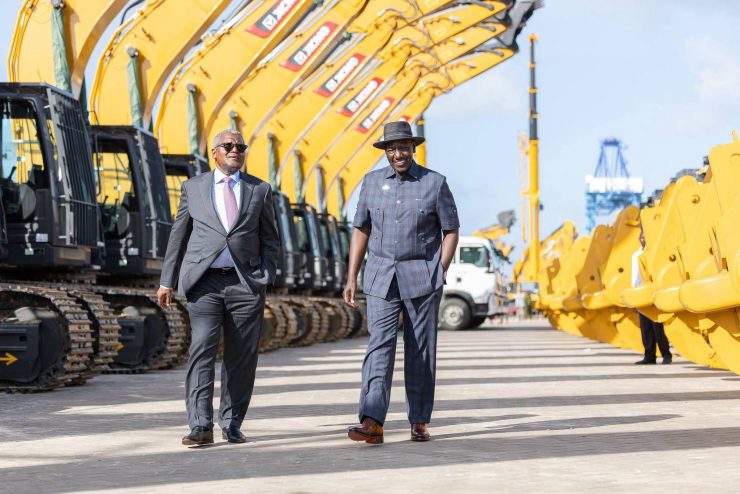
LAMU, Kenya, Sept. 30– Kenya on Wednesday officially commenced construction of a 16-billion-U.S.-dollar petrochemical facility in Lamu County, designed to process up to 700,000 barrels of crude oil per day. Kenyan President William Ruto led the groundbreaking ceremony for the coastal mega-project. “Today we turn a proposal into an industry.
We transform a long-held ambition into real opportunity for Kenya, for East Africa and for Africa,” Ruto said in Lamu. Beyond refining petroleum products, the facility, realized through a strategic partnership between the Kenyan government and Nigerian industrialist Aliko Dangote, will co-generate up to 1,000 megawatts of electricity to support domestic and regional energy needs.
Ruto emphasized that the development represents a cornerstone investment in national energy security, rapid industrialization and broader East African integration, serving markets well beyond the refinery’s immediate footprint.
According to Ruto, the African Export-Import Bank noted in 2024 that Africa produced approximately 6.8 million barrels of crude oil per day, while consuming approximately 4.5 million barrels of refined petroleum products per day.
Ruto explained that the newly established National Infrastructure Fund is designed to mobilize domestic assets, public savings and capital markets to attract institutional, long-term capital for large-scale developments such as the refinery.
Ruto emphasized that the mega-project reflects growing investor confidence, with Kenya now attracting a record 3.2 billion dollars in foreign direct investment, the highest in the nation’s history. Ruto said that the facility will generate up to 60,000 direct and indirect jobs, with peak construction monthly wages estimated at 7.7 million dollars.
For his part, Dangote emphasized that the project will help break Africa’s historical economic pattern of exporting raw commodities while importing high-value finished products. He described the 700,000-barrel-per-day facility as an initial step in a broader, long-term regional investment strategy.
To ensure operational continuity and optimize capacity, the refinery will use a diversified crude-sourcing strategy, importing feedstocks from the Middle East and the United States while scaling up intake as domestic production expands across Kenya, Tanzania, and Mozambique. (Namibia Daily News / Xinhua)

