

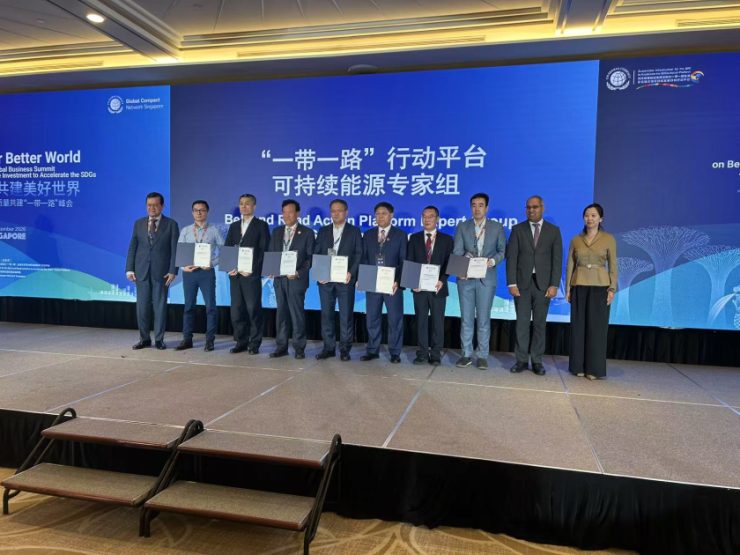
SINGAPORE, Sept. 3– United Nations (UN) officials on Thursday called for investment in resilient infrastructure, cross-sector partnerships and greater regional connectivity in transport, energy, trade and digital technologies to advance the UN Sustainable Development Goals (SDGs), which are “far off course” from being achieved.
Only 36 percent of SDG targets are on track or making moderate progress, while 15 percent are in decline, said Sanda Ojiambo, assistant secretary-general and CEO of the UN Global Compact, in an address to the Second Global Business Summit on Belt and Road Infrastructure Investment to Accelerate the SDGs held in Singapore.
Companies worldwide are navigating infrastructure challenges intensified by climate change, technological disruption, shifting supply chains, resource constraints and growing scrutiny from investors and consumers, Ojiambo said.
The majority of the SDG targets rely on infrastructure investment, she said.
Ojiambo urged companies to view development challenges as investment opportunities. Creating demand for green energy, for example, can secure long-term off-take for clean power and provide predictable financial returns, while investment in resilient infrastructure can accelerate innovation and growth, strengthen competitive advantage and reduce billions of dollars in repair and recovery costs, she said.
She also called for stronger partnerships across sectors and industries.
“It is particularly encouraging to see growing cooperation among companies and partners from China, Singapore, Indonesia and across the Asia-Pacific region. These connections are not only building smarter infrastructure, but also trust, knowledge and shared prosperity,” she said.
Armida Salsiah Alisjahbana, executive secretary of the UN Economic and Social Commission for Asia and the Pacific, called for greater regional connectivity to advance the SDGs, including through smart transport systems, clean energy sources, more efficient trade and information and communications technology connectivity.
On transport, she said the challenges of sustainable transport development cut across sectors, dimensions and national boundaries, a dynamic that is particularly evident in Asia and the Pacific, which accounts for the largest share of global freight and passenger transport flows.
On energy, she said cross-border power-grid connectivity is a key strategy for increasing the share of renewable energy across Asia-Pacific, given the region’s complementary renewable energy resources and differing demand profiles. Both exporting and importing countries can benefit, she said.
The summit was organized by the UN Global Compact Action Platform on Sustainable Infrastructure for the Belt and Road Initiative to Accelerate the SDGs, and the UN Global Compact China Office. (Namibia Daily News / Xinhua)

