ADDIS ABABA, July 31– The Africa Centers for Disease Control and Prevention (Africa CDC) has warned of mounting operational constraints hampering Ebola response in the Democratic Republic of the Congo (DRC), while praising Uganda for successfully containing the outbreak.
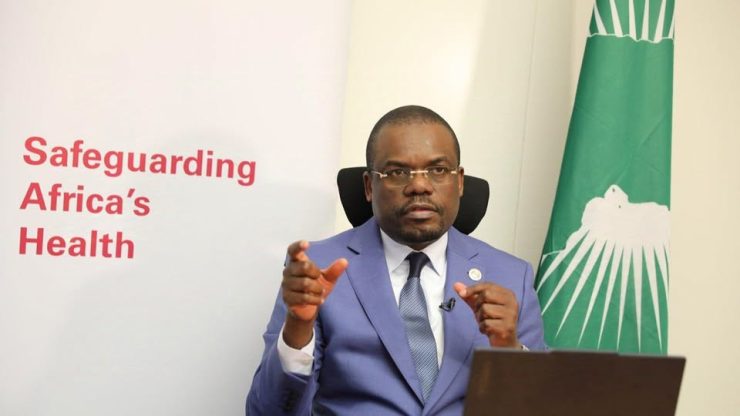
During an online press briefing on Thursday evening, Africa CDC Director-General Jean Kaseya stressed that the continued outbreak “is the fastest-growing Ebola outbreak ever recorded” and is now the second-largest by total confirmed cases.
“It is a very serious outbreak. We are now fighting because we don’t want this outbreak to become the (largest ever) Ebola outbreak,” he said.
According to Kaseya, he will join World Health Organization (WHO) Director-General Tedros Adhanom Ghebreyesus to visit Bunia, the capital of the eastern DRC’s Ituri Province and the epicenter of the outbreak, on Aug. 2. They are scheduled to meet with national authorities, frontline health workers, affected communities, and response partners.
“We really need to strengthen our capacity to stop the spread of this outbreak to other new zones. We need to continue to strengthen the capacity to detect early, and to respond appropriately,” he said.
According to the latest data from the Africa CDC and the DRC health authorities, since the DRC declared its 17th Ebola outbreak on May 15, the country has recorded a total of 3,442 confirmed cases and 1,521 deaths, representing a case fatality rate of more than 44 percent. A total of 48 health zones are now affected by the outbreak across five provinces in the country.
Kaseya expressed concern over critical constraints hindering the response efforts in the DRC, citing limited contact tracing capabilities, climbing community cases and deaths, a rising case fatality rate, and inadequate bed capacity. He also noted persistent funding shortages, insecurity, unsafe burial practices, and infections and deaths among healthcare workers as major obstacles to containing the outbreak.
Despite challenges, the Africa CDC highlighted progress in several areas of the response, including improvements in laboratory testing capacity. Currently, 19 laboratories are actively engaged in testing, marking a notable boost from only two active laboratories at the onset, while daily testing capacity has now surpassed 3,000 samples.
The recent launch of clinical trials of therapeutics targeting the Bundibugyo strain is also considered a breakthrough, given the lack of licensed vaccines or targeted medical countermeasures for this particular Ebola variant.
Despite the worsening situation in the DRC, Kaseya recognized Uganda’s decisive national leadership and response in effectively containing the outbreak’s transmission after the country officially declared the outbreak over on Tuesday.
Uganda’s Ministry of Health officially said that advances in epidemiological investigations and the fully characterized nature of the outbreak provided sufficient scientific evidence that transmission had been interrupted.
“Uganda’s success sends a clear message: when political leadership, communities, and public health move together, outbreaks can be stopped,” said Kaseya, adding that the country’s achievement reflects the commitment and dedication of health workers, communities, national authorities, and partners who worked tirelessly to detect, contain, and overcome this outbreak.
Meanwhile, Kaseya urged the United States to lift its Ebola-related entry restrictions on Uganda as he underscored the country’s successful outbreak containment efforts.
The Africa CDC also called on Uganda’s health authorities to remain fully engaged with continued vigilance and infection prevention measures, alongside enhanced risk communication and community surveillance efforts as the outbreak evolves in parts of the DRC, which borders Uganda.
Beyond the DRC and Uganda, 11 other countries across the continent have been designated as high-risk, namely South Sudan, Rwanda, Kenya, Zambia, the Central African Republic, Tanzania, Ethiopia, Angola, the Republic of the Congo, Burundi, and Somalia.