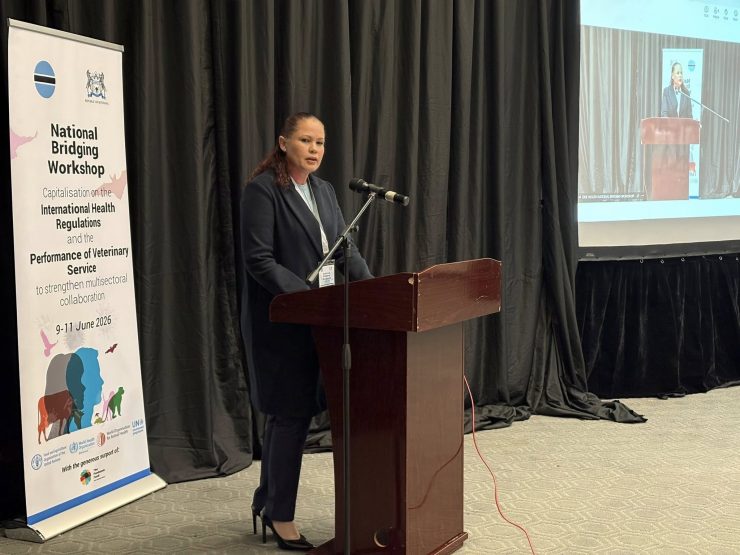
GABORONE, June 9– The World Health Organization (WHO) in Botswana on Tuesday emphasized the importance of coordinated, multisectoral action to combat health threats.
Speaking at the opening of Botswana’s National One Health Bridging workshop in Gaborone, Juliet Bataringaya, officer in charge of WHO Botswana, stressed that emerging outbreaks across Africa make multisectoral collaboration essential, particularly as more than 60 percent of emerging infectious diseases originate from animals.
She described the One Health Joint Plan of Action 2022-2026, developed by the Food and Agriculture Organization of the United Nations, the United Nations Environment Program, the World Organization for Animal Health, and the WHO, as a guiding framework.
“One Health is a necessity, not just a concept,” Bataringaya said, urging participants to assess collaboration gaps and develop a shared roadmap to address zoonotic epidemics, antimicrobial resistance, and environmental health, not only for pandemic preparedness but also for the control of endemic diseases like foot-and-mouth disease, rabies, and anthrax.
The three-day workshop brings together national and international stakeholders across human, animal, and environmental health sectors to strengthen collaboration, identify gaps, and advance a shared roadmap for addressing health threats. (Namibia Daily News / Xinhua)