

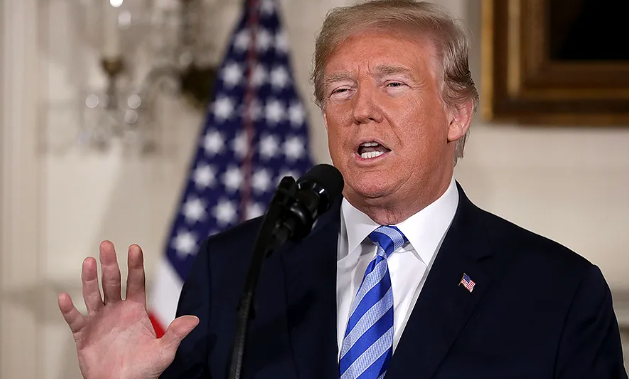
WASHINGTON, May 30 — Some U.S. experts warned of continued uncertainty surrounding efforts to end the Iran conflict after U.S. President Donald Trump deferred a final decision on a draft deal with Tehran on Friday.
Trump’s move comes on the heels of the United States and Iran reaching a tentative agreement on a memorandum of understanding to extend their ceasefire by 60 days and to launch nuclear talks, pending Trump’s final approval.
What happens next remains unclear, but if no ceasefire comes to fruition, it could be due to parties other than Tehran and Washington.
“If a 60-day ceasefire doesn’t materialize, this will be primarily due to the Netanyahu government’s choice to keep the Israel-Lebanon front of the war going, plus the inability of the U.S. to rein Netanyahu in,” Clay Ramsay, a researcher at the Center for International and Security Studies at the University of Maryland, told Xinhua.
He was speaking of Israeli Prime Minister Benjamin Netanyahu. Following attacks by the U.S. and Israel against Iran, Hezbollah in March joined the fight by firing rockets, missiles and drones into northern Israel.
In response, Israel launched a large-scale air and ground campaign into Lebanese territory. Even if a ceasefire does occur, there is no guarantee that it will stick.
“To make a ceasefire stick, the U.S. and Israel will have to accept that Iran won’t make concessions first without seeing the U.S. and Israel making concessions at the same time,” Ramsay said.
Some experts said the White House has not paid attention to the art of diplomacy that is necessary for such a deal to work out.
“A lot of this comes down to Trump not valuing the quiet, behind-the-scenes work that international affairs require,” Christopher Galdieri, a political science professor at Saint Anselm College, told Xinhua.
He said that there’s a risk whereby the Trump administration “constantly announces an impending deal or ceasefire or victory and then it just never happens.”
Meanwhile, the longer the war lasts, the more the conflict has the potential to hurt the GOP’s prospects in November’s midterm elections.
“Every day, Trump has a new statement on ending the Iran War, but the conflict still is not over,” Brookings Institution Senior Fellow Darrell West told Xinhua.
“People see high gas prices and no clear strategy for ending the war. This is becoming a big political problem for Trump,” West said.
Disruption to shipping in the Strait of Hormuz has led to a global surge in energy prices, as roughly one-fifth of the world’s oil flows through the key waterway. (Namibia Daily News / Xinhua)

