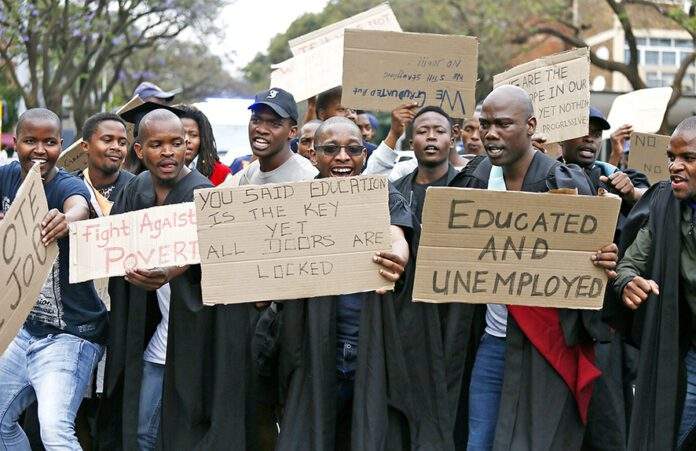
JOHANNESBURG, May 14– South Africa’s worsening unemployment is driven by weak economic growth and systemic shortcomings in education and skills development, leaving young people the hardest hit, according to Ravi Naidoo, chief executive officer of the Youth Employment Service (YES).
The YES program is a business-led initiative launched in 2018 by South African President Cyril Ramaphosa to tackle youth unemployment.
In a recent interview with Xinhua, Naidoo said that sluggish economic expansion, poor work readiness and limited job creation are excluding millions of young South Africans from the formal economy.
On the demand side, South Africa has been struggling with its economic growth, Naidoo said. According to Statistics South Africa, the country’s gross domestic product increased by 1.1 percent in 2025.
He said that despite significant public spending on education and training, many young people remain inadequately prepared for the workplace. “Education and skills development have not generated sufficiently work-ready youth.”
“Young people face severe competition from more experienced workers for what are in essence entry-level jobs,” Naidoo noted. “They also lack work readiness, as neither education nor families have been able to prepare them for formal sector employment.”
While university graduates generally fare better in the labor market, most young South Africans do not hold tertiary qualifications, which further limits their opportunities, according to Naidoo.
“Over time, we expect new technology to accelerate labor shedding and further constrain the creation of new jobs,” he added.
According to Statistics South Africa, the country’s official unemployment rate rose to 32.7 percent in the first quarter of 2026, up from 31.4 percent in the final quarter of 2025. The economy shed 345,000 jobs during this period, pushing the total number of unemployed individuals past 8.1 million.
Youth unemployment remains particularly severe. The expanded youth unemployment rate reached 45.8 percent, underscoring the deepening challenges facing young job seekers in Africa’s most industrialized economy.
Economists and labor analysts have repeatedly warned that persistently high youth unemployment poses significant social and economic risks for South Africa, including rising inequality, poverty and social instability.
To counter these trends, Naidoo called on the government to work more closely with the private sector to stimulate investment and restore economic confidence.
He urged authorities to prioritize reforms and infrastructure investment in sectors such as ports, railways, roads, energy, water and digital networks to unlock growth.
Furthermore, he advocated expanding youth-focused employment initiatives, particularly the YES program. “YES has become the largest program for 12-month, full-time jobs where the youth earn at least the minimum wage,” Naidoo said.
According to him, the initiative currently creates around 40,000 youth jobs annually, but this figure could increase tenfold if participation by large corporate entities became mandatory. “If it were mandatory for large companies to join YES, its youth jobs would grow from 40,000 per year to 400,000 per year,” he noted. (Namibia Daily News / Xinhua)