BEIJING, April 22 — China’s service sector has become the primary driver of job creation, absorbing about 50 percent of the country’s total workforce by the end of 2025, up from 48.8 percent a year earlier, according to the National Bureau of Statistics (NBS).
Wang Pingping, an NBS official, said that service industries such as transportation, accommodation and catering, information transmission, culture and sports, as well as health and social work, recorded notable employment growth in 2025 compared to the previous year.
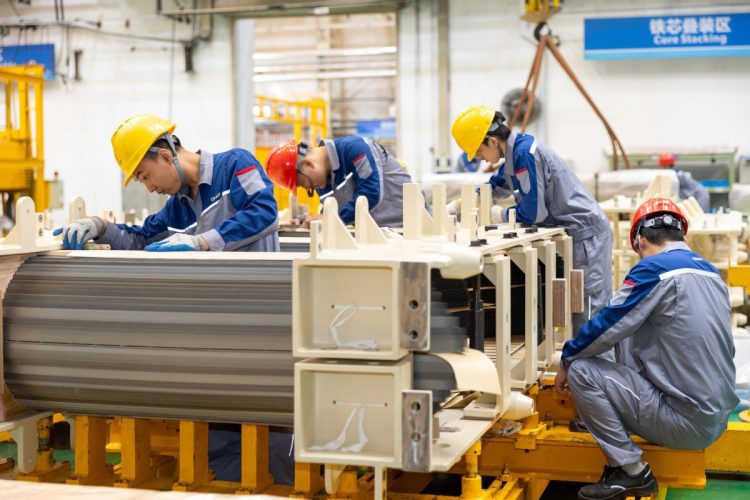
She added that the manufacturing sector’s share of national employment remained stable, as authorities actively leveraged industrial sectors to boost job creation.
In recent years, new forms of employment, including livestream hosts, delivery riders and ride-hailing drivers, have emerged, diversifying the workforce amid the rapid expansion of the service sector.
In the first quarter (Q1) of this year, the service sector’s value-added output accounted for 61.7 percent of GDP, up 0.4 percentage points year on year.
Its contribution to economic growth reached 63.2 percent during the period, up 4 percentage points from a year earlier, according to NBS data.
Xiao Ning, another NBS official, noted that the service sector also played a key role in absorbing employment in Q1, with job increases in wholesale and retail trade, transportation, accommodation and catering, leasing and business services, as well as culture and sports. China has rolled out various policy initiatives to further unleash the service sector’s vitality.
The outline of the 15th Five-Year Plan (2026-2030) calls for comprehensively enhancing the quality, efficiency and competitiveness of the service sector, and better leveraging the role of the service sector in supporting industrial upgrading, meeting people’s needs and driving employment expansion.
On Tuesday, the country released a new set of guidelines aimed at expanding capacity and improving the quality of the service sector, with the goal of bringing the sector’s total scale to 100 trillion yuan (about 14.57 trillion U.S. dollars) by 2030.
Li Yu, a researcher with the Chinese Academy of Personnel Science, said that against the backdrop of demographic shifts, consumption upgrading and industrial transformation, the service sector will continue to serve as both a stabilizer and a growth engine for employment.
As its growth momentum strengthens and the division of labor becomes more refined, the sector will expand its employment coverage and optimize the employment structure, Li added. (Namibia Daily News/Xinhua)