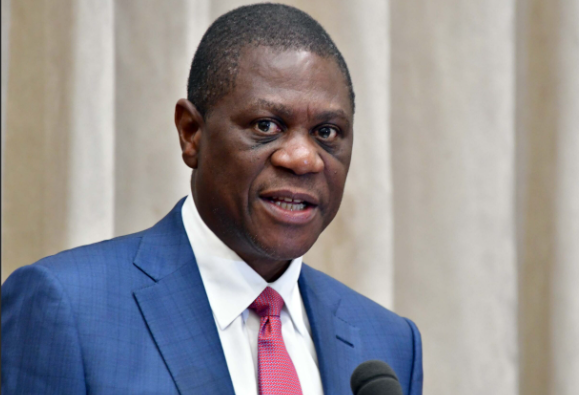
JOHANNESBURG, Dec. 20 — South Africa cannot remain silent on the unresolved land question as it moves forward with land reform to address historical injustices, advance economic transformation and curb widening inequality, South African Deputy President Paul Mashatile has said.
Speaking at a gala dinner hosted by the Evangelical Lutheran Church in Southern Africa in North West Province on Friday, Mashatile said land reform is a moral, constitutional and economic imperative rooted in the country’s painful history of land dispossession under colonial and apartheid rule.
“We acknowledge the painful history of land dispossession and the ongoing struggles many South Africans face,” he said. Outlining the historical context, Mashatile said colonial conquest and apartheid-era laws dispossessed black South Africans of nearly 87 percent of the land, leaving them with just 13 percent.
Since 1994, roughly 19.3 million hectares have been redistributed or restored, but white South Africans still own about 72 percent of private farmland, he added, quoting the 2017 Land Audit.
Legal disputes and resistance to expropriation without compensation have slowed progress, Mashatile said, noting that land reform remains central to economic transformation and poverty reduction.
Describing the process as one of “opportunity, dignity and responsibility,” he called for sustained efforts to ensure beneficiaries productively use the land and generate lasting economic value from it.
The remarks came against a backdrop of heightened political tensions, including lobbying visits to the United States by groups such as AfriForum and the Solidarity Movement.
These groups claimed that land reform policies unfairly target minority communities, particularly white farmers, which were rejected by the South African government.
Alongside South Africa’s case at the International Court of Justice accusing Israel of genocide in Gaza, the land issue has further strained diplomatic ties between South Africa and the United States.
The tensions culminated in the U.S. decision to boycott the Group of Twenty (G20) summit in Johannesburg last month and to exclude South Africa from G20-related activities organized by the United States in 2026. (Namibia Daily News / Xinhua)